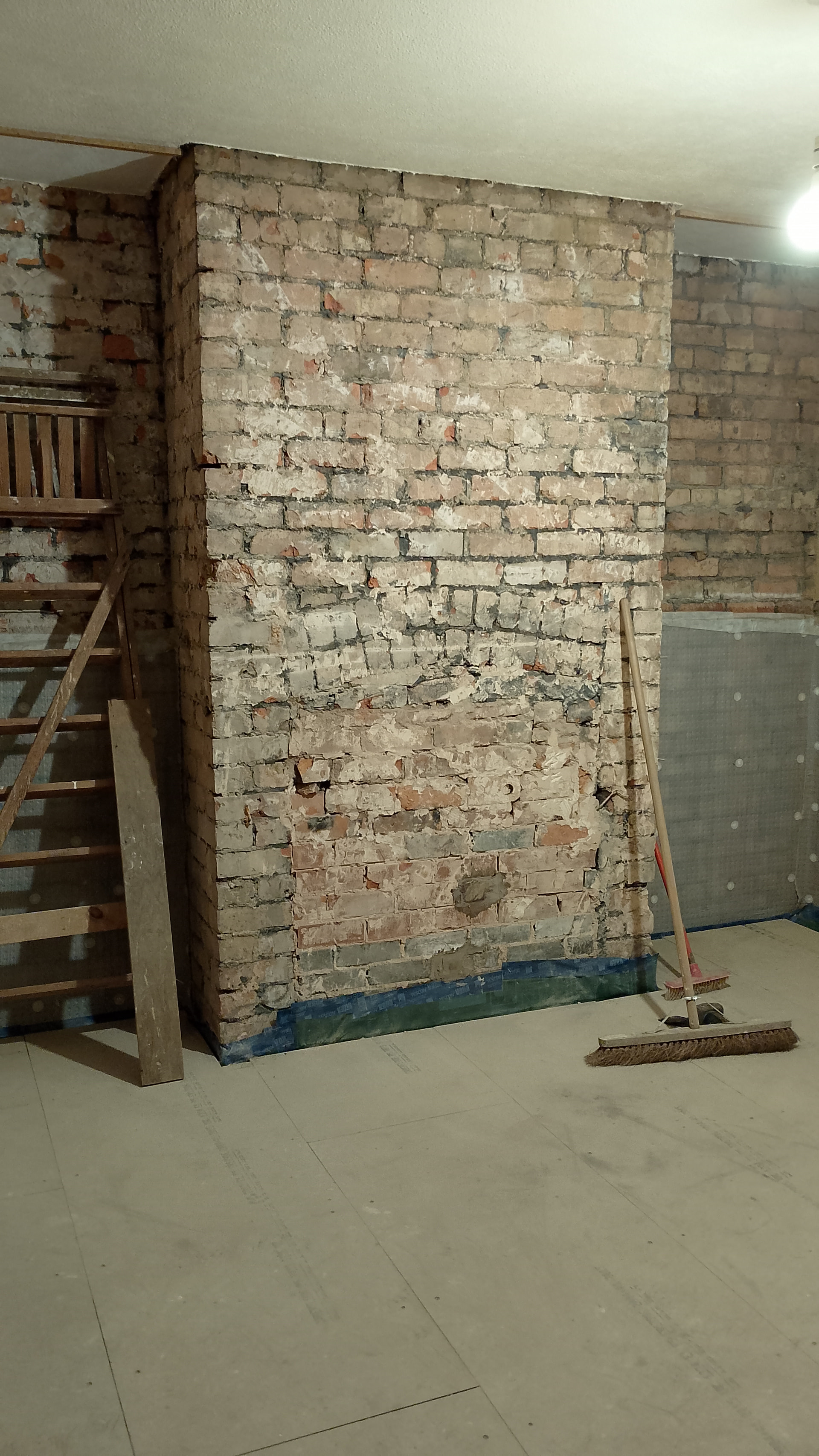
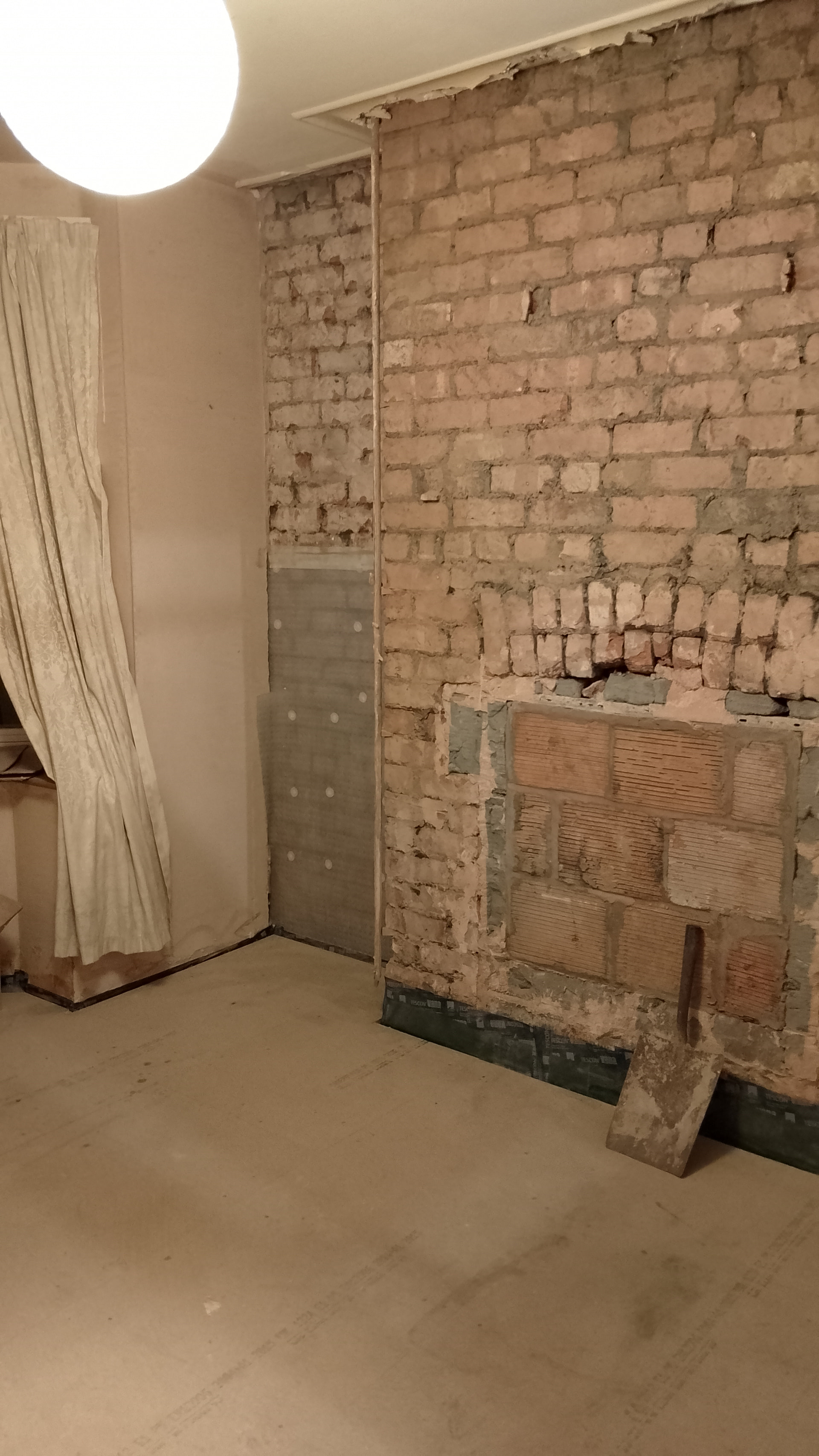
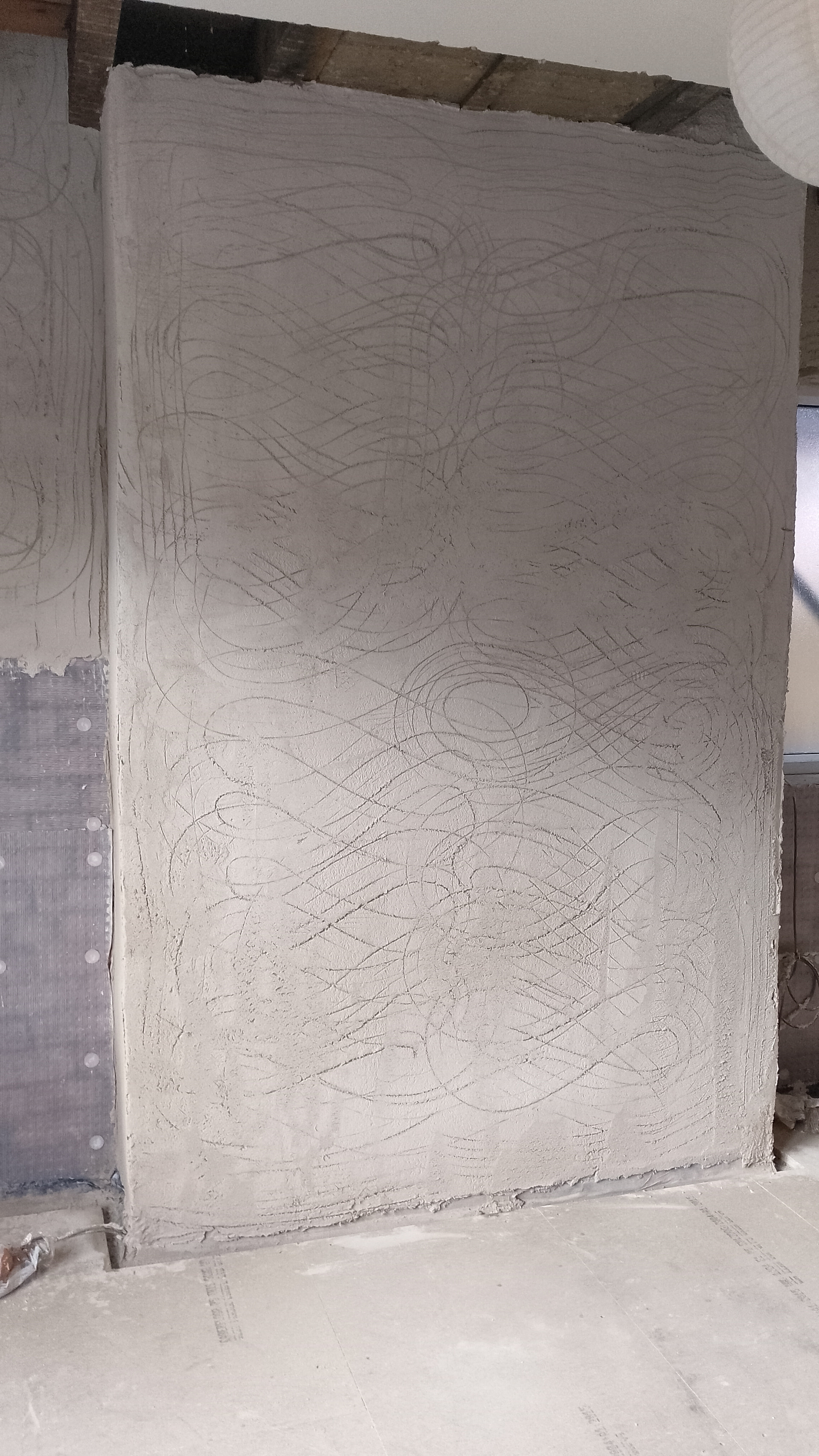
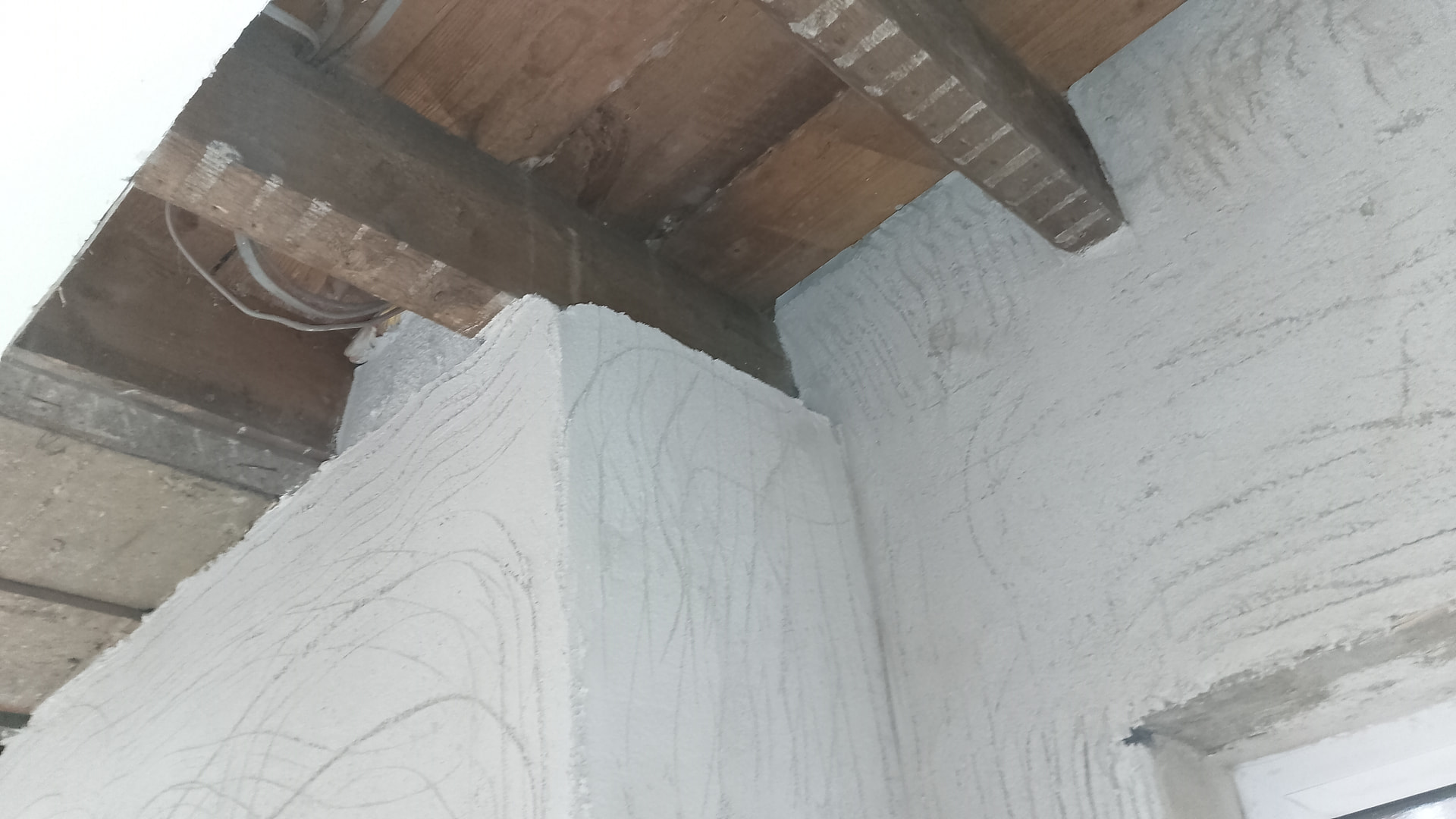
Wood fibre insulation over wooden beam

Yes, due to uneven and slightly sloping walls.

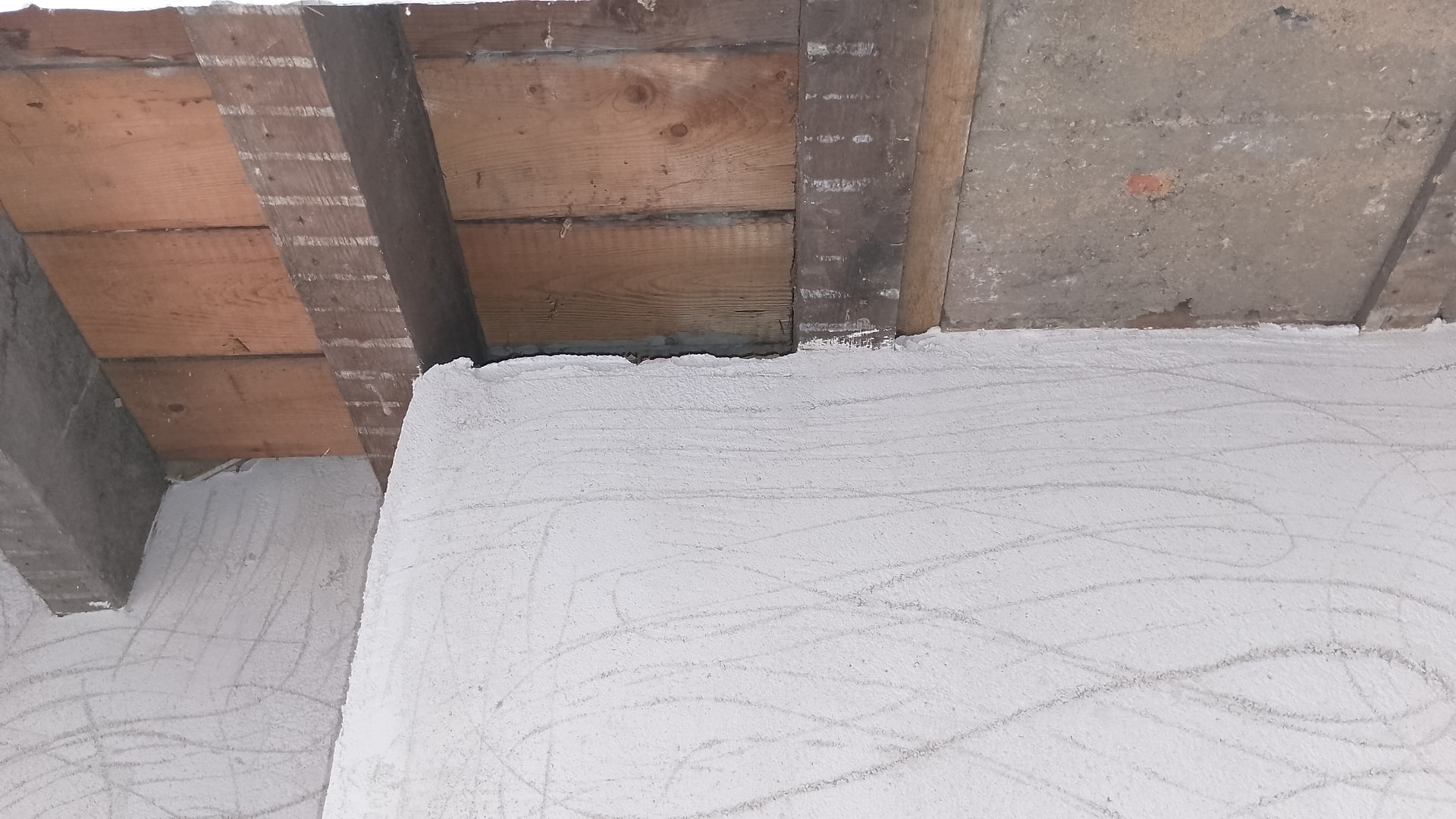
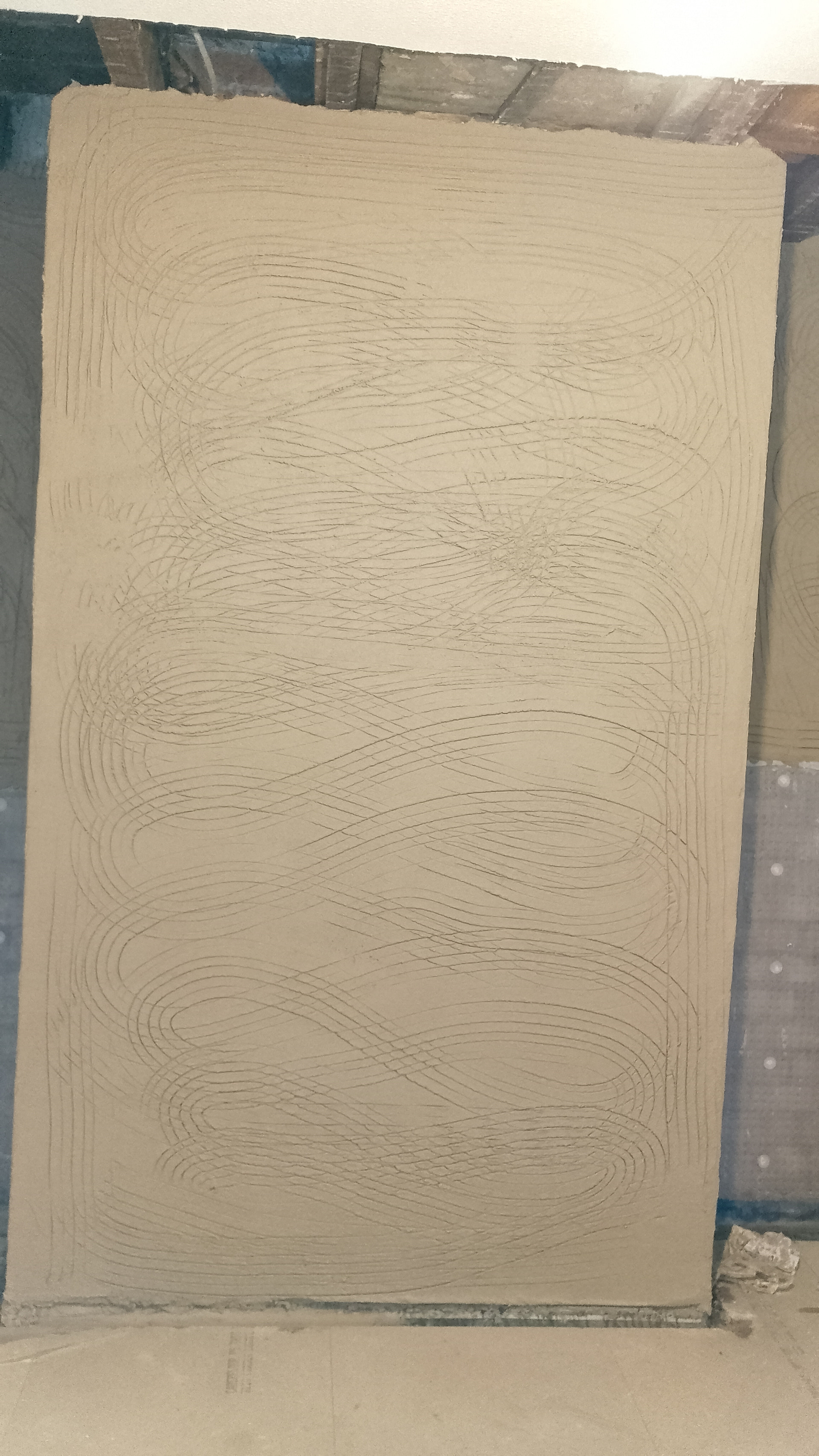
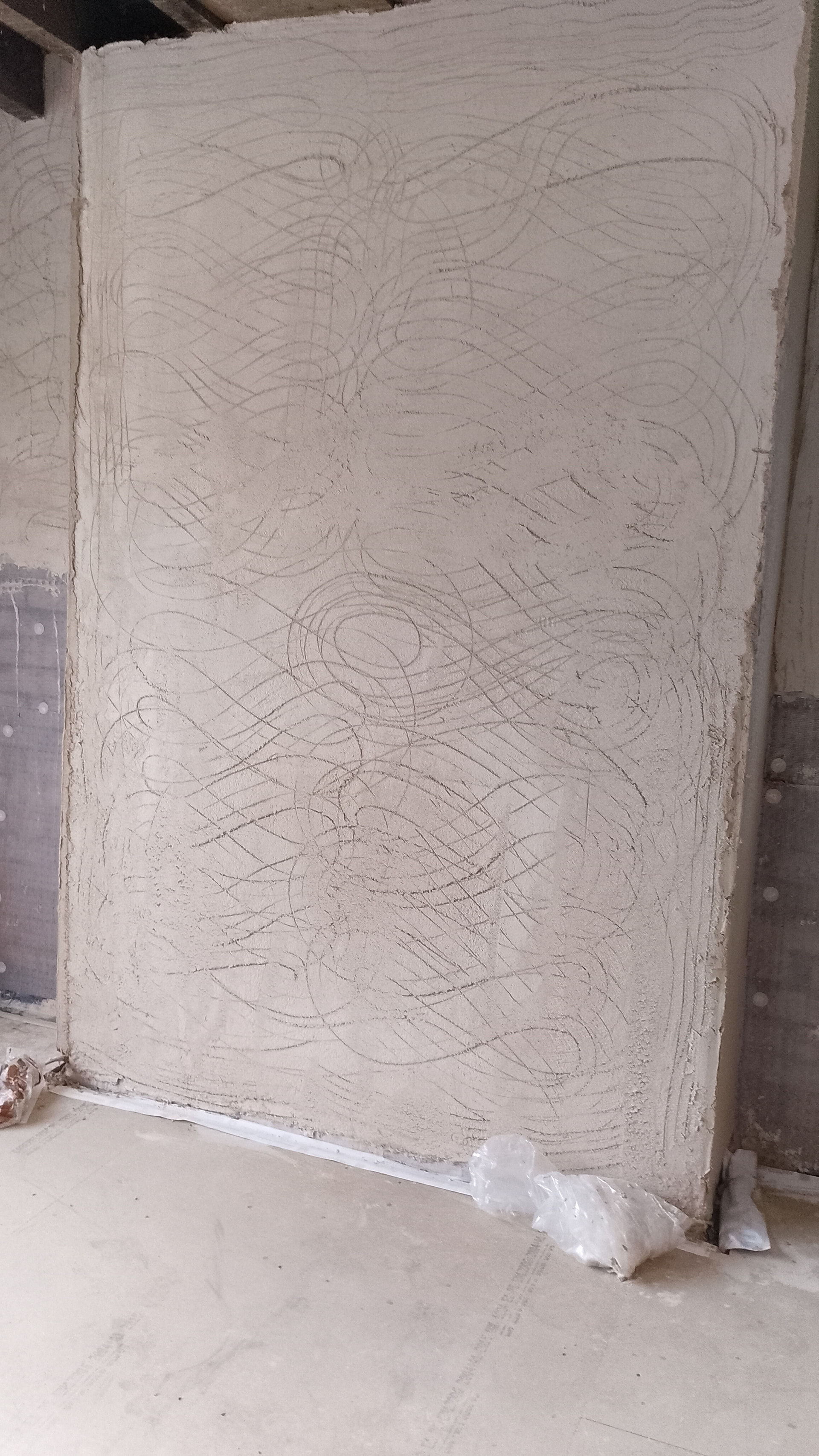
I haven’t got to grip with the terminology - not really sure what bonding means :thinking: . Isovit Lime was used as an adhesive layer, applied primarily to back of boards but also directly to wall where it still wasn’t level enough.

We used EJOT H3 fixings - 075 for 40mm boards and 135 for 100mm boards.

Others may be interested in these IWI ‘systems’:

The Mike Wye system is shown here STEICO Internal Wall Insulation (IWI)

Ecological Building Systems have this Retro EcoWall® | Ecological Building Systems

And the Lime Green system here Warmshell Internal Woodfibre Board . Interestingly at abt 4 minutes in there is a bit about electrical sockets - using galvanised steel back box just screwed into woodfibre boards…

1 Like

Very useful photos Sian! Thanks.

Nice taping of the back boxes. Did they tape behind around the fixings too?

So they traced the wires into the woodfibre boards rather than into the lime layer beneath. Was that recommended to you? I am now wondering if I should do the parging with lime first and then the rewire or if I should do the rewire before I do the parging.

Do you have any photos of your lime parge layer under woodfibre boards? Thanks.

@sianrichards55 how much of your house are you improving with this IWI approach and have you had a retrofit plan and U vale calculations etc done for this?

I am just asking because when doing all this work it should ideally be validated because you are increasing the value of your home. EPC or retrofit assessors may take your upgrades into account if you can evidence it, and a lot of the work you are doing is later hidden so EPC assessors can only account for it if they have approved evidence.

I am also now considering how to go about that in a good way, and will have my architect signing off U values of the work as they are competent to do so.

I’m not sure - I don’t have any photos of behind the backboxes I’m afraid, I must ask the contractor what he did.

Not really. It was hard to find anything much online. But the consultant, contractor and myself came up with the plan for the sockets themselves. The electrician had never come across woodfibre insulation before, and I asked him to cut as far into the woodfibre as needed to seat the cables and junction boxes (I think he used 2 wagos and the third was a different type?) within the woodfibre.

Photos of wall before insulation -

One of my regrets is not having a full rewire of the ground floor while the floors were up.

After the Cal CS and Cal RB levelling, taken up between joists above

You can see that the alcoves have quite a heavy damp proof membrane up to 1.2m, which was fixed in place by the damp proof contractors to stop salts coming through from the brick. The Isovit Lime then applied to membrane and woodfibre to fix woodfibre to membrane.

1 Like

I had a full carbon co-op retrofit assessment over 10 years ago, then a lot of stop-start bits of planning and a couple of pieces of retrofit work done up until a year ago. The bay was rebuilt in 2018/2019 with triple glazed bay windows, and after another pause a plan was made to insulate the suspended floor, improve ventilation, and put a WC and washbasin in the utility room.

I had an ASHP installed in June 2024, sized on the assurance that the floor was soon to be insulated which made a 7kWh possible. When the immediate plans to insulate the floor fell through, I was about ready to give up with insulation, and upgrade windows and doors instead. But I made a final attempt last summer, working with a new advisor, and although the underfloor insulation is still not quite complete, I decided to go as far as I could one floor at a time. I had a full PHPP carried out, and that resulted in a plan to insulate the whole house, upgrade windows and doors and an MVHR design.

As well as a new damp proof course last year, some floor, chimney and wall insulation, new doors and ground floor windows have been installed this year.

So I do have u-values, some thermal modelling of junctions, and both the contractor and myself are taking photos. The PHPP is being kept up to date with any changes to the plan, as reality intervenes. I have a Building Control application in, via the council, for thermal upgrade of the fabric, and the building inspector for my area has visited several times already.

All in all there should be enough evidence to get things signed off :crossed_fingers:

1 Like

Really fabulous Sian. Thanks for sharing.

I was thinking to do a full AECB certification initially, but I found the costs for just the certification too costly (>£3200) and I would still have to provide all the evidence myself.

However, I am lucky enough my architect is a passivhaus designer and has his own EnerPhit project, but I found it really difficult to commit to a target as I am just so aware of the cost implications while not knowing if I will be able to stay in the house.

I still want to do the right thing for each step I do, but the budget has already ballooned beyond what I feel comfortable with. Hence, I am trying to do more myself and have taken courses on plastering with lime etc. However, going that route makes it more difficult to get the certification.

My current building work was focussing on the ‘dirty’ stuff on the the ground floor 1) installing a new insulated ground floor (U-value: ~0.14), 2) remove the chimney breast, 3) replace the roof on my kitchen extension with a warm roof (U-value: 0.15), 4) add EWI and cladding on the small kitchen extension and 5) replace the worst doors and windows with triple glazed units and ensure they are airtight.

Of course in the process, my old conservatory had to be torn down, I had to remove the old plaster and found a lot of gremlins. I haven’t really planned for lime plaster and internal wall insulation as I am thinking that at a later point the rest of the house can get EWI.

I did have UFH installed in the new insulated floor in anticipation of the ASHP (which I have a Heat geek quote for), but as you seem to have done as well, the ASHP sizing was based on doing the new windows everywhere, which means I need to do 8 more windows incl the bay windows. All of these are big cost items and hence I need to wait with the ASHP (which my installer really didn’t understand). It is really hard to know where is best to set milestones if you do this the first time.

However, I am planning for MVHR and as I have all the plaster off it seems really wrong to do ‘dot and dab’ with gypsum plasterboard now. Though, I only belatedly came to the point that lime parging and IWI could actually make a real difference for heat loss and airtightness, and I think the costs are not so high so that it feels like doing now by myself, even though I haven’t planned for it.

I might actually write to my architect today and ask about his thoughts. I do have the PHPP and will do some U-Value calcs to check my options, but I realise I might also have to consider things like WUFI that I have no idea about yet.

To be honest I am not too impressed by building control on insulation and airtightness. The building inspectors that came around for the project never really questioned much about airtightness details and seem to instead question why I am doing all this work…

Sorry for another long post and not sure if this helps anyone.

In terms of planning the internal airtightness and IWI has not been put into my project plans, but happy to discuss a bit more if you don’t mind! :slight_smile:

The BUS grant and others do not help with choosing the right time to fit a heat pump. If there were no grant and you could afford to do so, the ideal time to fit a heat pump is always “now”, sized for planned heating load, and retain the boiler to supplement the heating on really cold days. This approach gives low carbon heating at a good COP from the start (high COP is actually easier to achieve in a draughty house) with occasional extra carbon emissions. Then as work approaches its conclusion the boiler can be removed. Such hybrid systems are apparently common in the Netherlands, where the government incentives differ from ours.

Another approach is to fit Air to Air heat pumps and as the need for additional heating reduces remove radiators (or don’t fit them back as each room of completed).

Old houses never used to have radiators and removing them could improve the aesthetics.

1 Like

Very good points Tim. Thanks.

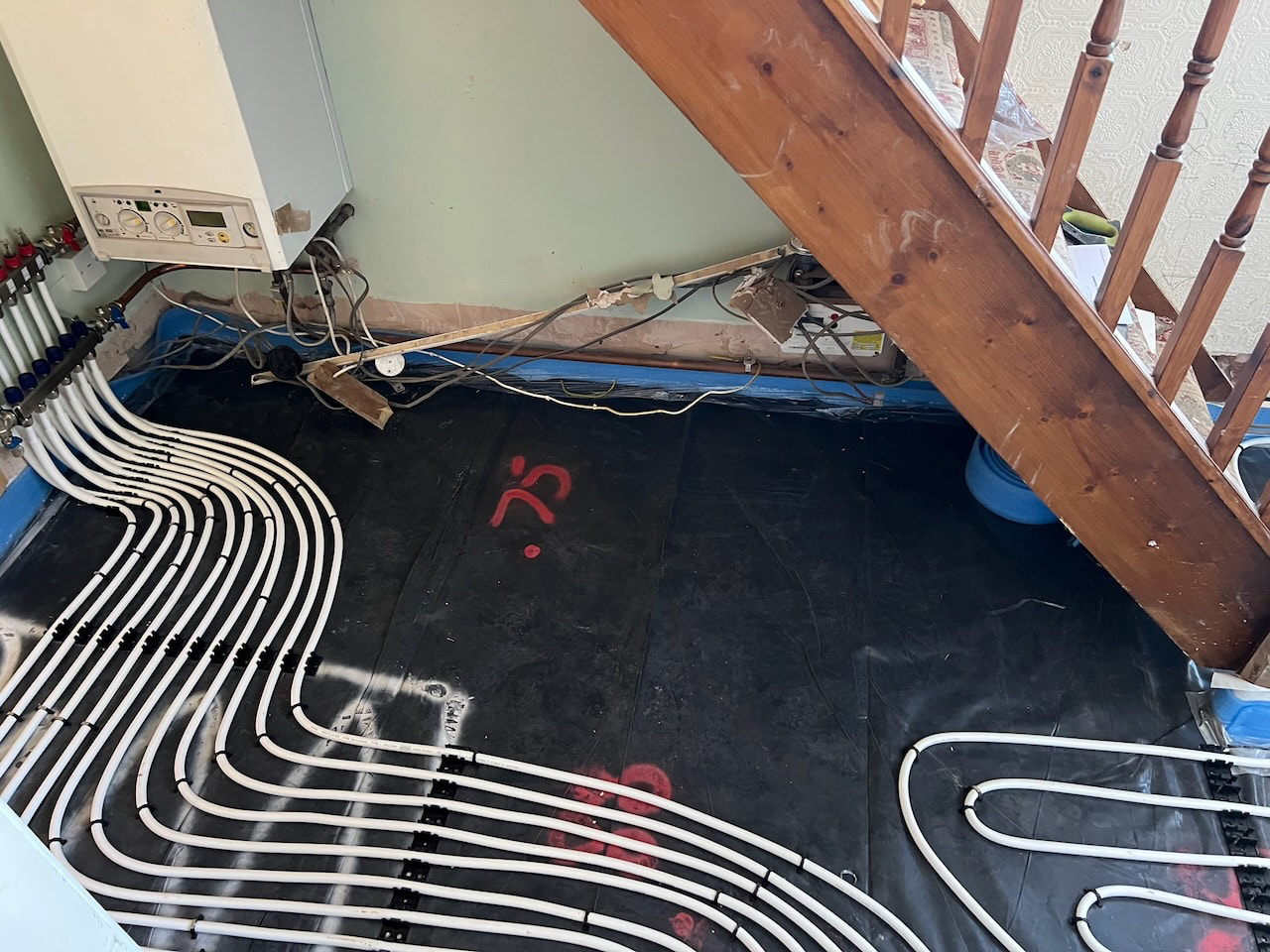
I didn’t even think about keeping the boiler as an interim solution, as the only place I can have a water tank and the heat pump piping gear was under the stairs where the boiler is at the moment. Based on that we have installed the UFH manifold very close to it as well.

The air to air heat pump is of course an interesting thought as these could also provide cooling when needed! I have not looked into that and would need to figure out what these cost (on top of the other heat pump, what efficiency they have and how they impact the whole house working with an MVHR? It sounds like quite a lot to think about but I will have a look.

Air to air heat pump sounds good but you’ll presumably need some form of air to water to run the UFH. Air to air could work in other rooms. Would be nice in the bedroom to cool during the summer.

With the windows, have you thought about secondary glazing over the existing windows? Obviously not as good performance as new double glazing but may be a cheaper option to get you over the line. You could always replace them at a later date.

1 Like

Agreed. My post was intended to be of general interest rather than specific to this case. Once UFH is installed going full air to air, whilst not impossible (i.e. abandon previous system) is highly unlikely.

A means of heating DHW will also be required.

1 Like

Hi Ellis and Tim,

yes, of course I need the Air to Water heat pump anyway, but was considering the air to air heat pump @Tim_Gilbert described to make up for any shortfalls that may occur if I haven’t yet finished the retrofit work ((i.e. replace all the windows) before the heatpump is installed … keeps me from oversizing the Air to Water heatpump, which would be wrong long term.

Anyway, this is all very complicated to sync up well if you don’t have enough of a budget…

Budget is king. Disregarding the king leads to serious consequences.

1 Like

Yes, doing the right thing at the right time in a proposed, stepwise retrofit is complicated, where budget is restricted. As mentioned earlier in this thread, where the BUS grant won’t assist with an air-to-water heat pump unless it can fully heat the house in its current, unretrofitted (or only partly retrofitted) state, it is particularly tricky, I am finding. So I, too, am finding this thread’s discussion about how to manage this situation to be very worthwhile. Meanwhile, Brexit prevents me proposing a move to the Netherlands, where, by the sound of it, they have a more sensible grant scheme.

1 Like