Hi there, I thought I put this in a separate thread (rather than my ongoing retrofit thread) as I there may be some vapour and condensation issues to discuss in general.
For some context: At the moment my builder has taken off the old flat roof on my 1980s kitchen extension and is in process to replace it with a new warm roof. So there is a short window of time (next week) where I can ask my builder to fix some thermal bridging and condensation risk where the new warm roof butts onto a cold outer wall.
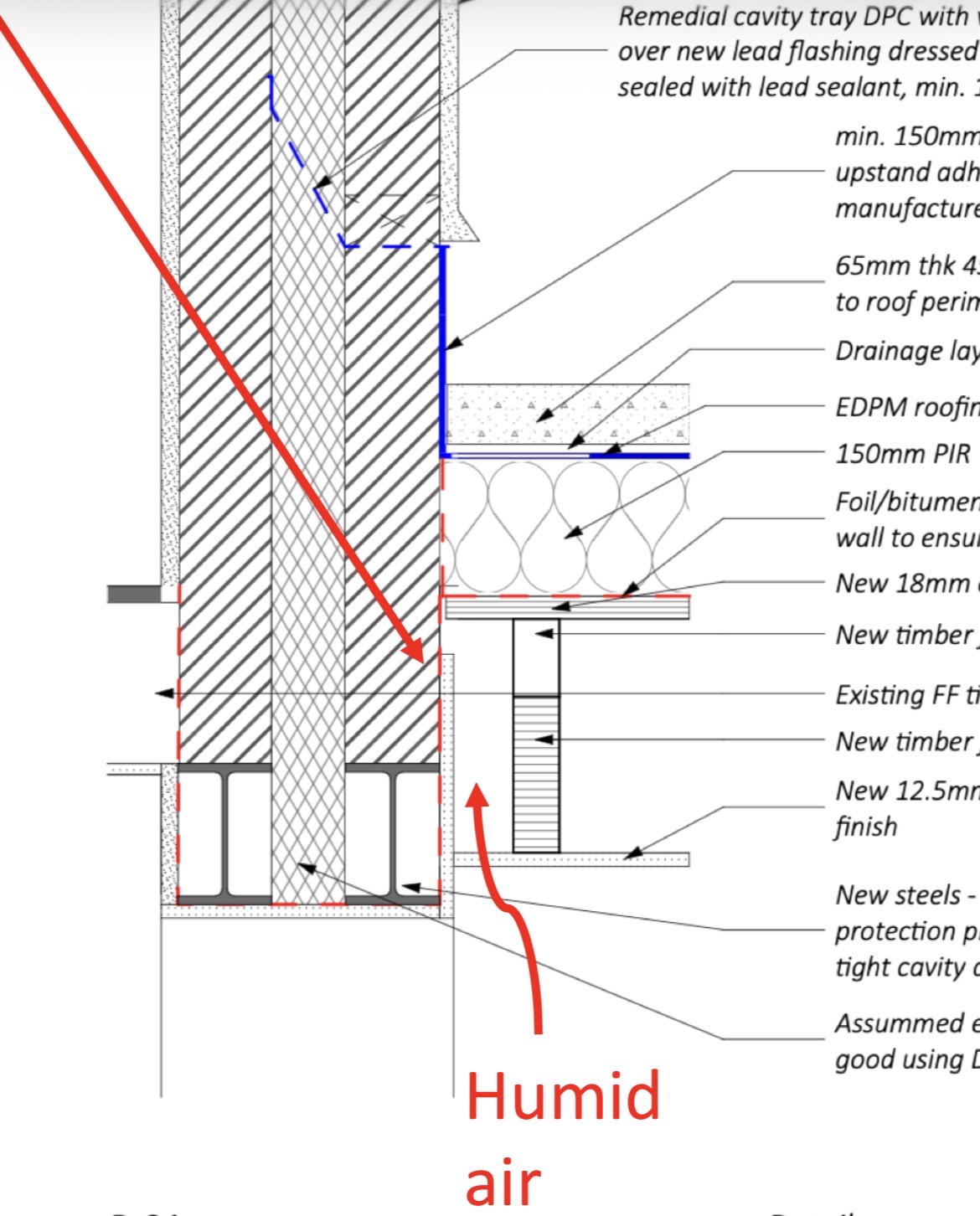
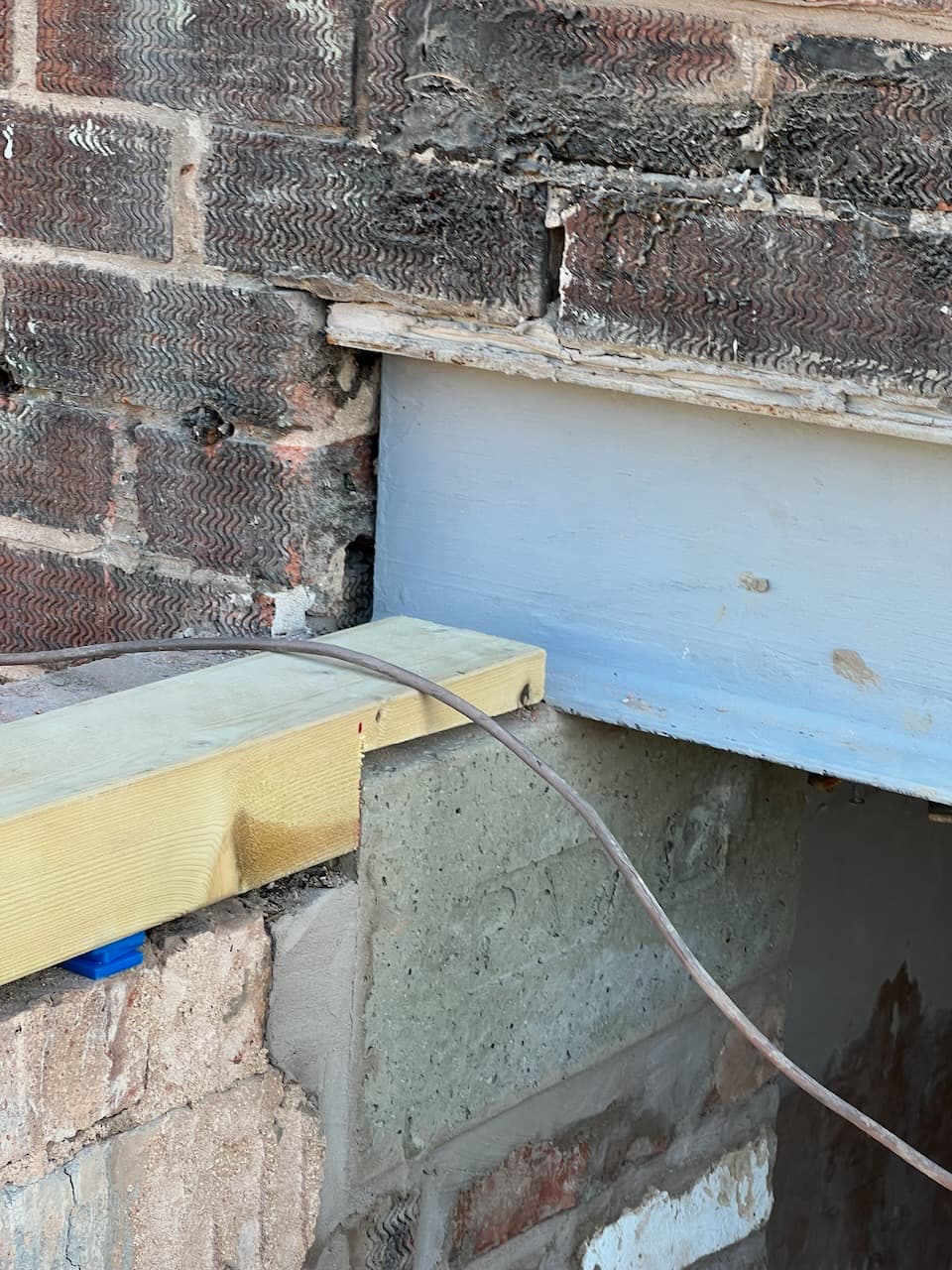
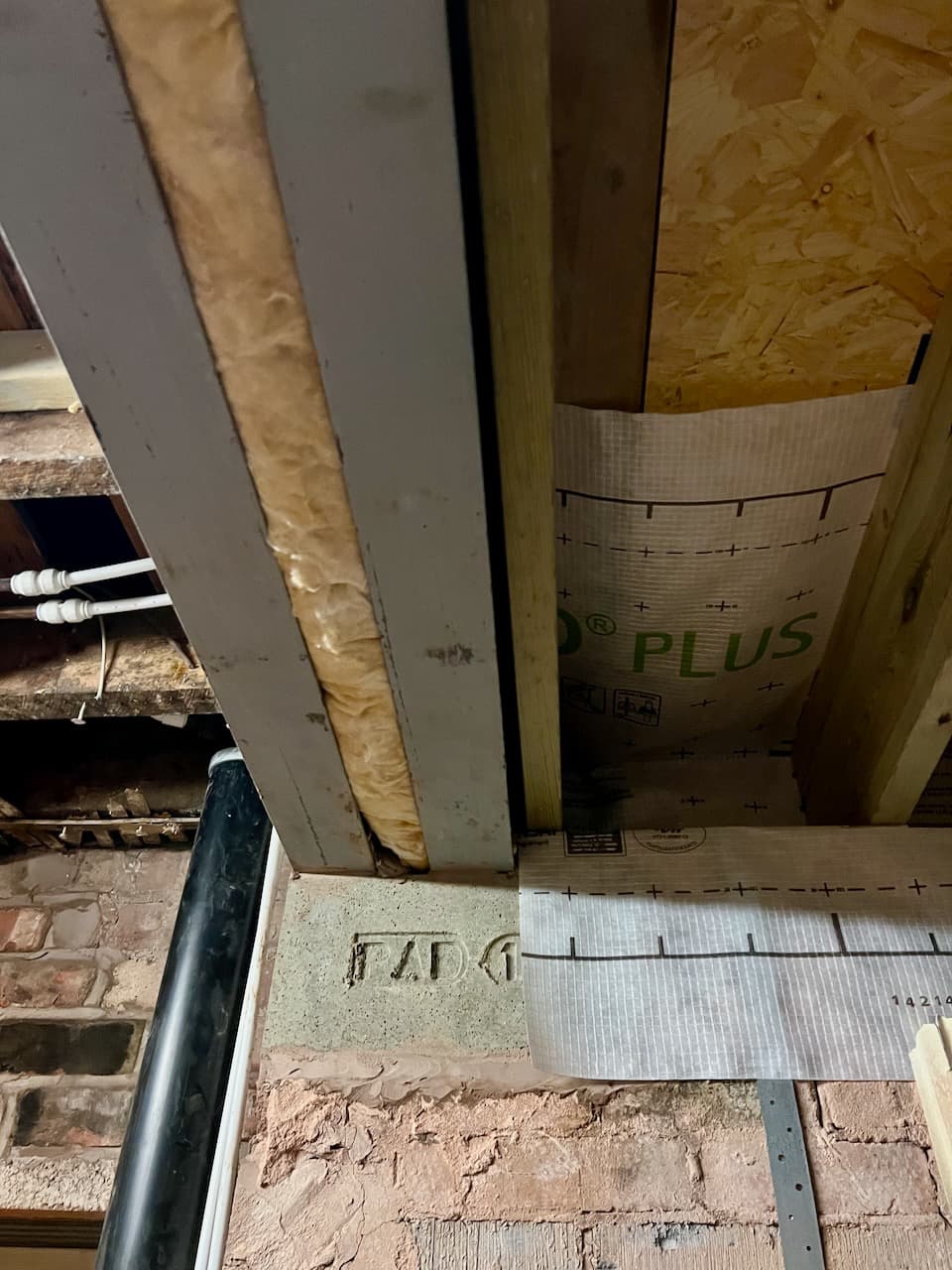
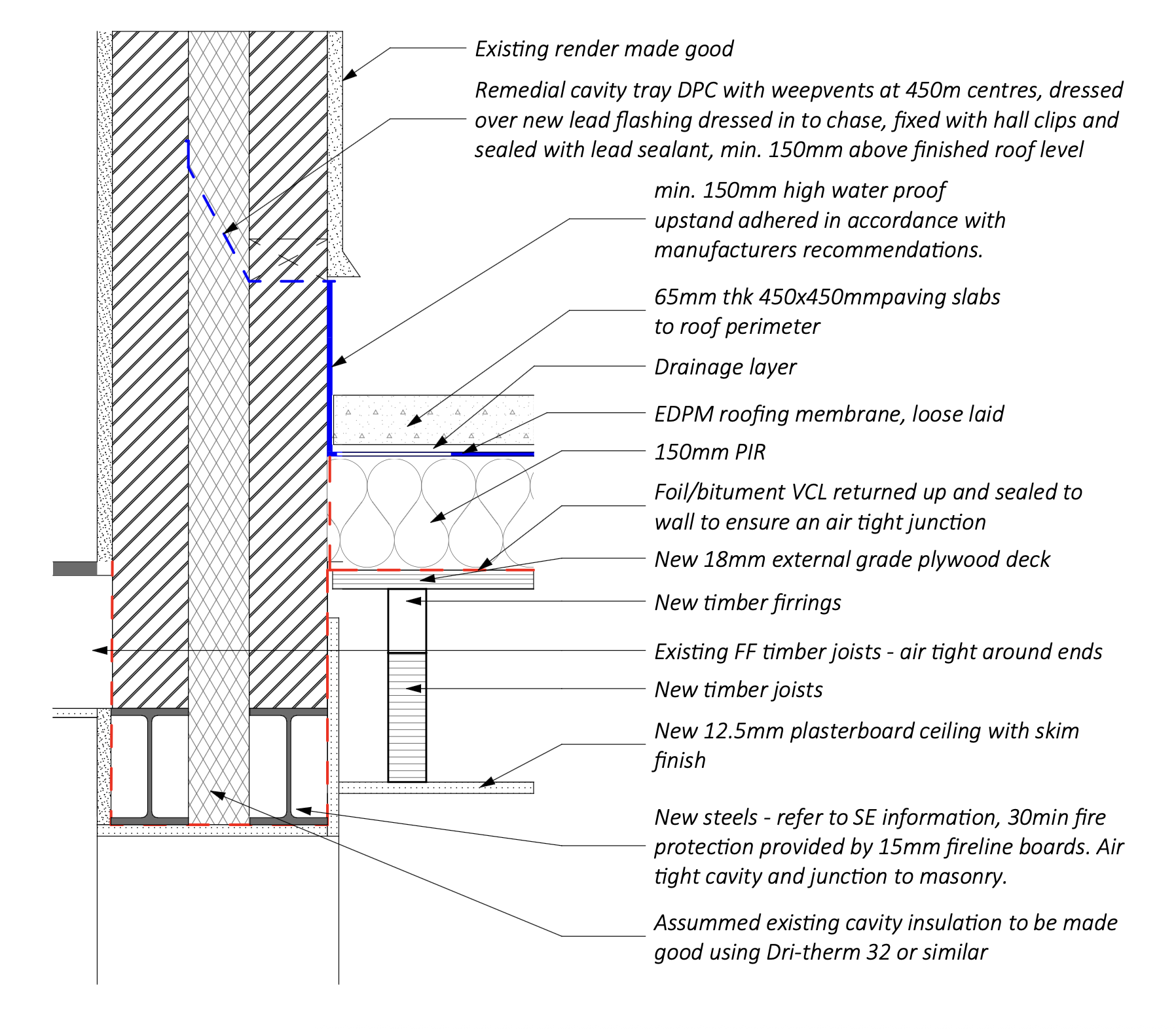
I have prepared some 2 slides with the architect detail and some photos to hopefully convey the thermal bridging and condensation issue I am worried about. Let me know if it is not clear.
Wall-kitchen roof Junction air tightness issue v2.pdf (1.5 MB)
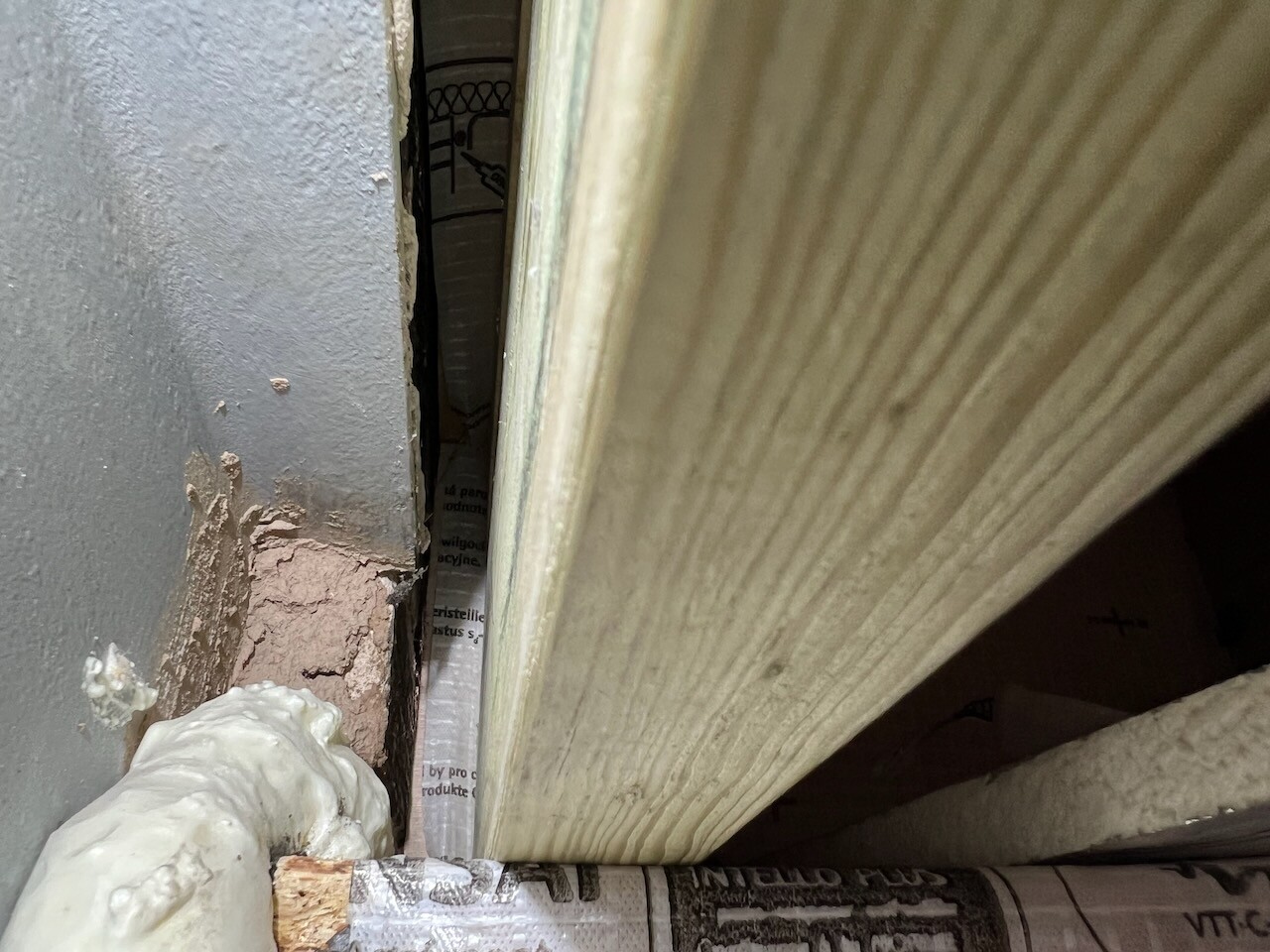
My builder has put a joist very close to the RSJ/wall leaving only a 10mm gap between the joist and the RSJ/wall assembly where humid air can easily get in. No airtightness or insulation yet in that gap. Hence, I think this could cause condensation on the wall just above my kitchen ceiling.
My builder is prepared to unscrew the joist as the OSB on top is not yet fixed. He could perhaps also move the joist a little further away from the wall to actually fit some PIR, but I really need to pin down what I need to ensure I don’t leave a moisture trap there.
Any thoughts and advise would be much appreciated!
Thanks a lot.
Your question “Should I try to close the gap to prevent any humid air to go in?” is answered definitely No. It isn’t possible to move the RSJ so tightly to the wall that air and valour can’t get in. You need a wide enough gap to isolate the RSJ from the adjacent wall.
You don’t need PIR on the gap as the shape will be impossible to precisely cut to fit wall and RSJ profiles. A flexible, compressible insulation would be better.
Is the “Foil/bitument VCL returned up and sealed to wall to ensure an air tight junction” accessible from below? If so fix airtightness membrane to it and seal below the “New 18mm external grade plywood deck”. That should stop cold air reaching any lower. It won’t stop the cold wall elements from cooling internal air.
The red dashed line around the bottom of the wall would be a good place to fit vapour barrier. It would stop the vapour from the room below condensing in the fabric of the wall but may well still condense on the surface.
I just talked about this with my architect today. He suggested I could add some 25mm PIR between the wall and joist and then try to seal the PIR to the wall with airtightness foam. That way no moisture from the kitchen should get onto the cold wall surface.
I did think to perhaps use some mineral wool, but my architect said that would further drop the dew point in that gap as it prevents the heat getting into it.
So now I am even less sure. Should I just leave it open? I will loose some heat, but it will be able to dry out.
Your architect’s solution is a good one if you don’t fill the gap, as you probably want air circulating around the RSJ. That might involve moving the RSJ slightly further from the wall.
Remember to use the foam along the top of the PIR as well as behind it.
No, the RSJ is fully installed and mortared in already for many months. It can’t be moved.
It is not yet boarded with Fireboard, so I can put some insulation into the shape to minimise heat transfer, but I have no idea about best practice on this.
The adjacent joist is the only thing we can still move around.
As you can see the RSJ sits a bit lower than the joist. The RSJ is 178mm high and the joist is 190mm plus the furring on one side adding about 65mm.
Hence, there is about 30-80mm exposed wall above the RSJ and the RSJ which are thermal bridging.
I wonder if it will be best to leave it uninsulated and just add the Intello Plus as an air barrier to get the airtightness layer around the RSJ? The problem is that everybody says you need to put the Intello Plus onto the warm side of the insulation.
Hence the thinking to get 25mm PIR all around the wall and the RSJ and put the Intello Plus on top of that.
P.S.: It is worth noting that me and my architect didn’t plan for the double RSJ to be changed. This had to be done as we exposed the opening for the roof replacement work. So I went to my structural engineer and got the calculations and the builder was able to fit it quickly…. so I didn’t have time to think this through (maybe isolate the RSJ better) and the architect drawing was actually what the architect thought the opening looked like and so all my architect could do was draw an airtightness layer around the existing structure as I believe this is now standard. In the below detail he then just updated the wording so we could update building control and also to think about this now retrospectively.
Additional question about boxing in structural steel after removing a wall.
Is there any best practice on how to do the airtightness and any insulation before adding Fireboard?
Seems like nobody cares much as it is an internal element. All I did ask the builder is to make sure there is cavity insulation on the end that is resting on the inner leaf.
Generally, I am now really constantly thinking about thermal bridging, but my builder or building control do not seem to think about it in a retrofit.
Your builder and building control should be familiar with Building Regs, which as we know is the absolute minimum standard a building is allowed to have. What you want is an energy efficient condensation free building, which neither of them know about. Ultimately it is down to you and your architect.
When I had some ceiling work done recently I packed offcuts of PIR & EPS around all the parts of an RSJ that could be reached, after aiming spray foam into the gaps each side where it entered an external wall. I felt that the RSJ must be causing thermal bridging, without any survey or measurements to say so.
1 Like
A minimum 25mm of insulation in the 30-80mm high masonry above the steel would definitely be good, because that is where the wall is coldest. So moving the joist over to provide the 25mm would be nice. Airtight foam is a good insulator (e.g. PHS Airtight foam has 0.039 W/mK) so I would just fill that gap with spray foam rather than use bits of board. If your joists span 4m or so, that’s only about 5L of foam. (A £7+VAT can of PHS foam yields 36-40L).
If you can get it to stick to the beam, I don’t see any disadvantage in also applying minimum 25mm of foam to the underside of the top flange plus the sides of the web. Even if there were isolated pockets of air against the steel face, these would not be replenished by fresh, humid air because neither the steel nor the foam would let air through.
By the time you had done that, you would have increased the length of the thermal bridge significantly. The temperature at the uninsulated bottom flange would be lower. I’d be happy to do a THERM calculation to check the surface temperature, but wouldn’t be able to do that until the weekend.
1 Like
@Christian_Unger I’m not sure if there would be a condensation risk without doing a thermal model on it. Probably is, but I think it might depend on geometry/length of that outer leaf. If it was my place I’d just run a model to check temperature at the coldest spot, and if it’s over 15 deg C I won’t worry. If it’s below 15 deg C then I’d think about mitigation, which would be some sort of insulation that can hug the wall tightly, with then the airtightness on the warm side of that?
1 Like
Hi Gabriel,
I think we will do the airtight foam solution on the wall. I got 4 cans of Illbruck FM330 to ensure any joints are filled and basically just coat the wall area above the steel.
Probably fill the steel web as well, as it will be a better fit than trying to cut bits of insulation.
The only thing I am not yet clear about is how to also fix the Fireline board over the steel later on. But I think if the builder leaves me the 25mm between wall and joist we should be able to fix it somehow.
As I am not the builder, I hope he has some idea.
Some calculations would be nice, but if I coat the exposed wall with the Illbruck foam condensation shouldn’t really be a significant issue I think.
Last words…
I am planning to install an MVHR next year too, but it is the kitchen and I don’t want to rely on the technology too much.
Anyway, today is the day to get that foamed up, so I will try to take some photos if my work allows me to get to the site.
Thanks Eric.
Fingers crossed.
The objective is now to foam the exposed wall and any of the roof junctions.
Unfortunately I can’t heat the building yet, as I could otherwise actually measure the temperature in that wall.
As I said above some calculations would be nice, but I wouldn’t even know where to start.
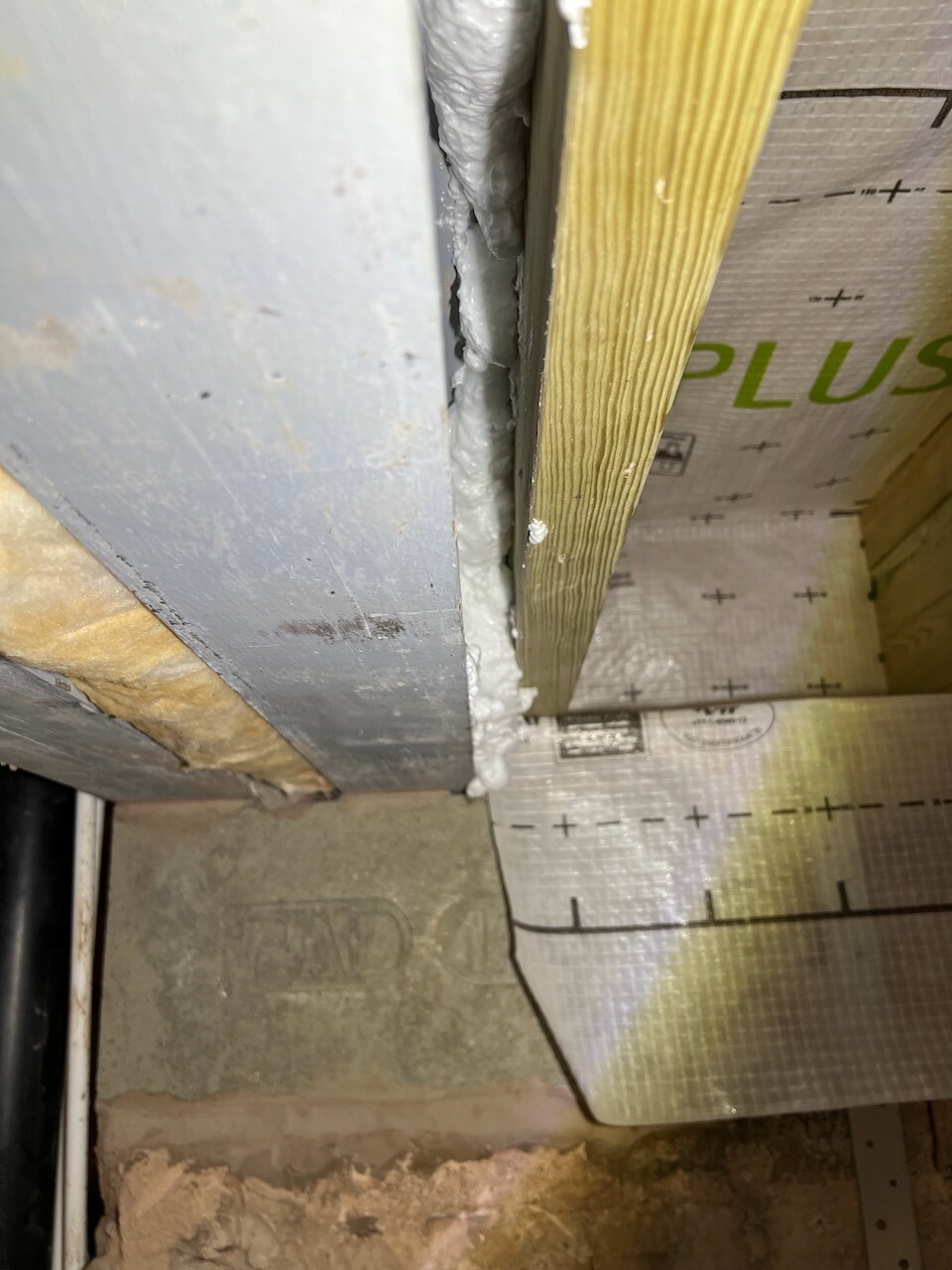
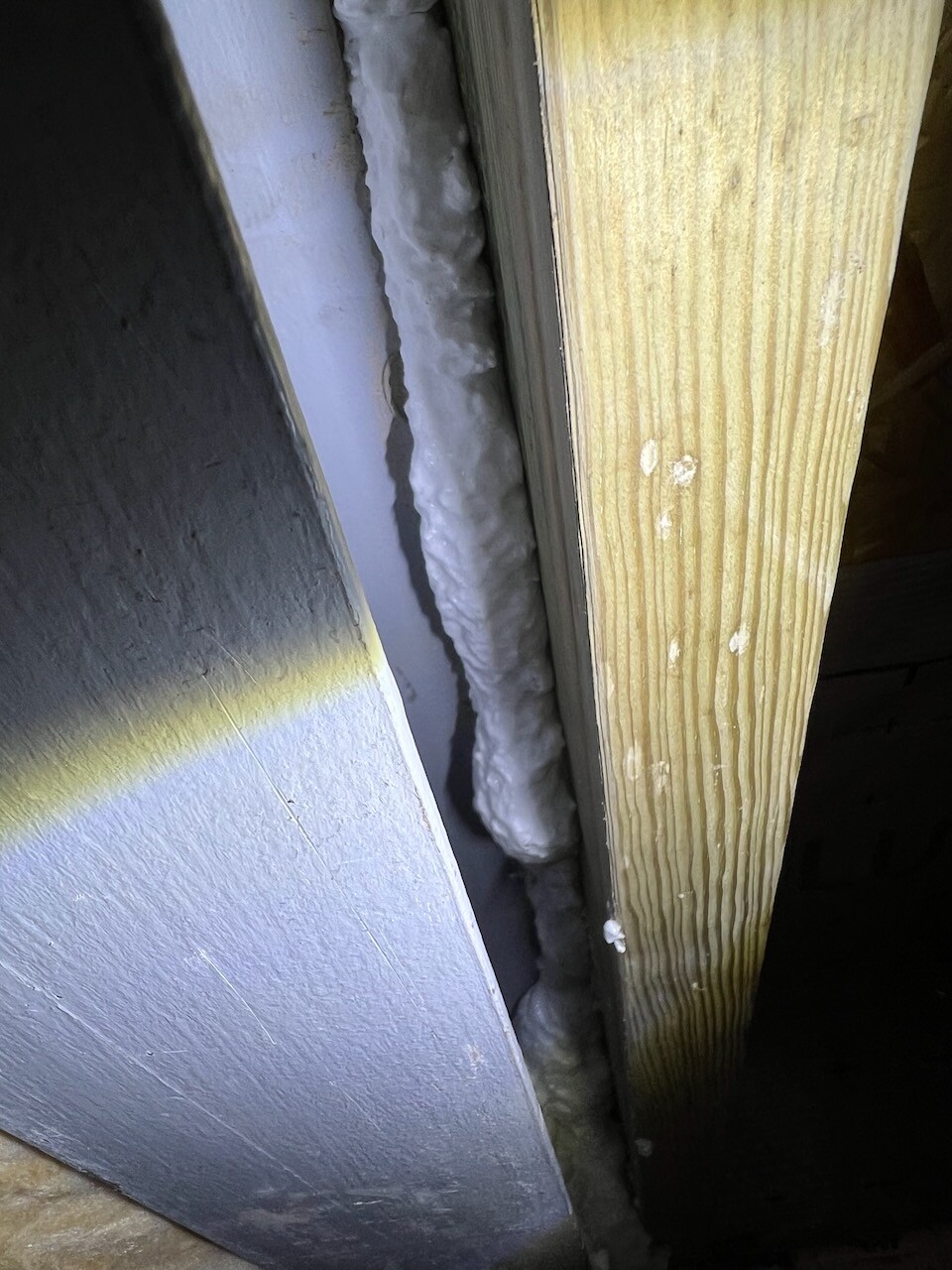
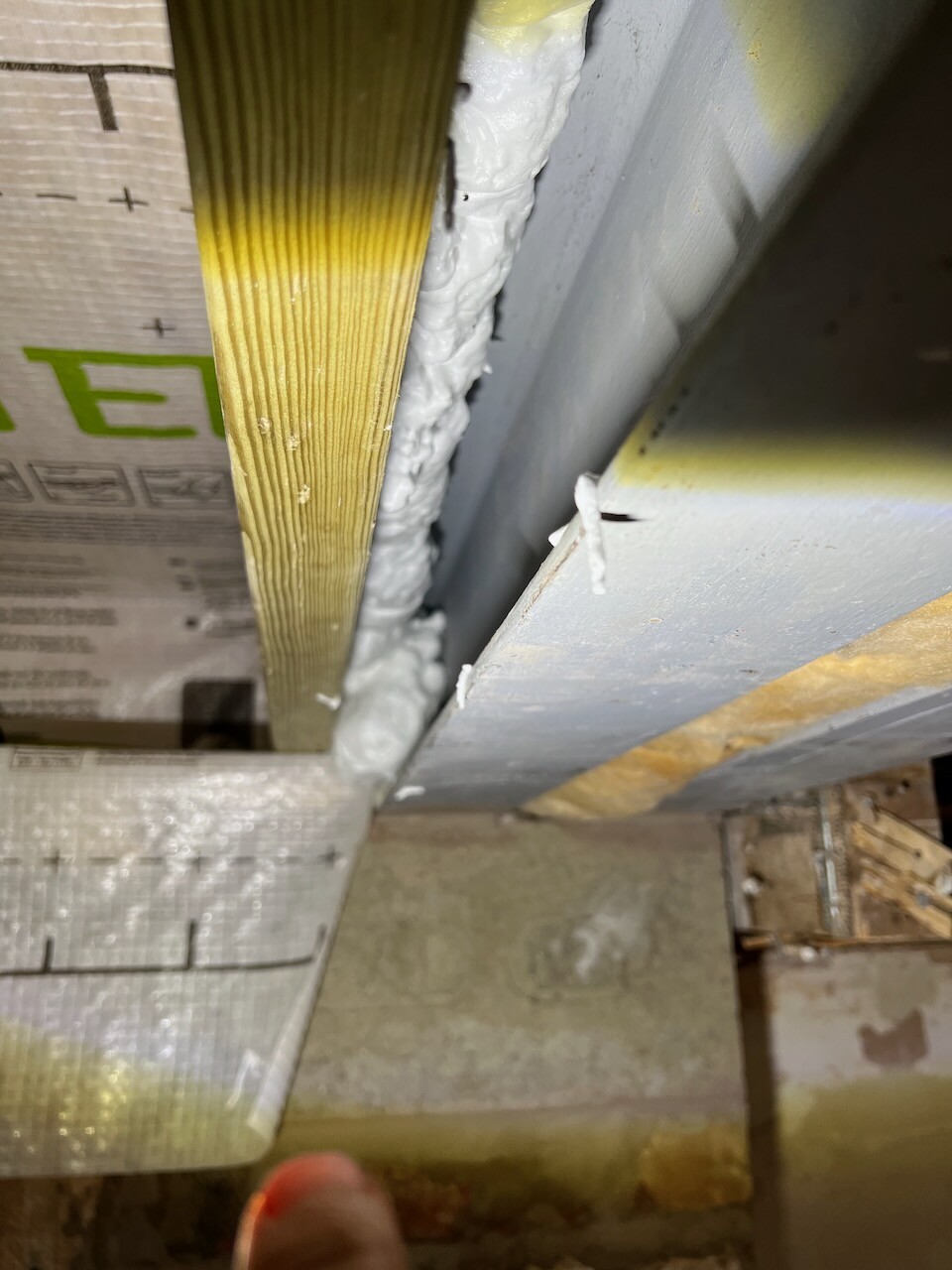
Just a quick update that I have completely sealed the junction with Illbruck FM330 foam.
Before:
After:
It was a bit tricky to get deep enough with the gun I had to hand, but I took my time and hopefully have no gaps. It doesn’t look too pretty, but I can cut the foam as I need.
It took about a can of the foam.
It is a bit tricky to spray this overhead, but can be done with care.
RSJ:
I did not yet fill the whole RSJ as I am still thinking how to box that in and add the airtightness layer. My builder said they usually glue the fireline board to the underside of the steel and only up to the ceiling boards. That means I can’t just wrap the Intello Plus all round the steel beams, but may have to just tape some in between the two beams with Tescon Vana tape and leave the steel exposed to glue to. Unfortunately that means no insulation between the steel and the fireline board.
Does anyone have a solution for that? What is best practice to enclose steels, maintaining the fire protection and add insulation? I mean it is obvious to fill the inside of the RSJ, but what do you do on the flat underside for example?
Thank you.
You’re probably finished by now. But I think that in your position, I would suck it and see: tape the membrane to the beam as you describe, so that you have addressed continuous airtightness. Insulate the webs, apply the fire board to the flange, finish the job. And then see if that’s good enough in use. A bit of transient condensation on the soffit (if it occurs) might not worry you. If it does, you can add an extra boxing of timber or insulation-backed plasterboard or whatever.
1 Like
Hi Gabriel,
I haven’t finished yet. Everything has slowed down over Christmas and the roof is not yet finished.
In any case I agree with you and will definitely insulate the RSJ and then go around it with the Intello membrane to get the airtightness.
Some timber or woodfibre board on the steel soffit should be good as the Intello membrane should be on the warm side. However, just not sure how to fix it to the steel yet.
I am just researching woodfibre and lime plaster, which opens a whole new world of options.