Sounds cool. I’ve been contemplating something along these lines. If you fancied sharing a photo, I’d be interested in seeing what it looks like. Ta.
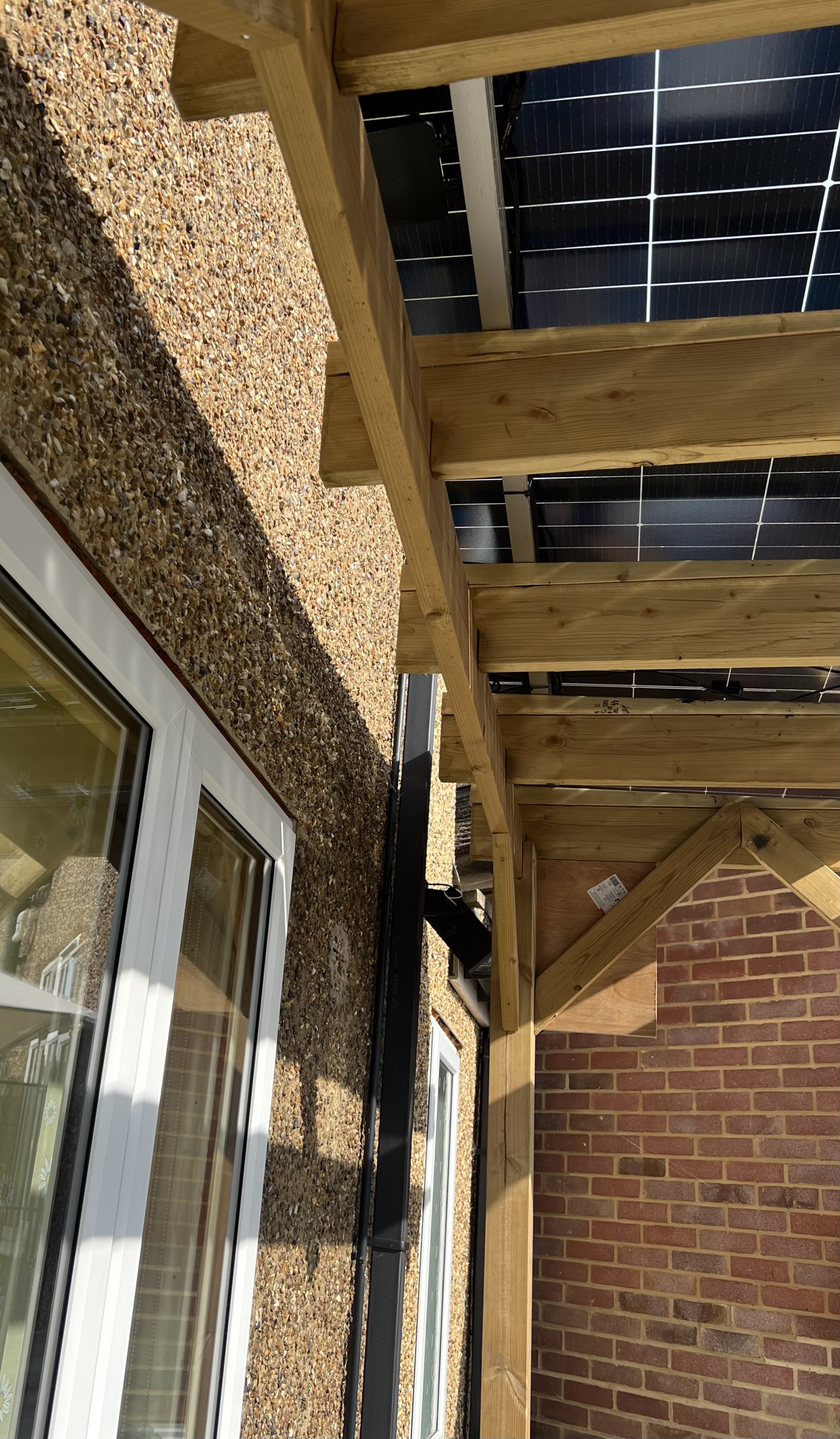
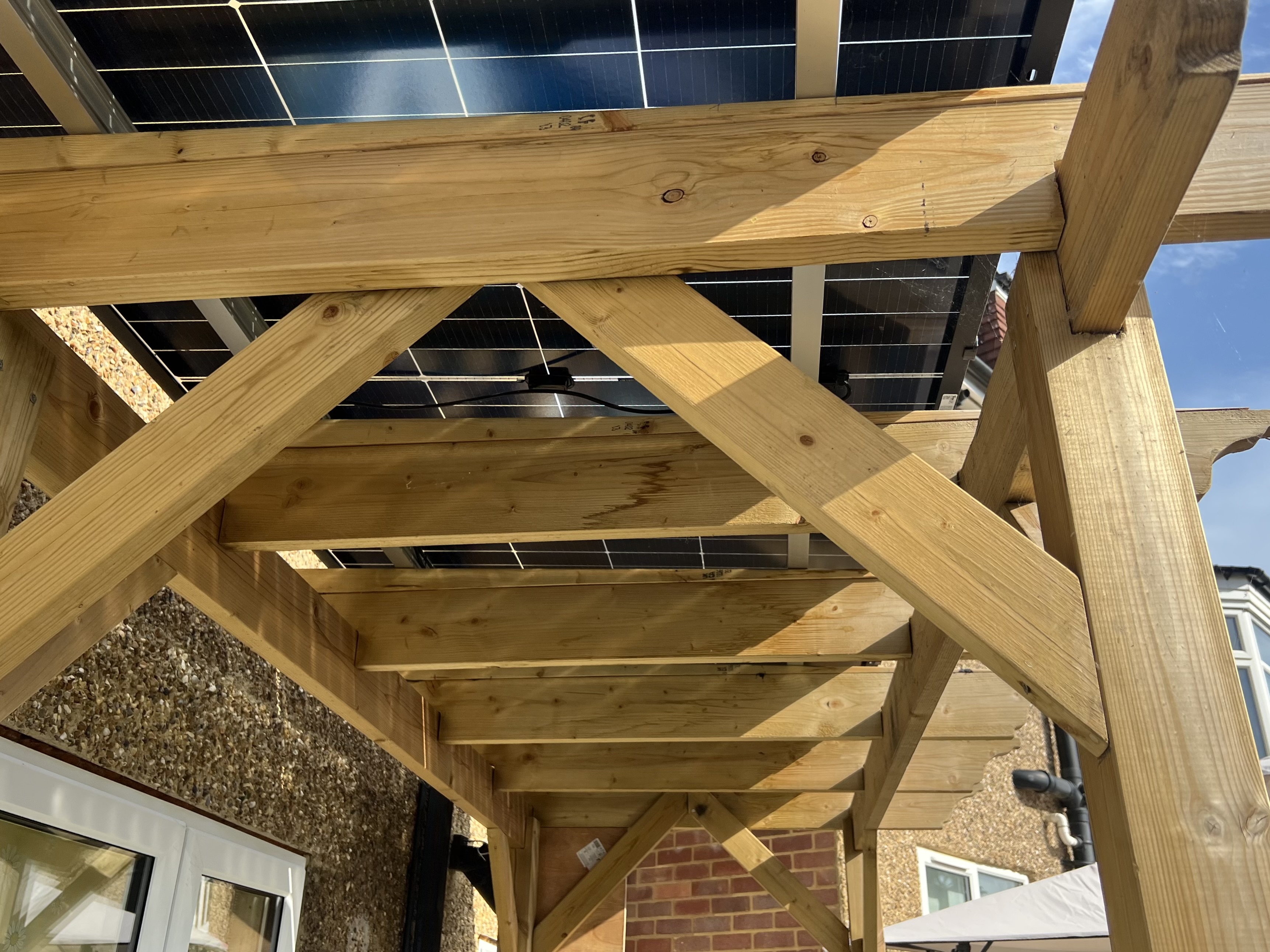
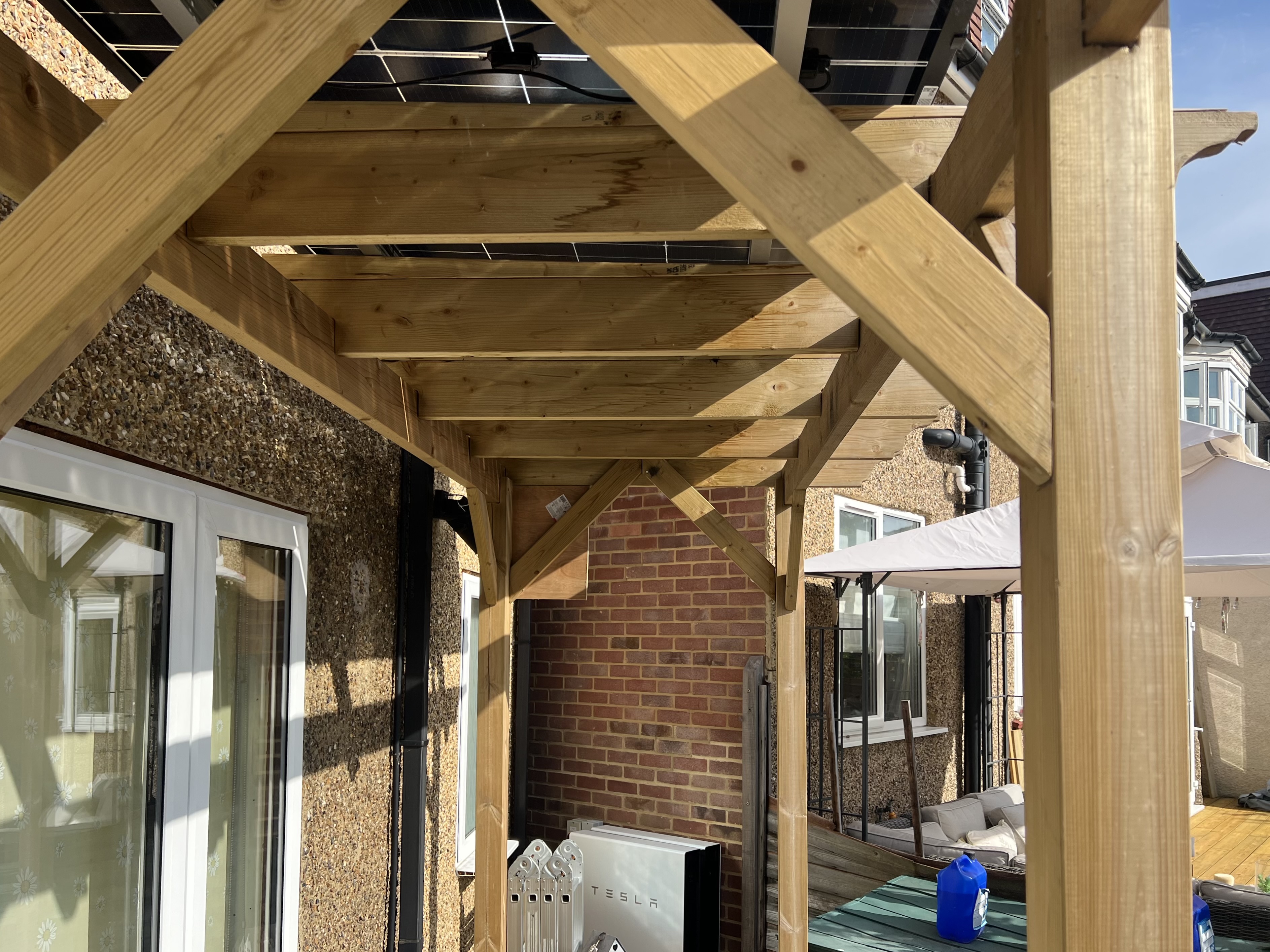
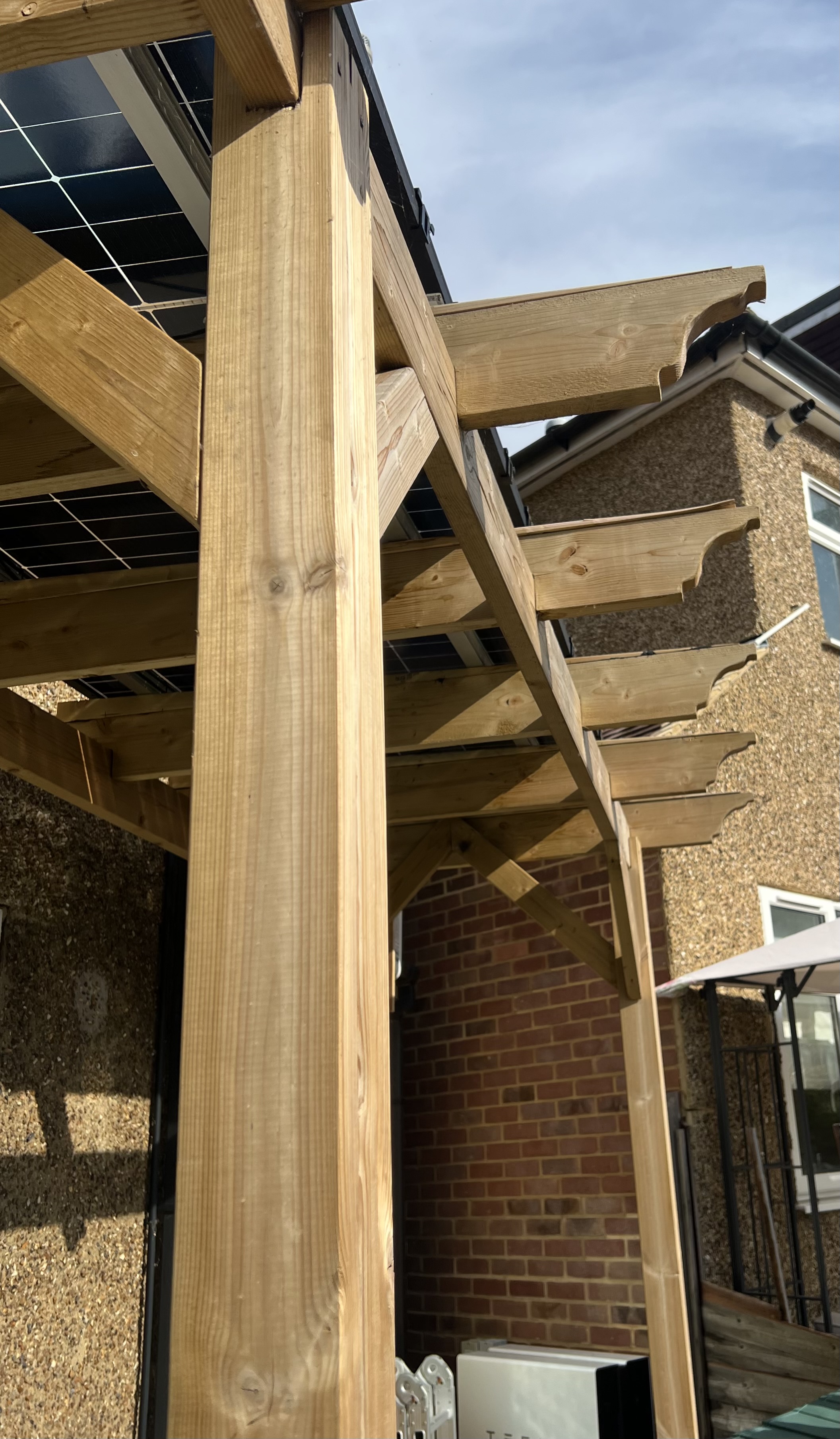
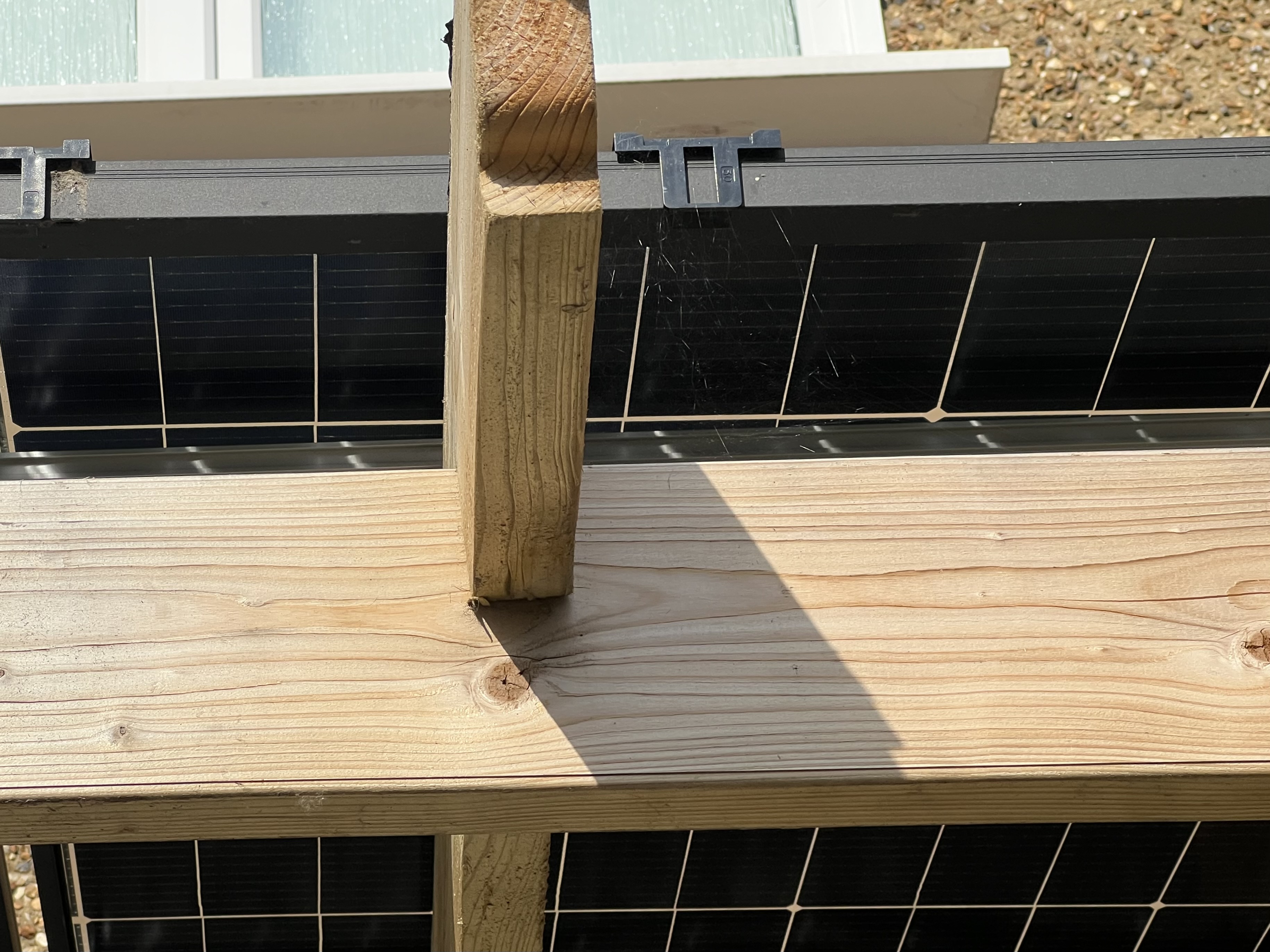
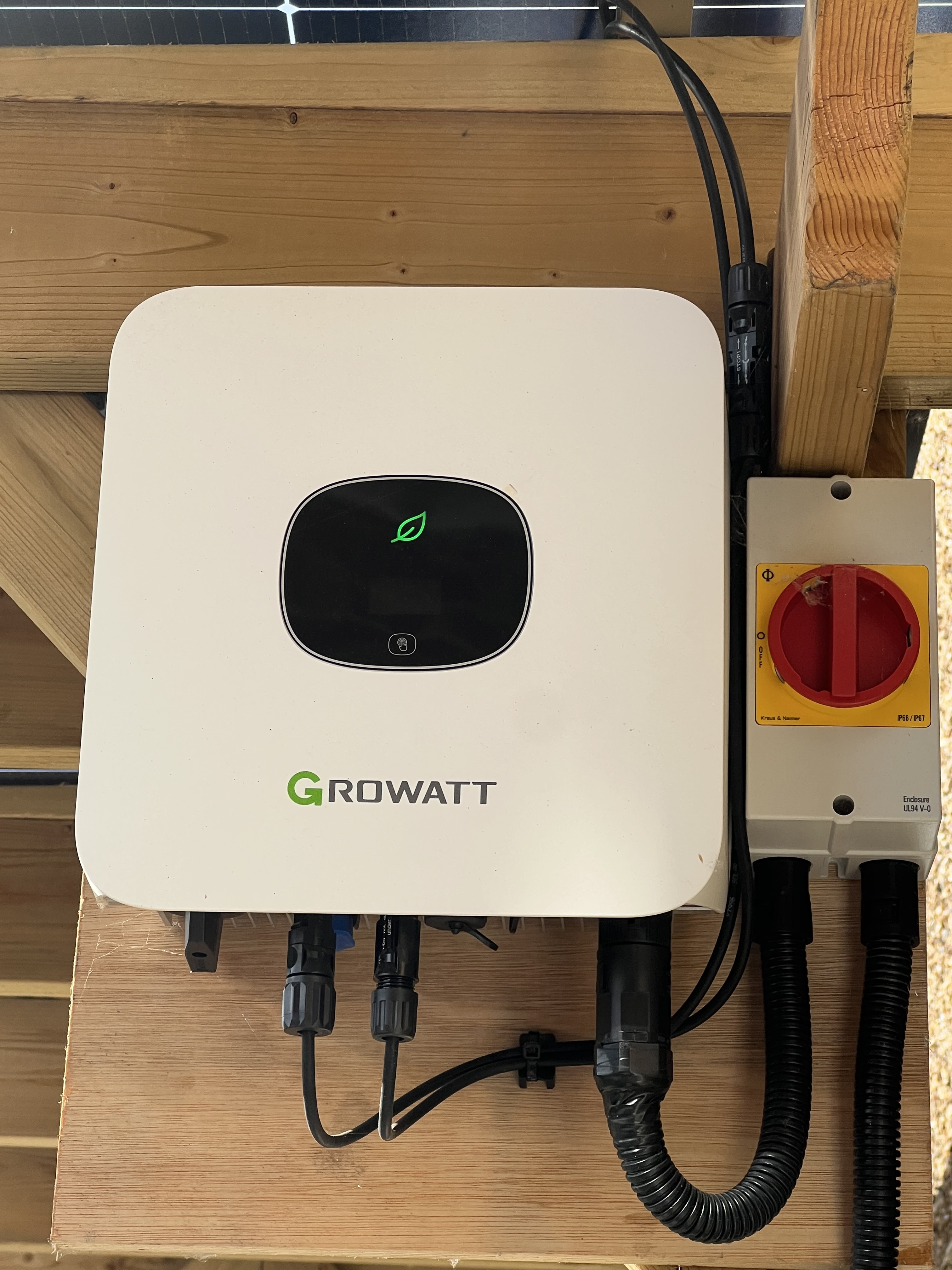
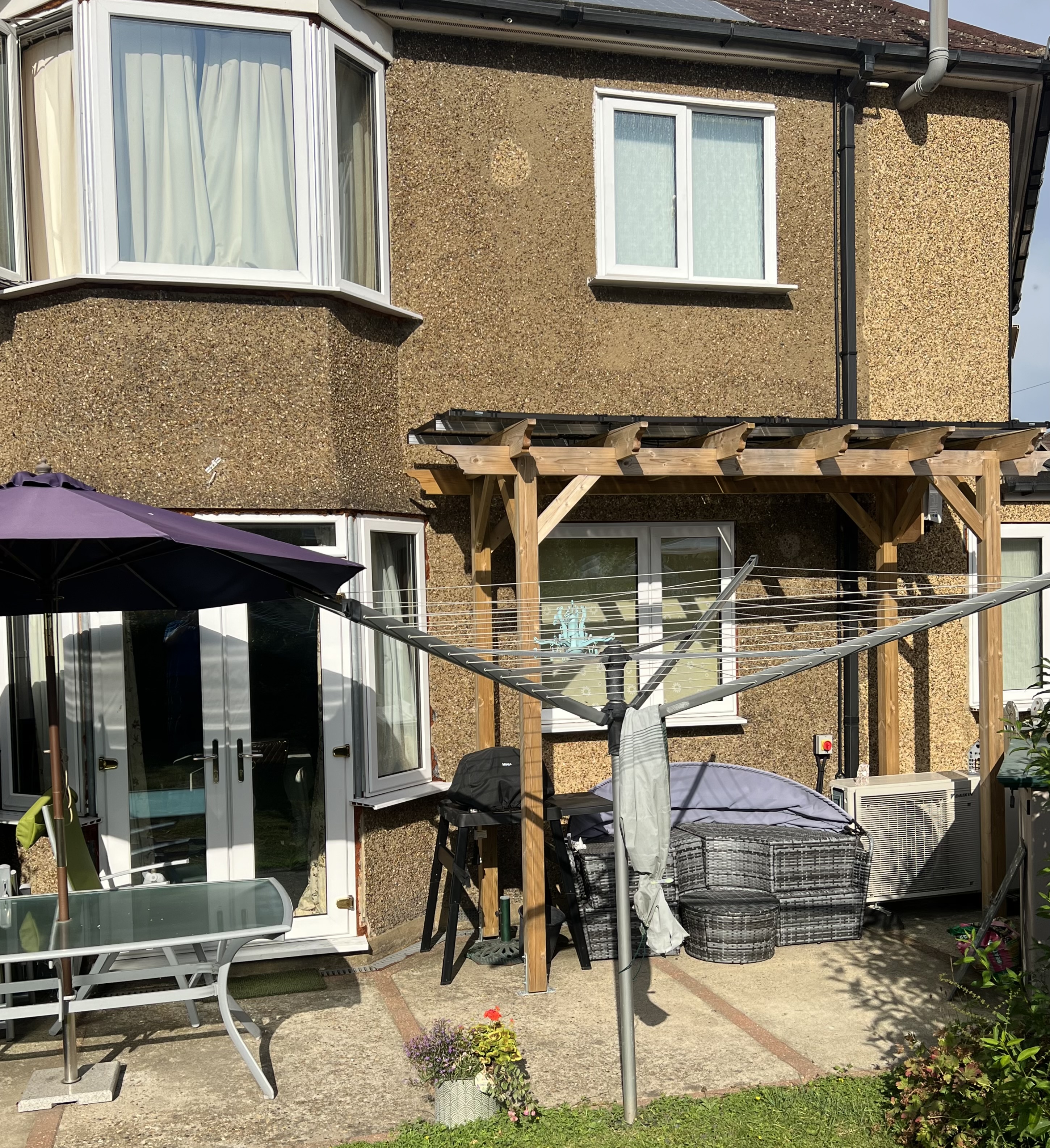
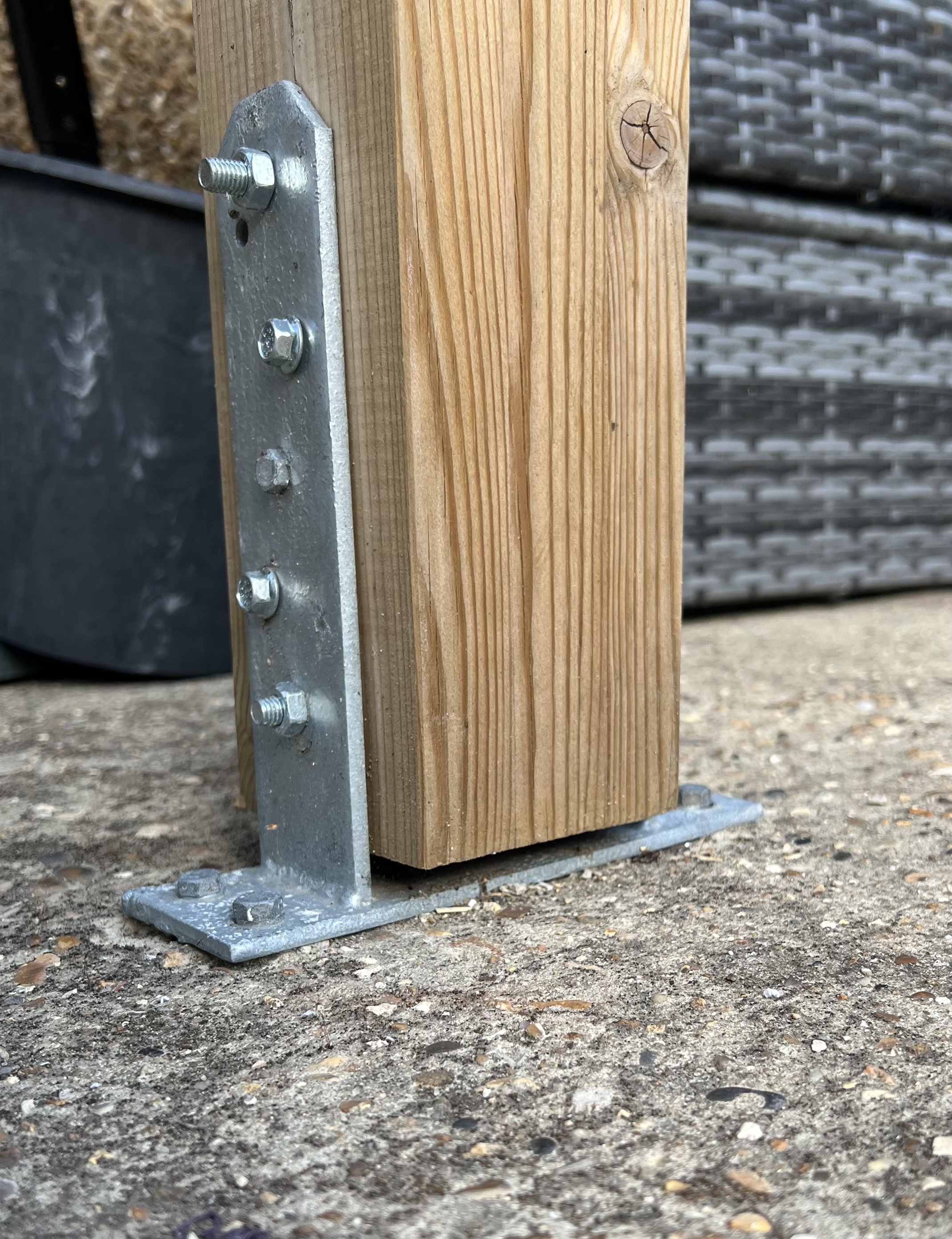
The aspect is WSW, so even with the pergola we get late evening sun. These last few days that has been a problem and I will need to incorporate some vertical shading in due course. Meanwhile the other rooms are my priority.
If I didn’t have a bay window at the back I would have extended the pergola to the full width of the house.
A general rule for shading in the UK is nothing to the north, vertical to east and west, horizontal to the south.
Oh, very nice. Good job.
Thanks, that’s really helpful, esp with photos of the detailing. Good to know such a thing can look good.
The back of our house is also WSW, but flat, so a shade could go full width over patio doors & kitchen window.
1 Like
Remember to plan in the stand off from the wall. This prevents thermal bridging, makes snow bridges less likely and allows the wind to escape on a blowy day, rather than blow away your roof!
I forgot to show it from above.
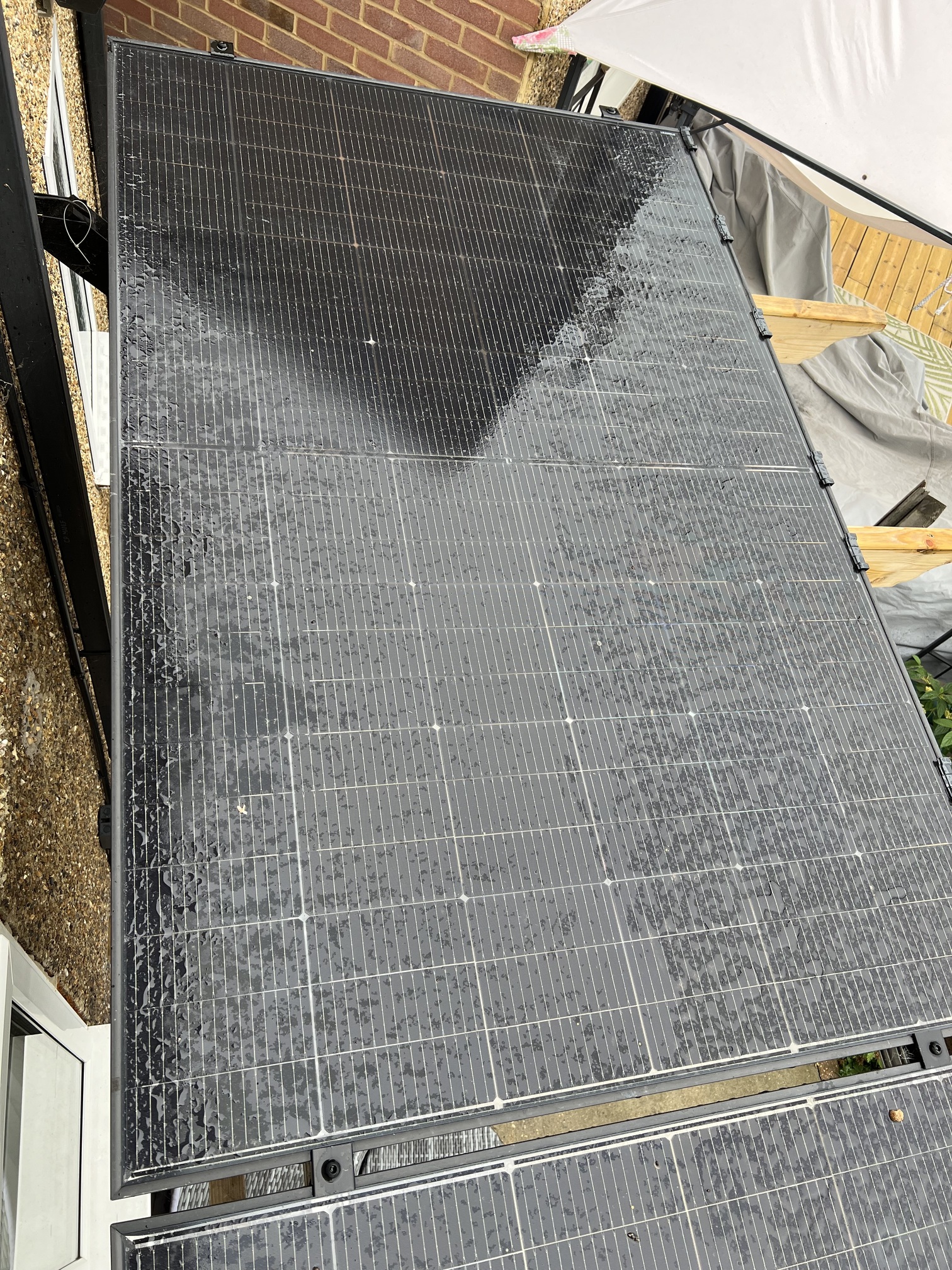
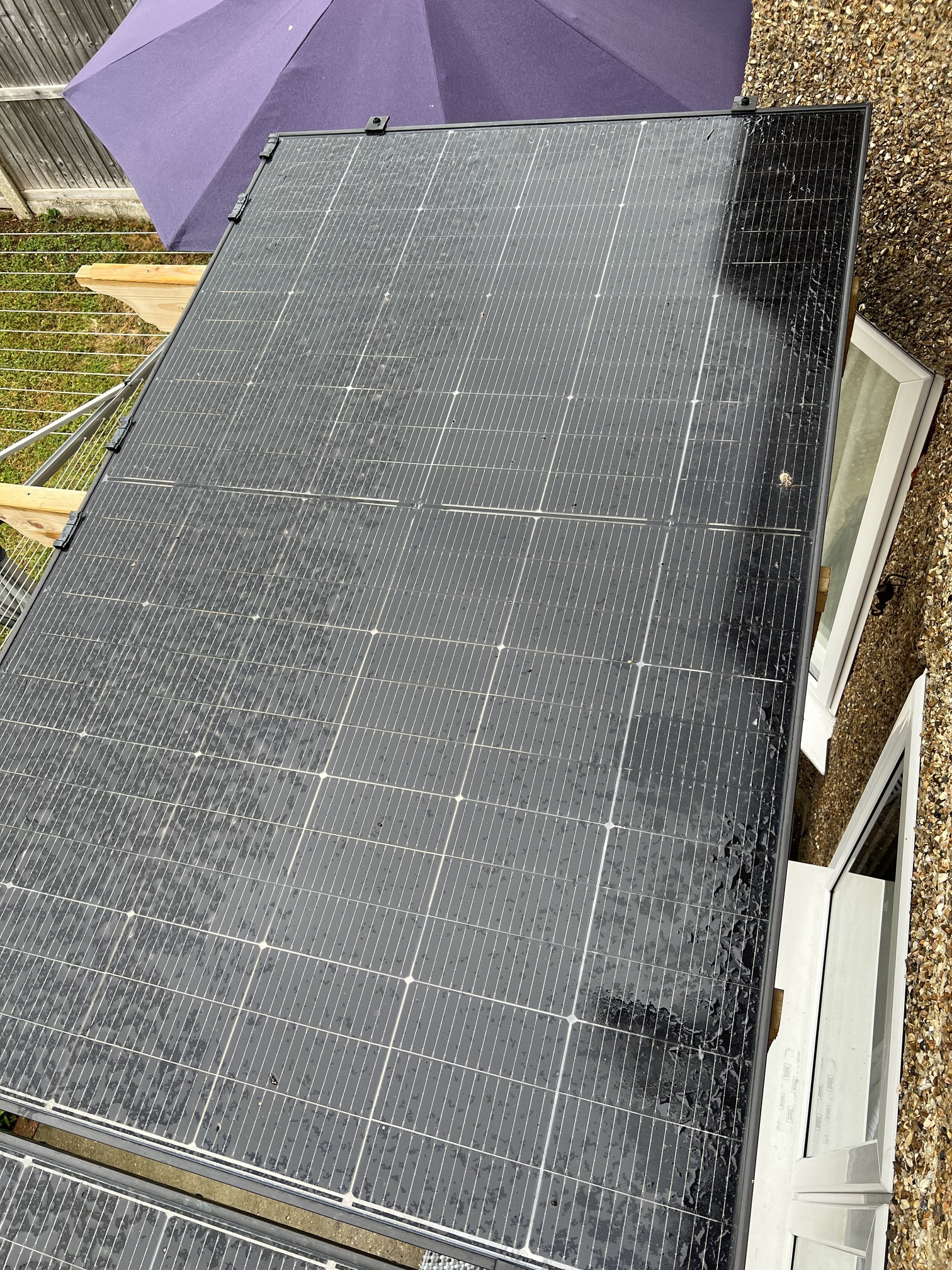
As you see it’s raining a bit today.
This afternoon the sun is shining and the view isn’t obscured by drying laundry, so I took another photo, showing the area of shade. During the afternoon the area of shade moves across the wall but as the pergola is much longer than the window, the window remains in the shade until the sun starts sinking towards the horizon. At that point in a heat wave the kitchen starts to warm up and we lower the internal blind, but external shade would be better.
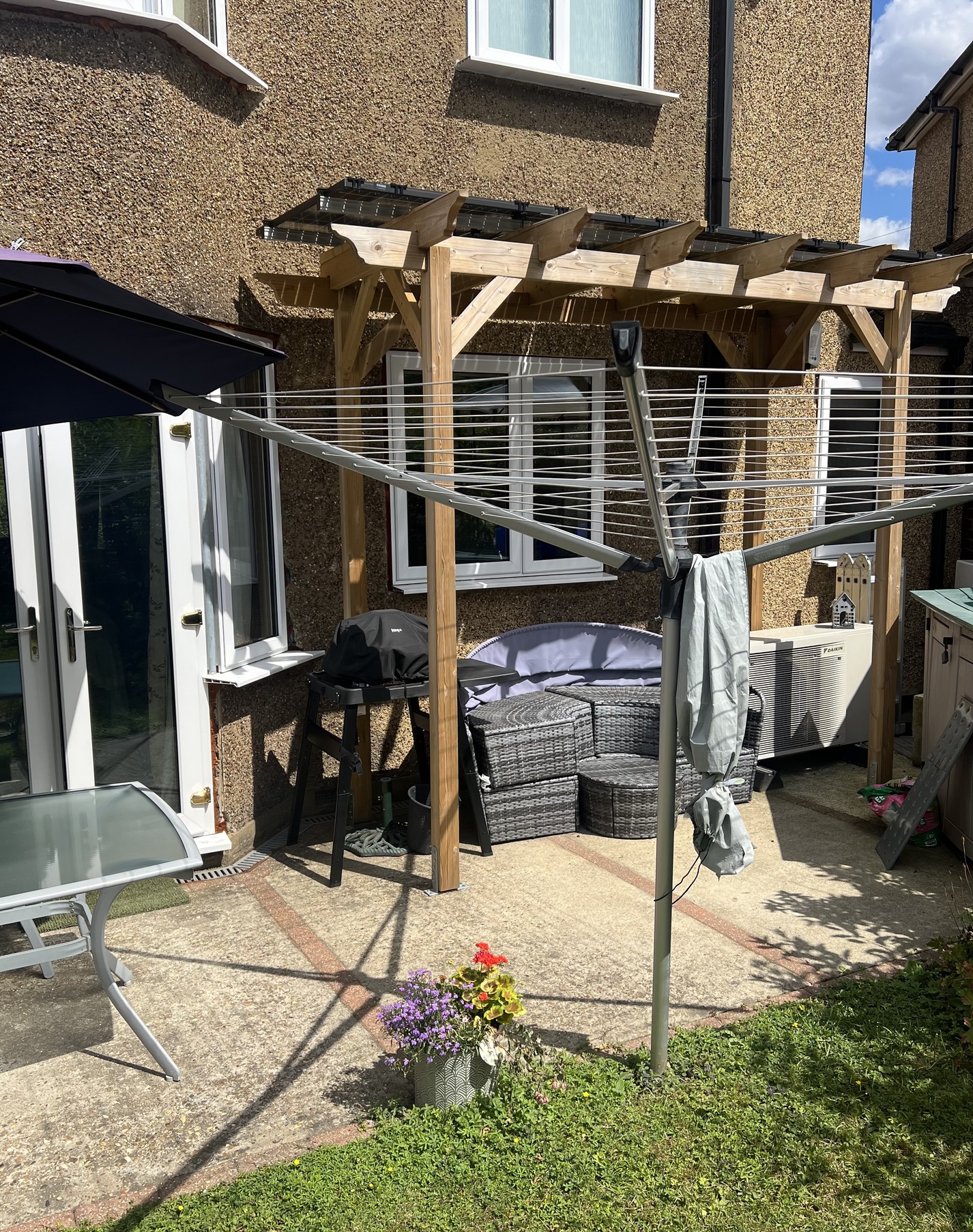
Notice too the large number of drainage clips. Near horizontal panels don’t drain well and I just used a whole packed on the two panels to make sure that pooling water didn’t lead to algae, moss or sediment forming on them and reducing PV production.
I found this article, which may be useful.
On the theme of overheating I came across this fascinating podcast about trials of cool roof passive cooling in Burkina Faso.
If you think it’s hot here, spare a thought for these people.
Cool roofs: homes fit for a hotter world
When Science Finds a WayAs rising temperatures challenge vulnerable regions, could ‘cool roofs’ be the affordable, sustainable solution? Alisha joins Dr. Aditi Bunker to talk about the remarkable health benefits uncovered in Burkina Faso’s trial, hearing firsthand accounts of how this simple intervention significantly reduces indoor temperatures, lowers heart rates, and improves overall health. When Science Finds a Way is brought to you by Wellcome, an independent global foundation that supports science to solve the urgent health challenges facing everyone. For more information and podcast transcripts visit When Science Finds a Way | Podcast | Wellcome
Listen on Apple Podcasts: >Cool roofs: homes fit for a ho…–When Science Finds a Way – Apple Podcasts
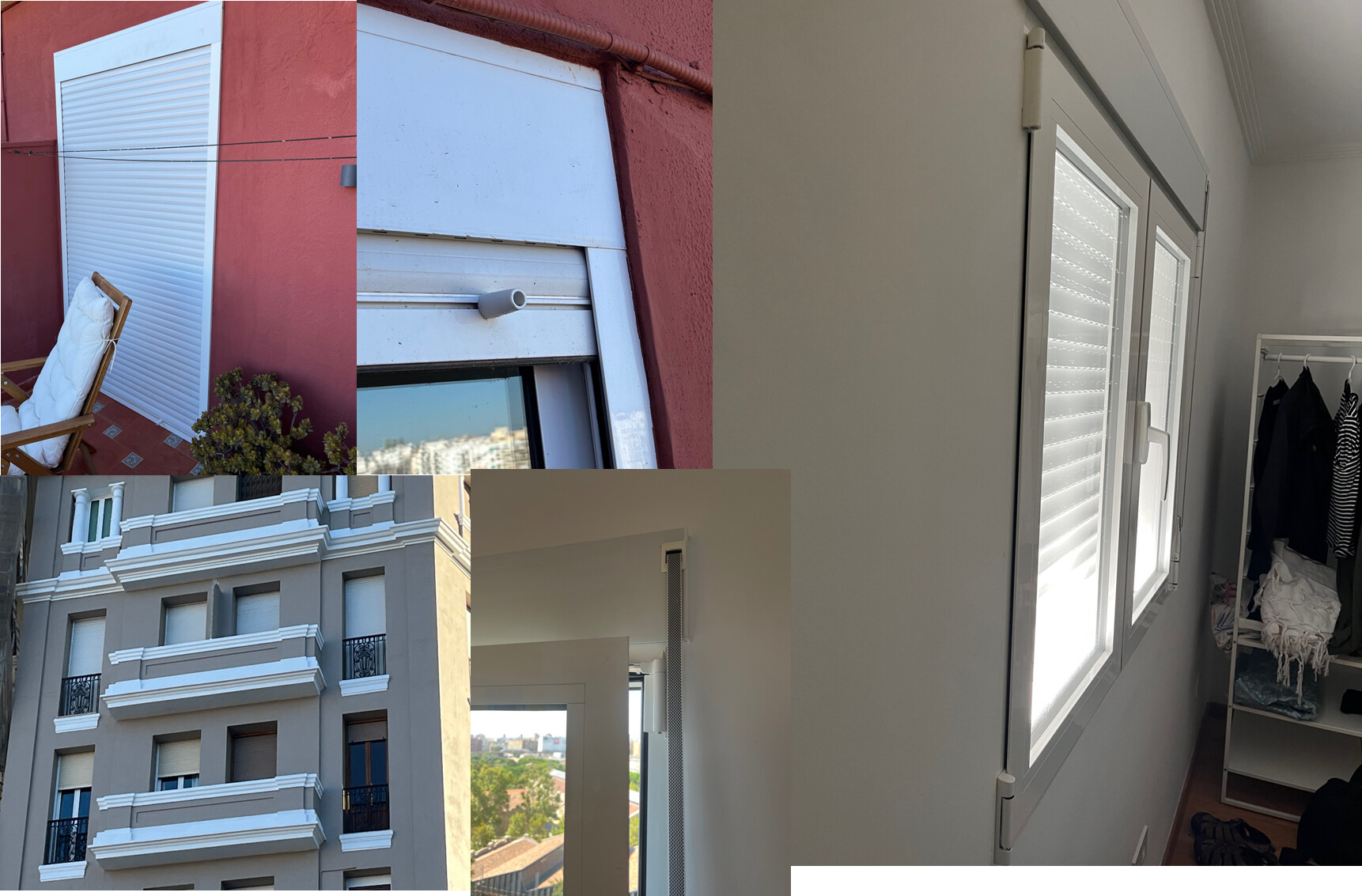
There is such a thing as a Passivhaus certified external shutter.
The problem is that they aren’t available here. You would have to privately import.
Shade the UK, shadetheuk.com, is a partner in research on the lived experience of heatwaves, named Heat Risk Delivery Plan (HRDP).
I was interviewed about my experience, thoughts about what can be done at household and local government level and what I have seen of the effect on vulnerable groups. It was very interesting and what was scheduled as a half hour interview lasted 45 minutes. Technically I am in a vulnerable group based on my age but I don’t think of myself that way.
When anything gets published I’ll add comments and links to this thread but don’t hold your breath, these things take time.
If you are thinking about external shading or other measures then this is a good time of year to get it done. Winter is knocking on the door and providers of such products have shorter queues. They may even be offering discounts to help with their winter cash flows.
Remember, once your home has overheated it’s much harder to get the temperature down than it would have been to stop it doing so in the first place.
Something to watch out for in relation to patio doors and tall glazing generally:
I watched a very good webinar by Sally Godber at WARM who gave the example of a school which had lots of south-facing glazing, generally with good shading. Summer afternoon sun only catches the bottom edge of the full-height glazing. But the sun heats up the air/gas between the panes, which by convection quickly rises to the full height of the pane, so that the whole glazed unit becomes a massive hot radiator, neatly by-passing the shading.
A good point. In fact full length or tall glazing has another issue. I read an article a while back, unfortunately I’ve forgotten any reference or link, that said glazing below about waist height added negligible extra illumination but maximised overheating in summer and heat loss in winter.
1 Like
A related q.: my partner finds 24hr running of heating has been having a dehydrating effect, on skin and eyes. (This is low-flow-temp running, from our gas boiler, room temp 20degC in main room, less in bedrooms etc - I’ve been experimenting, for researching possible heat pump.) So how would we/she live with a heat pump, which runs day and night? Anyone any experience of this problem?
No experience, but humidifiers are widely available and are used in bedrooms in particular for just this reason.
What sort of ventilation does the house have?
A single dMEV in bathroom, constant-running, increases rate of extraction when (additional) steam/ humidity detected.
Surely that isn’t the only ventilation. I’ll assume trickle vents and/or airbricks plus unstopped draughts.
In a well ventilated house in winter kept at 20°C and outside temperature at, say, 2°C, a part of the air in the house was recently outside. That air will carry the water it contained, as vapour/humidity.
Air at 2°C and relative humidity (rh) of 90% contains 0.005kg/m³ of water. That same amount of water at 20°C is only 28.863% rh, which is very dry. The recommended humidity for habitable areas is 40-60%. Unless the household is generating a lot of humidity you can see that ventilating leads to extreme drying of the air. The colder the outside air the greater the effect. The indoor humidity needs to be increased to at least 40%rh to enable comfortable living. It seems counterintuitive but you could direct bathroom humidity into the rest of the house. Likewise don’t use the kitchen extractor when boiling food.
As has been said above you may want to use a humidifier or two. Passive radiator mounted humidifiers may not function very well with low temperature systems so a more active solution may be needed.
I find the situation a bit odd. We have a heat pump, A2W, with the house kept at 21°C 24 hours a day. We have whole house centralised MVHR, so more ventilation than you. The average humidity indoors (as measured by the MVHR system) is 54%, at an outside air temperature of 6.8°C and rh of 78% after doing some cooking. At 09:20, before preparing Sunday breakfast or any showering, I see that it was 42% with outdoor temperature of 3.8°C and rh of 82% so still within limits.
1 Like