Retrofit project planning starting with underfloor insulation

Very belated response, Tim. But do you need a 150mm reinforced concrete slab? I see from your sketch that it’s founded at much the same level as the walls, which presumably don’t contain reinforcement. I’m assuming you are not trying to span over old well shafts, or something.

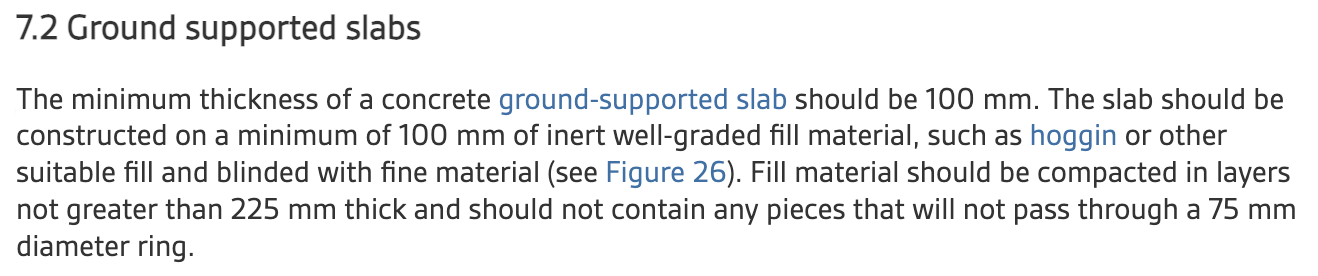
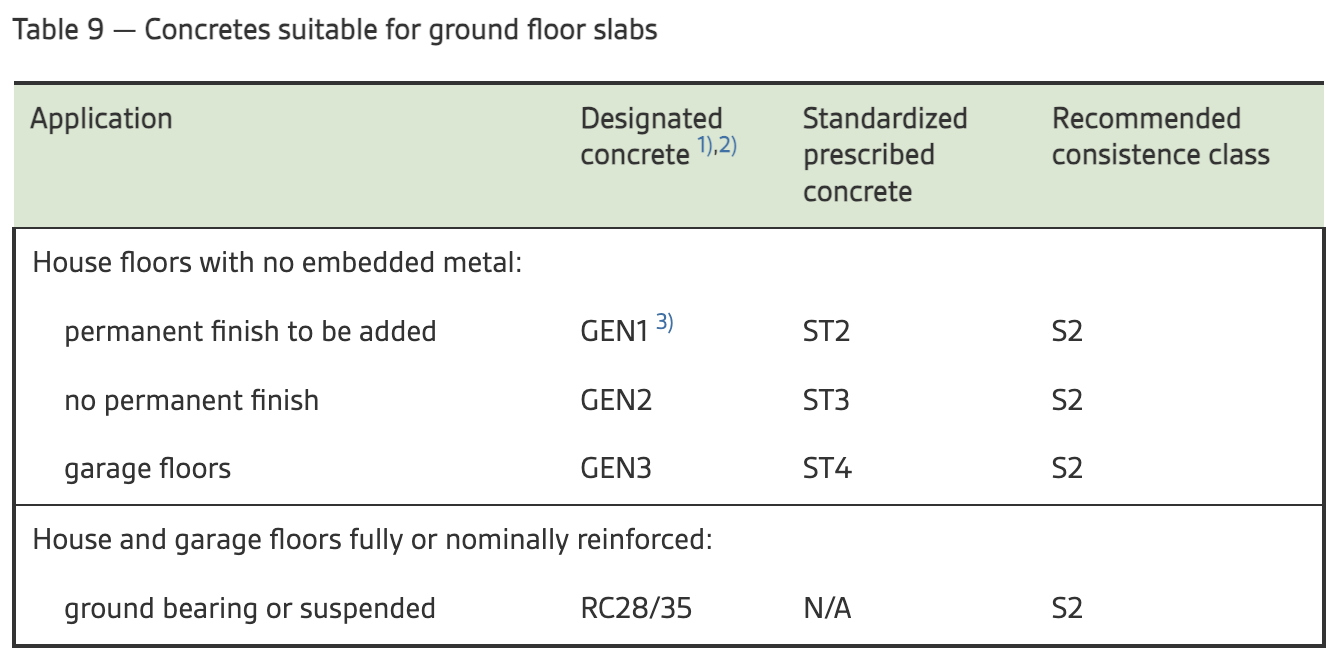
Building Regs refer to BS 8103-1. Here are two snippets:

In other words, unless there is a special reason to beef things up, 100mm unreinforced concrete should be fine and would save you some cost and carbon. Worth noting that the limecrete slab of Ty-Mawr’s Sublime insulated floor is also 100mm thick. They had LABC Registered Details approval but that system seems to have been terminated. Even so, Building Control raised no objection to my proposal to use it my house.

1 Like

When I had an extension built some years ago it was found that the new built area had some voids, old drains and a well underneath. Maybe I should have excavated the well for siege resilience. After all, an Englishman’s home is his castle.

Under the circumstances I’m happy with 150mm!

1 Like

That makes sense.

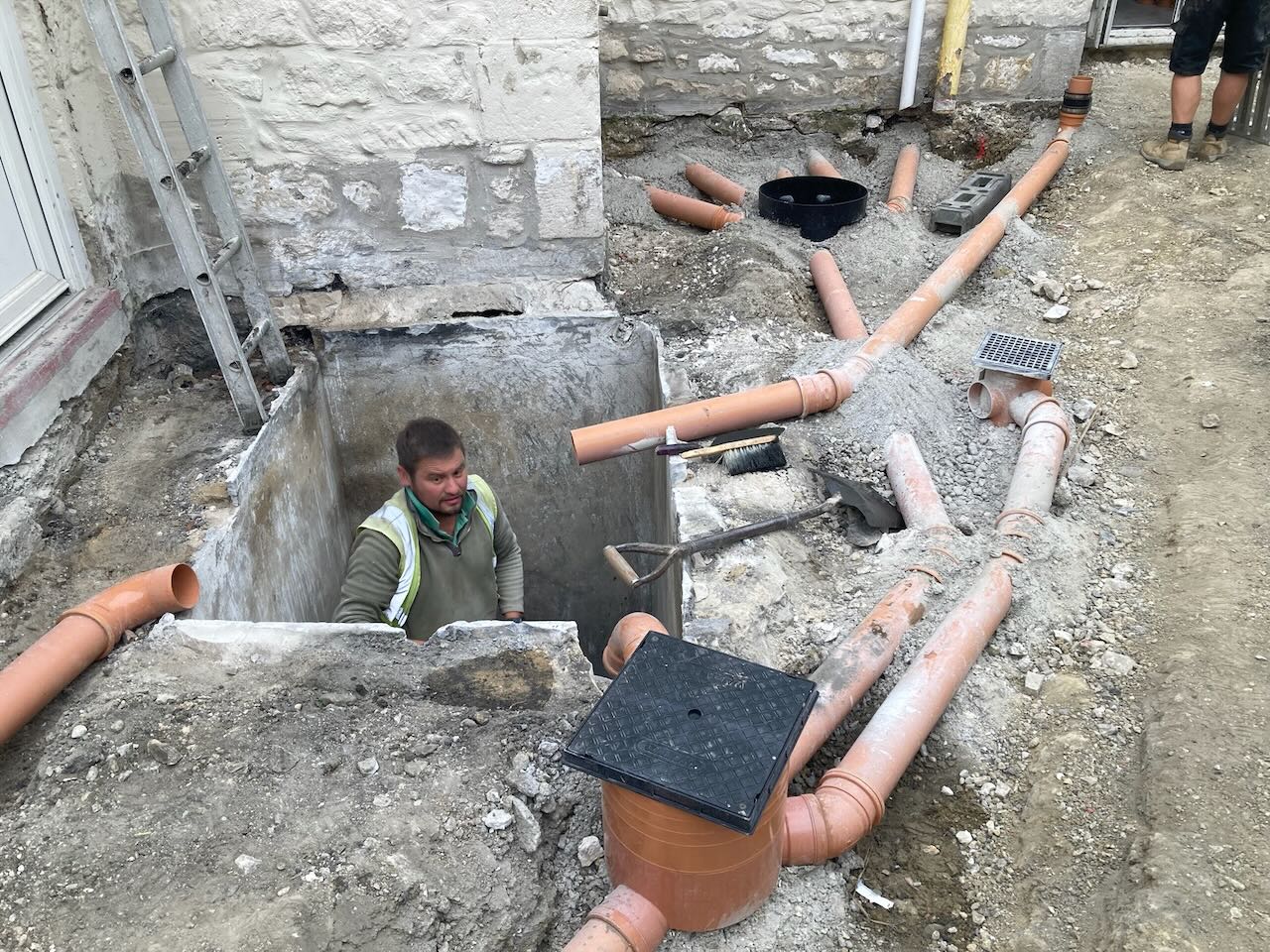
Speaking of wells, refurb of my own, late 1890s end-of-terrace is under way at last. No well has been found but the biggest surprise was a 6 foot deep, infilled rainwater cistern, one edge of which sits just under the main house wall. Did they build it in the wrong place? Did they change their minds and make the kitchen a bit bigger than they had originally intended?

Anyway, it is still in good condition so we cleaned it out and will install a pump and use it for garden watering. Usable capacity is upwards of 2000L and last week’s rain filled it to overflowing. It would have plenty of capacity for flushing WCs. But we will have low-flush appliances and don’t use the washing machine much, so it doesn’t seem worth the cost and complexity of the plumbing.

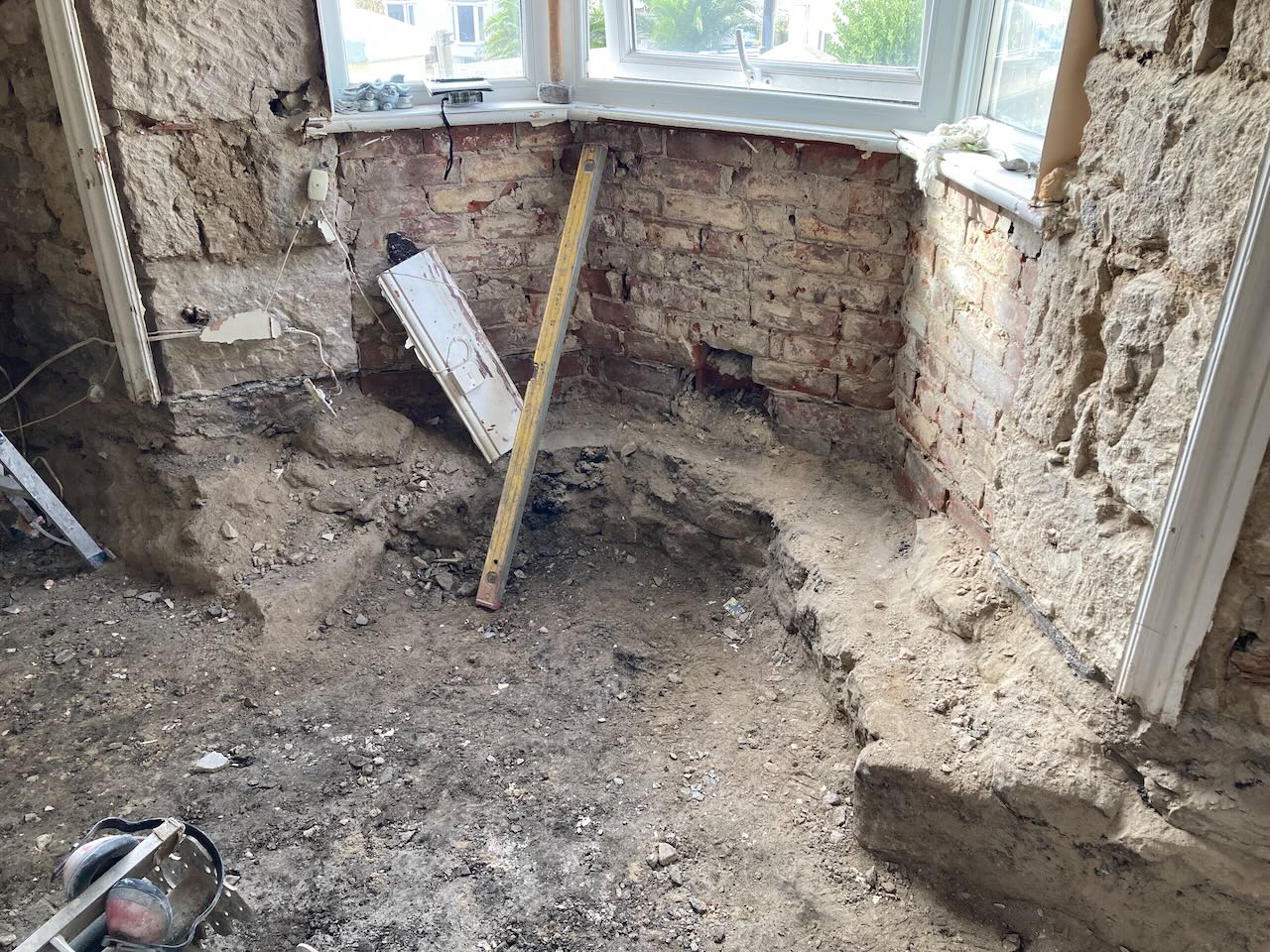
On floor insulation: rather than plastic boards we will be using recycled foamed glass aggregate, Glapor. It’s eye-wateringly expensive but one benefit that has become obvious as our builder excavates the floor relates to all the ragged edges of the existing wall bases and foundations. If we were using PUR boards, there would be some combination of scribing the boards to the walls and squaring off the walls themselves. With the Glapor aggregate, it just fits itself to the profile of what’s there.

Conductivity is poorer than PUR. The Glapor will be 270mm thick rather than, say 100mm thick PUR boards. That means a lot of excavation. But an unexpected benefit is that it mitigates the thermal bridges at all the edges. To achieve that mitigation with a PUR system, the builder would have to install a vertical strip of the PUR board around all the perimeters, about 170mm deep. It would have to be positioned as close to the wall as the maximum foundation projection allows, and with its top edge exactly flush with the underside of the main boards. All a pain.

I’d love to have access to a builder’s QS who could price all this and see how it affects the overall cost comparison between rigid board and aggregate fill insulation systems. My foundations may be unusually ragged but they’re not unique.

2 Likes

In my design the architect specified a 100mm unreinforced concrete slab and building control was fine with it. Maybe a little more than 100mm on one side as the house is not level.

I actually thought unreinforced would be better as the usual reinforcement metal rusts over time and may reduce longevity of the concrete versus unreinforced. Not that I am an expert… just IMO.

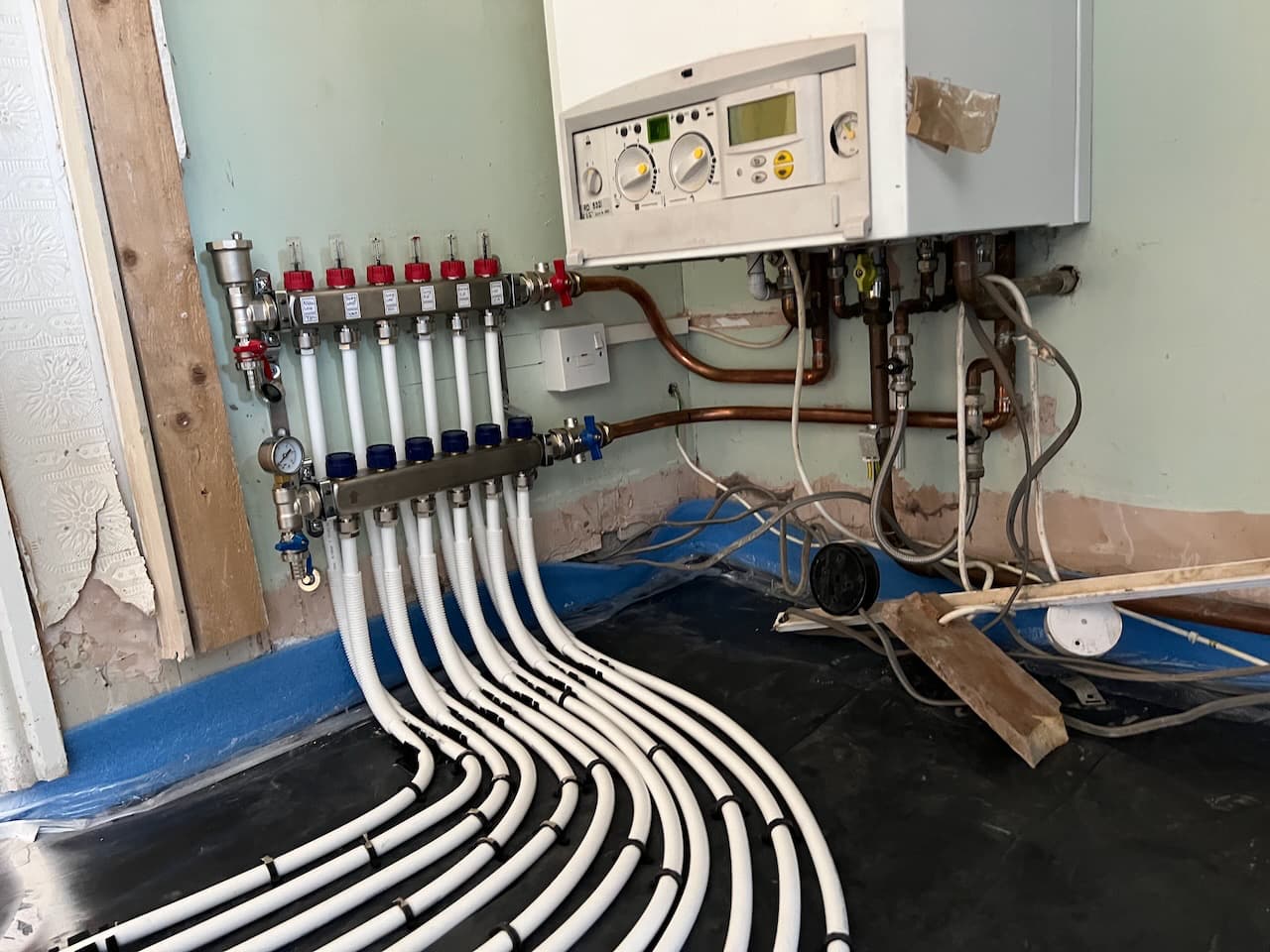
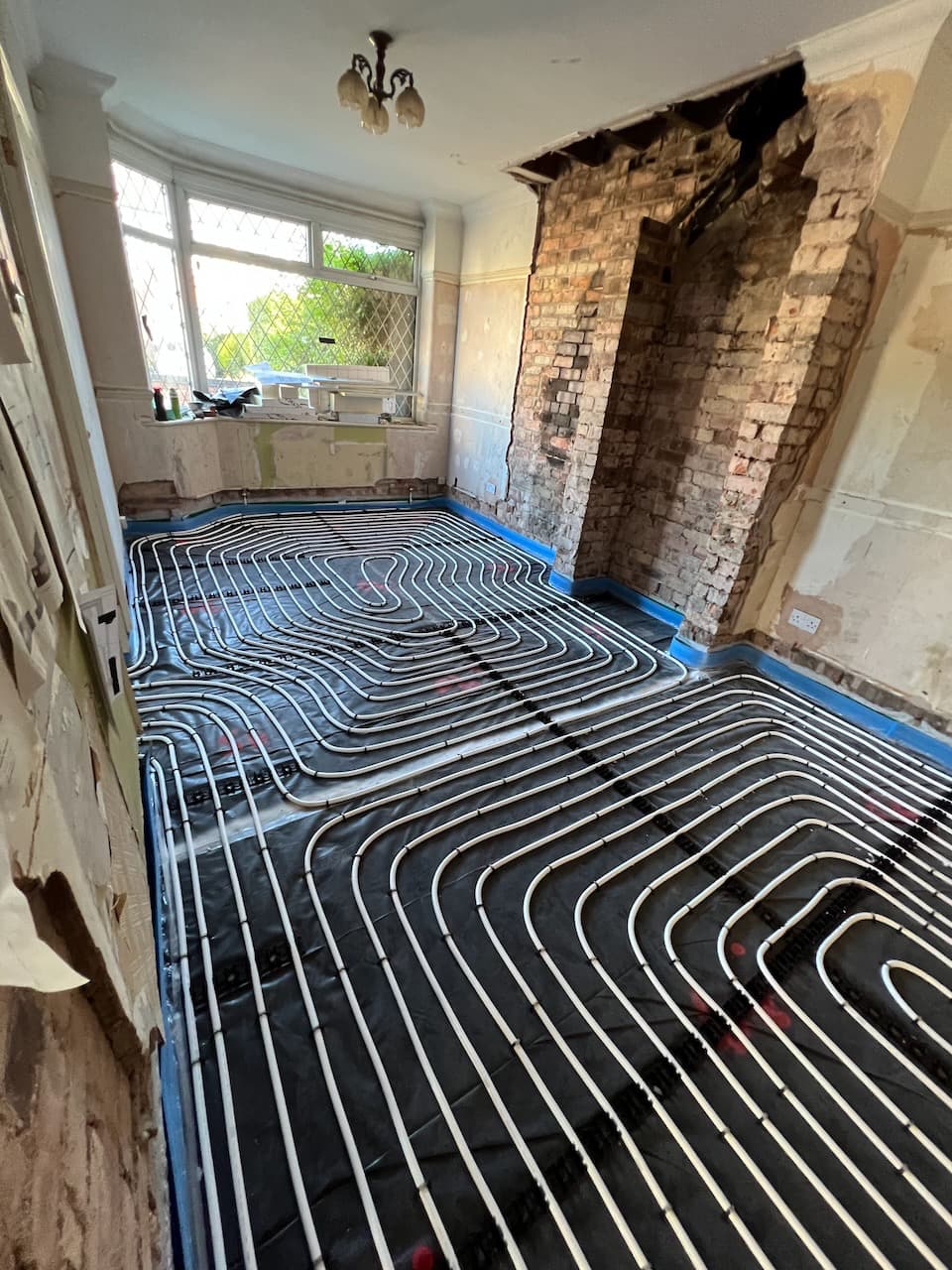
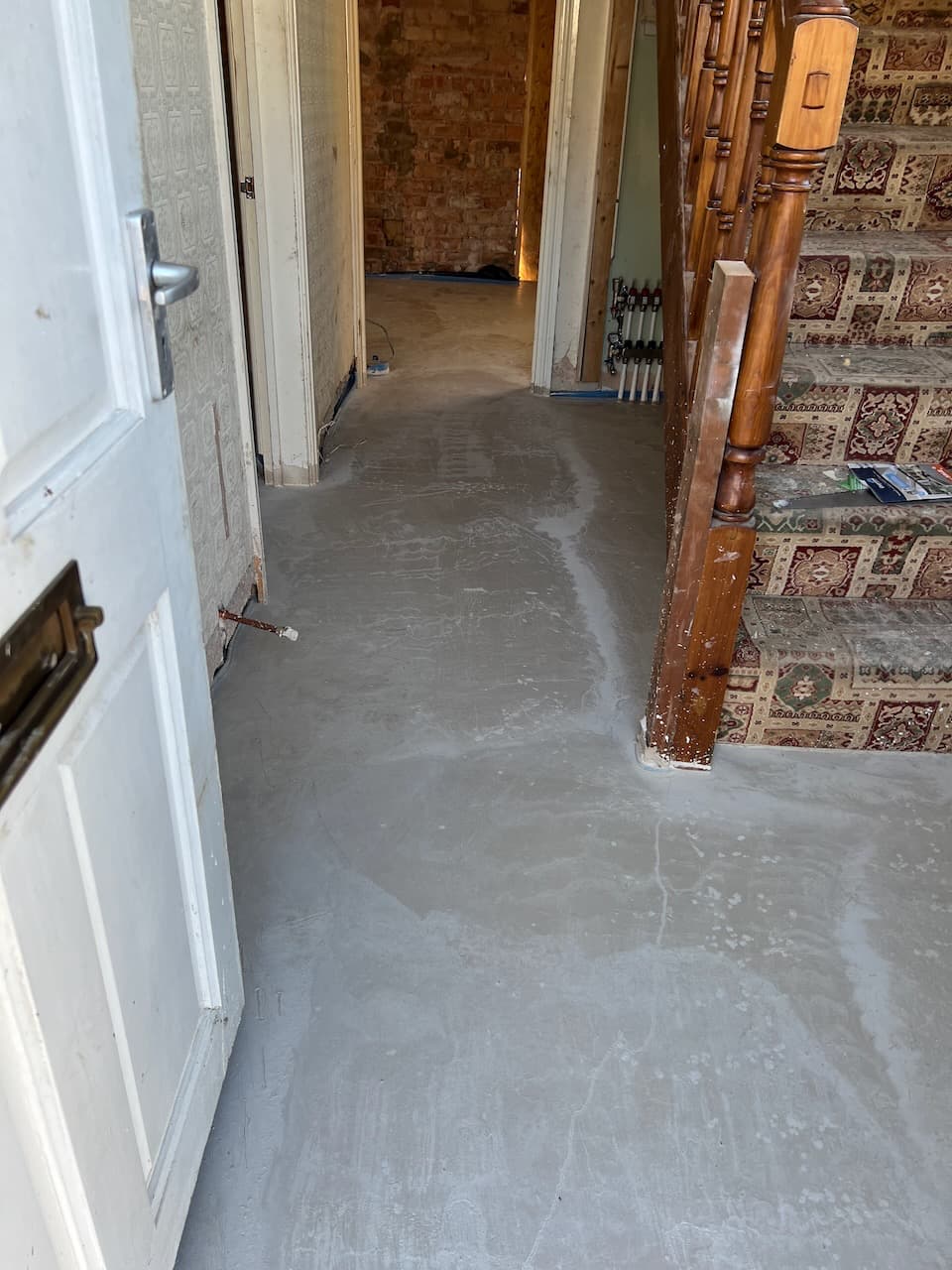
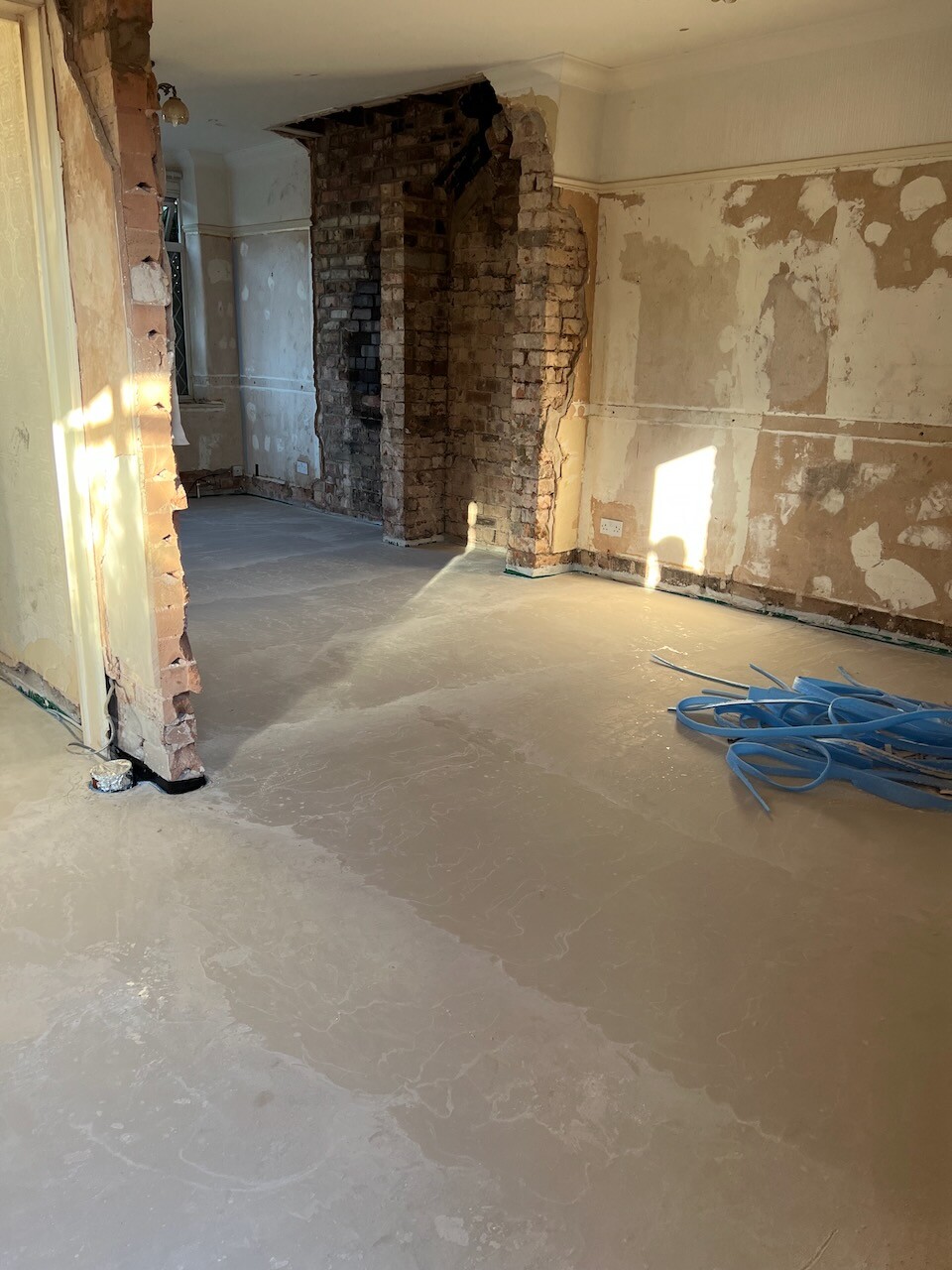
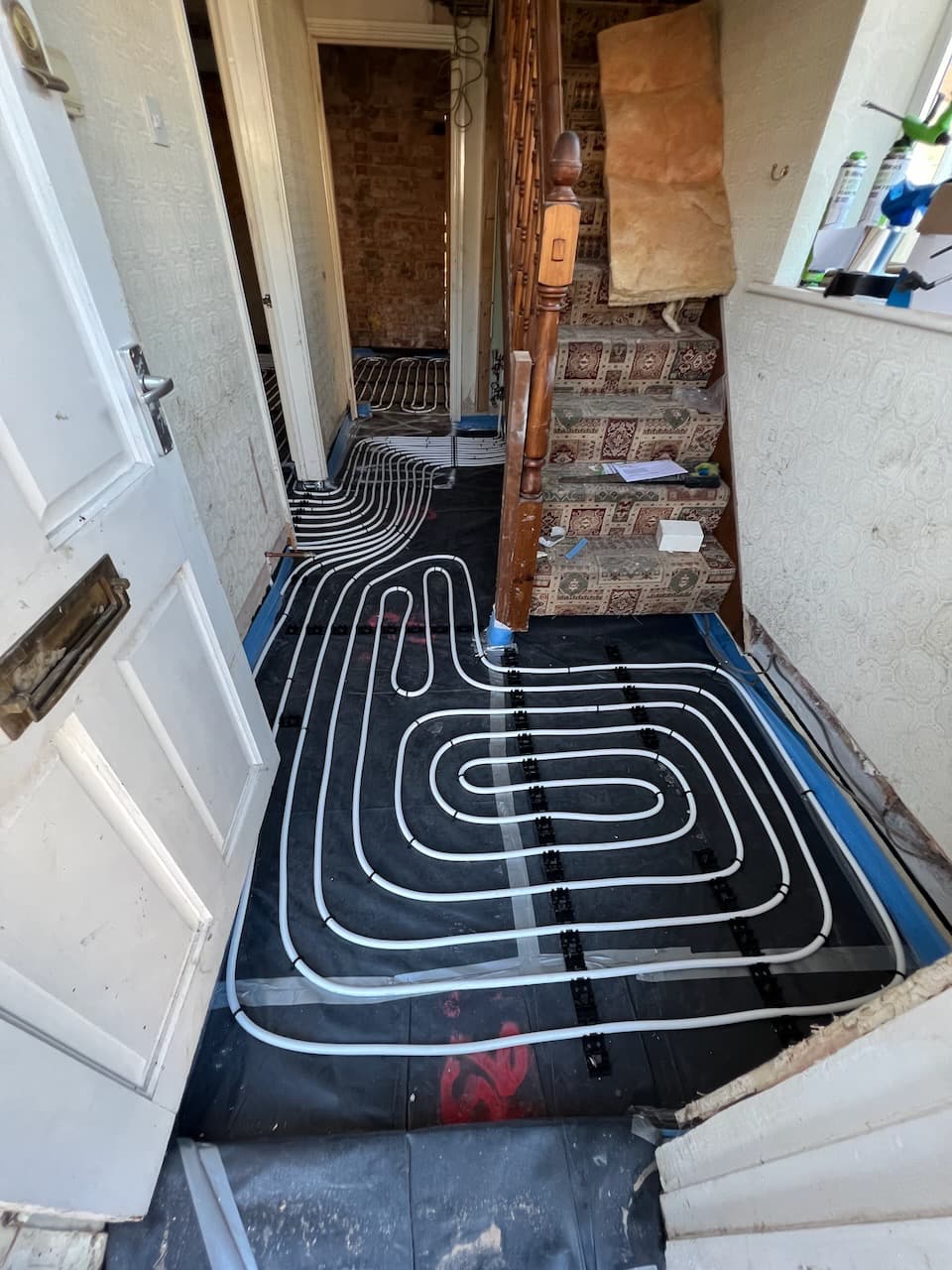
My UFH and screed is in now!! See pictures just for your info.

Does anybody know what material information is important to keep for later or is the building control approval enough?

My challenges on paper work are:
I have the dimensions of the RSJ from the structural engineer calculations, but no details who provided it and what steel it is made of. Everybody who has build before just says it looks like a good one… but no paper work.
I have also asked for concrete mix details for the 100mm slab, but again received no paper work.

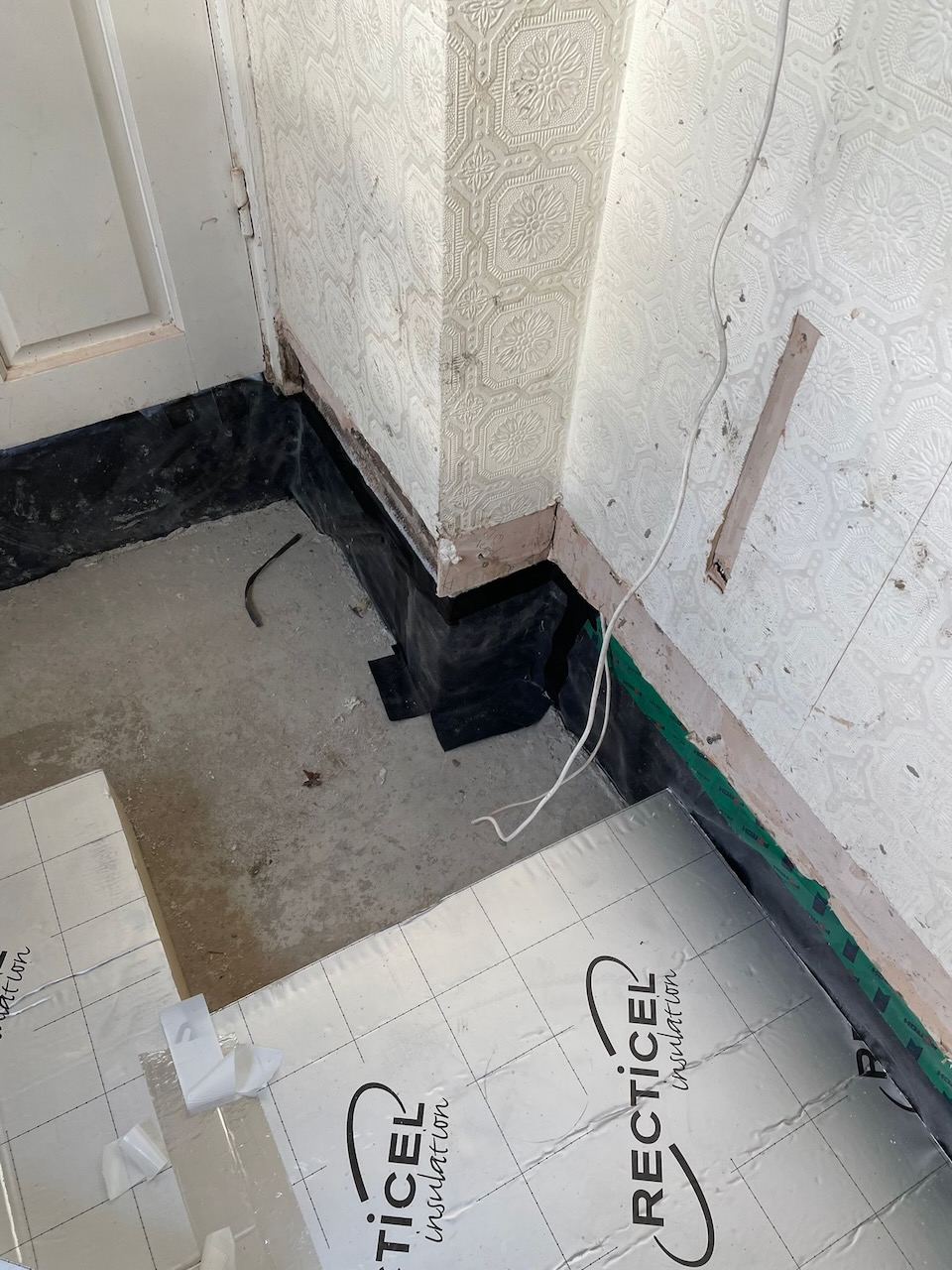
I have seen the 150mm Recticell PIR insulation put in, but again have no receipt for it as it is all purchased through my builder.

Note 1: building control seems to ask for no paper work really when they come around… they just come by have a look and seem to be happy with everything.
Note 2: I am also a quality manager in my work life and maybe I am just asking unreasonable stuff for a home retrofit… I would really like to compile the receipts to confirm what concrete was put in and what steel goes in.
However, my builder is not really good with receipts and paper work and I have to request paperwork he usually orders and puts in just because I want to compile a building file that shows what went in.
He always makes me feel it is a weird thing to ask for paper work… is it weird?

Can you give me some perspective about paper work on a retrofit with a builder? What should I be entitled to get? Thanks.

Without evidence of the installation and extent of insulation and heating you are jeopardising your EPC rating. If the person doing the survey cannot see the insulation or proof that it is there then as far as the EPC is concerned, it isn’t there. Ideally you need a thick wad of photos or the digital equivalent.

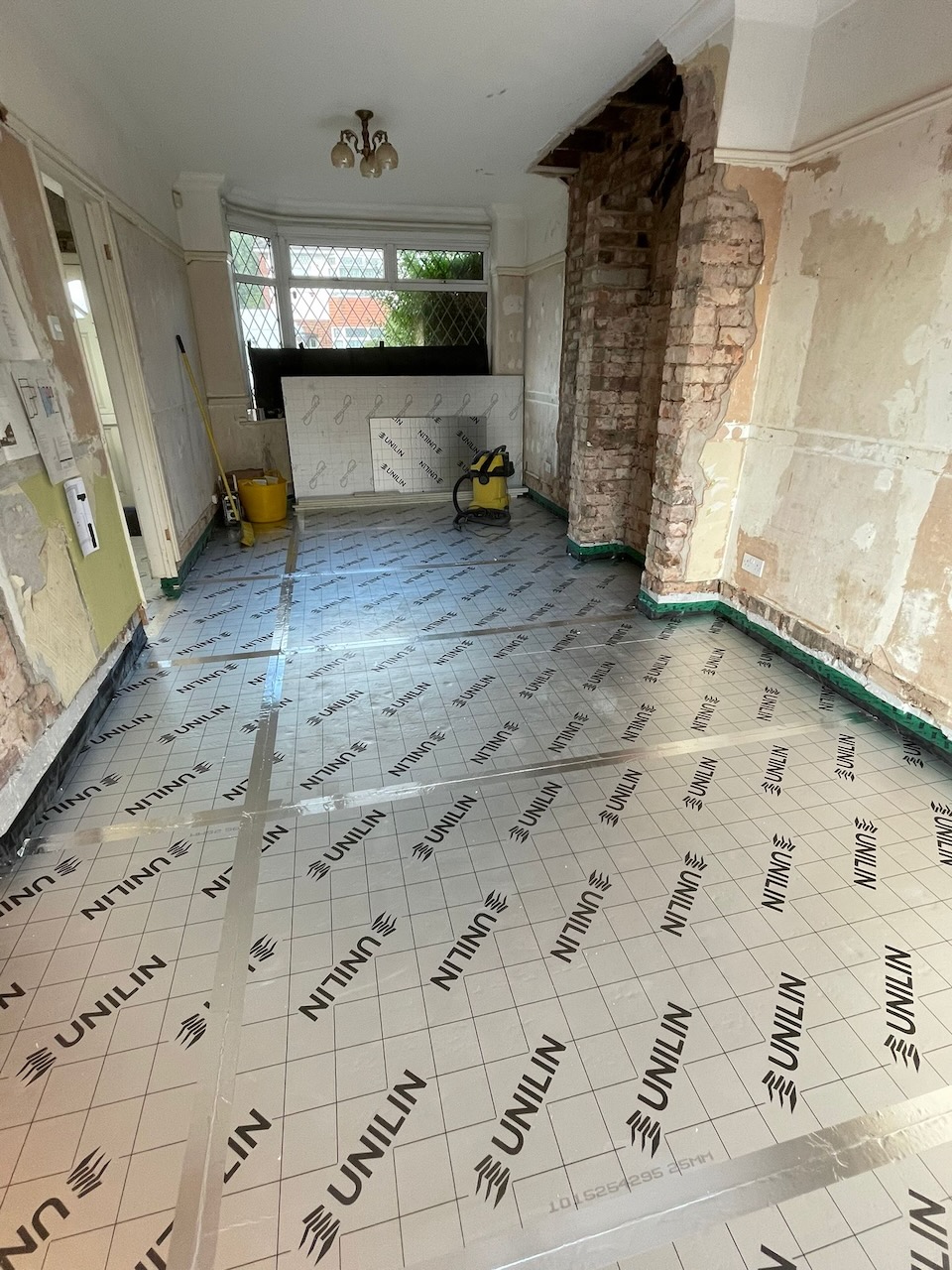
I have quite a few photos including a video and photo from the one hole in the floor where the builder put a timber to hold up the staircase on the concrete slap under the insulation. So this timber has now been removed as the stairs can now rest on the screed.

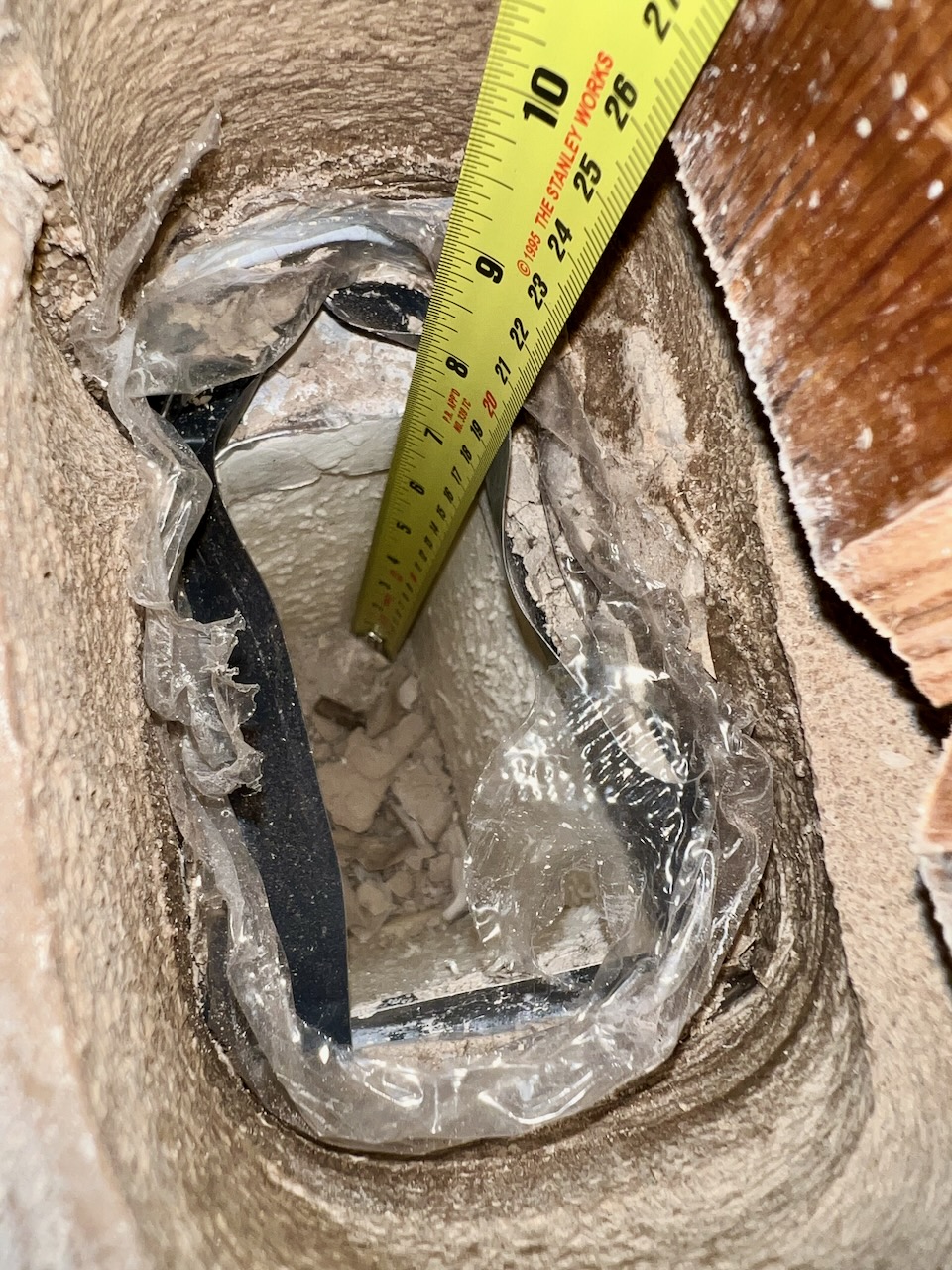
So I did the measurements of the floor layer depth with the floor in place using a tape measure showing the 175mm thickness.

I also got a little movie showing the measurements and I got loads of photos from before any insulation was added including with tape measures.

Do you think that would do as evidence?

@Tim_Gilbert @Russell_Selby

I have a new question for you about the construction of a wall plate over my extension cavity wall.
I am about to replace the existing cold flat roof on my old 5sqm kitchen extension.

The extension has a 50mm cavity wall with bricks as outer leaf and blocks as the inner leaf and the cavity was filled with cavity insulation (beads). Currently the cavity is open and just venting into the ceiling. There is also no wall plate, so that will be added now.

My builder says the cavities in our neighbourhood (built in 1945) are open from the base as well and hence should be left open on top too.

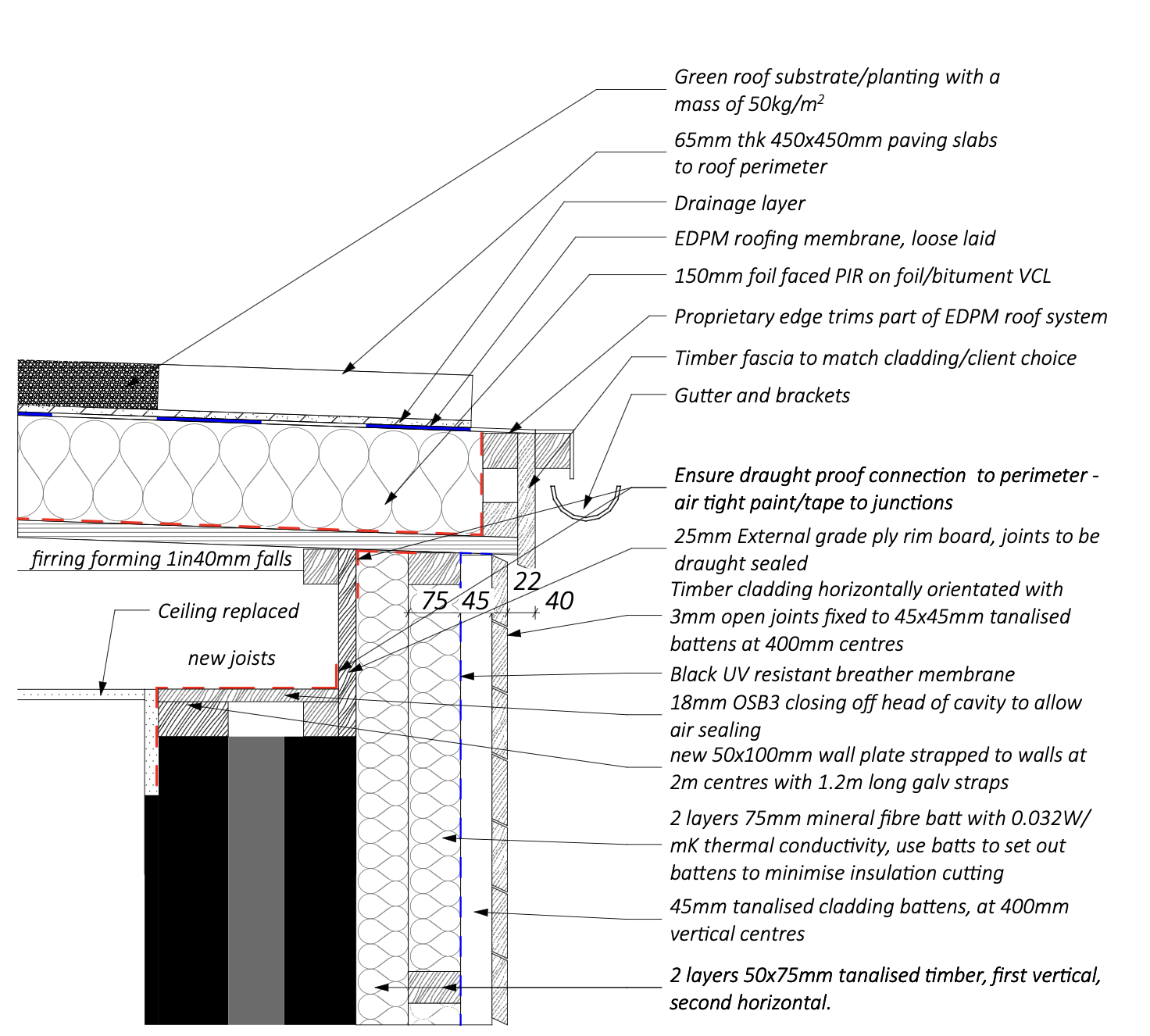
However, as I want a new warm roof, my architect designed the shown set up closing the cavity. See image.

In his design the OSB going over the cavity spanning two wall plates one on each leaf, will make it basically impermeable even for vapour.

Do you think that is a good idea in an old house?

As you can see we are also planning EWI on the outside, but I am still wondering what the best solution here would be.

I haven’t really seen/found any other drawings for a cavity walls with a warm roof on top and how the wall plate would be done. Can you advise?

I am thinking maybe just to close the cavity with Intello Plus and not put OSB over it as well. That way vapour would still get out. Does that sound smart?

Thank you!

EPCs are very dependent on the random assumptions and flexibility of the assessor. You should be fine with that evidence but it is impossible to be sure.

Make sure that you inform assessors about the alterations when asking for quotes and don’t go for a cheep “hardly stopped to look” assessment, which is the current equivalent to the old drive by assessments.

I was think of doing same. Dont really want to lift floorboards for marginal gain.

I have no experience of capping cavities but I would be happy with the OSB option. I would also tape the OSB to the inner and outer surfaces to ensure that it is really airtight. Any moisture trapped in the cavity should be able to permeate the walls and once the EWI is in place the condensation risk is as good as eliminated.

1 Like

Thanks Tim.

I have researched this a little and it seems my architect was right. Cavities should be closed and as you say when the EWI is in place it should remove any remaining risks.

Some really excellent explanations from the Skillbuilder channel also helps me there to communicate it to my builder:

yes, in terms of taping the OSB I have some Intello Plus Membrane that I was going to put around the wall plate as in the architect drawing. That should keep it air tight.

thanks for the reply! This was stressing me out no end.

You wouldn’t believe how often I have to research and explain things to my builder…

If your builder is interested you could encourage him to take a low energy building course. It will hold him in good stead in the future.

1 Like

I am slowly trying to take him along airtightness. Have you got any courses you would recommend?
The AECB carbonlite retrofit foundation course just seems to have some supported offers, but I am unsure if he will want to spend the money and 120h. However, I can share it with him and see what he says. It is definitely a good idea and we need more builders with that skill set.

To be safe, I have now arranged for an EPC assessor to come around for a mid renovation visit to see what I need to cover. He said he will give me advise while doing his survey. I want to see what they now want for the updated SAP / EPC assessments.

There are trades courses available. I’ll try to find something for you, or rather him.

1 Like

I did a search for courses and found most in Australia and Ireland! However I eventually found the organisation I was looking for but just couldn’t quite remember the name correctly.

When you have had your survey please share the results. I suggest this thread:

1 Like

Will do. He came around yesterday for an hour and I will have a follow up conversation today as I asked if he can do some forecasting of the score once the phase 1 retrofit was finished.

Key at this point seems to be to ensure he enters the correct and full details for insulation as you can get seemingly many extra points for more details. If you just do generic thicknesses or don’t add the model of the boiler your score may just be half of what it could be. And considering they have very little time and it is just a visual survey, you have to have all information ready for it to go on the certificate.

Even though he had done thousands of EPC assessments he did not know much about air tightness measures, except that you can do a blower door test. He also hadn’t seen an MVHR and he thought the updated RdSAP system should now allow you to properly enter heat pumps and ventilation so your score actually increases.

Anyway, I don’t have the score yet, but my existing EPC rating is a D (66). So let’s see.

I have now had my mid-renovation survey this week and many hours of follow up discussions.

The house was a D65 and now I got a C70.

This was accounting for the new insulated retrofitted floor with 175mm PIR insulation and the removal of the chimney breast. I also added the new underfloor heating I got installed to prepare for a heat pump, and that meant my score dropped from initial C72 to the final C70. Apparently that has something to do with the response time of screed versus radiators.

I have done some significant research on the EPC ratings, I have the full manual for RdSAP10.2 and specifications provided by my assessor. My assessor is very keen to work things out together and I have paid extra for forecasting/simulating the score based on retrofit measures. I would very much recommend this for anybody that does a retrofit and spends a lot of money. The EPC assessors have no time to play and work things out if they get less than a £100 for an EPC assessment and the RdSAP10.2 is new to them too. It only came out in June.

Following my initial research I have now also contacted Elmhurst, who are the assessor certification body with some questions on how to enter retrofit data like this correctly. I have only emailed them today after working through the materials, so let’s see what they will respond.

So far I believe a key thing to do for adding any insulation to the building is to make sure you have the calculated U-value verified by a credible source (Architect and signed off by building control). For adding high quality PIR insulation with a lambda value below 0.025 you must use the known U-value option in the software to get the full credit. If you just choose insulation thickness from the dropdown menu the system otherwise uses an average lambda value for insulation (not PIR), which may be only half of what you got. In my C70 rating we have not chosen the known U-value option, so I am currently assuming my floor insulation is underestimated.

With regards to ASHPs, I have actually done a simulation based on my heat geek quote and added a Vaillant arotherm plus heat pump to simulate if this was going to give me extra points. It did not! However, this maybe because the system is still evolving and we may not have added the right model with the right water tank and the right controllers. See attached the Technical bulletin my assessor shared with me on ASHPs. Partly any drop in scores can be explained by the cost of heating and if the SCOP is below ~3.5 you will probably be paying more for your heating than compared to a gas boiler. The system does take into account carbon savings, but how you enter the data is very important and the correct model of heat pump must be selected from their database.

TB113_DEA_ASHPs.pdf (1.1 MB)

This is all a bit complicated and EPC assessors can get this very wrong if they haven’t got the experience with retrofits. It is worth noting that there are also retrofit assessors that do better understand retrofits and work towards PAS2035 and if they assess your house they can do this more comprehensively, and they can also prepare an EPC certificate for you. They are a bit more expensive, but that means they have more time to look at your case and hence they can go through drawings and will know better what evidence you need to override the age bands in RdSAP. I didn’t know these roles exist until I was doing more reading.

Anyway, that was an initial bit of insight. If anybody wants more detail on this, please get in touch as I have quite a few information and am in the middle of the retrofit.

Cheers.