Additional guidance I found very useful while doing the retrofit is this 2015 Zero Carbon Hub builders book guidance with a lot of problems you might encounter during your retrofit and how to resolve it.
I think somebody here in the forum shared it previously and I thought it fits here in the thread if people look for resources.
It is a bit on the large side to upload, but somebody made a compressed 3MB version.
Having read the Hertfordshire document I have a bone to pick. On page 18 it says:
Associated work
Your roof may need extending, or the top of the insulation capping, if the eaves are not large enough.
Capping external insulation is not a permanent weatherproof solution. Eventually water will get in and your home will become a mould and fungus garden. Don’t even think of doing it.
I have seen two houses near here with what looks like insulation-capping - a sort-of flimsy-looking length of shaped sheet-metal, forming a cover or cap, and a lip around/across the top of the EWI. That’s worrying, what you are pointing out there.
To be fair, I think capping is possible to do correctly with the right materials and attention to detail, but it is more error prone. Extending the roof line is an expensive and complex invasion, and it’s not going to help people get their head around how much of a job all this is.
Does anybody have any good guidance on parging old brick walls for air tightness?
Not sure if parging is the right word here in the UK, but I found the word used regularly on YouTube (mostly American).
I did come across it as something recommend to do for deep retrofits, but I can’t find any detail on how to do it so far. (The ‘How to built a Passivhaus’ guidance on page 36 generally recommends parging: Interesting reference documents - #5 by Tim_Gilbert)
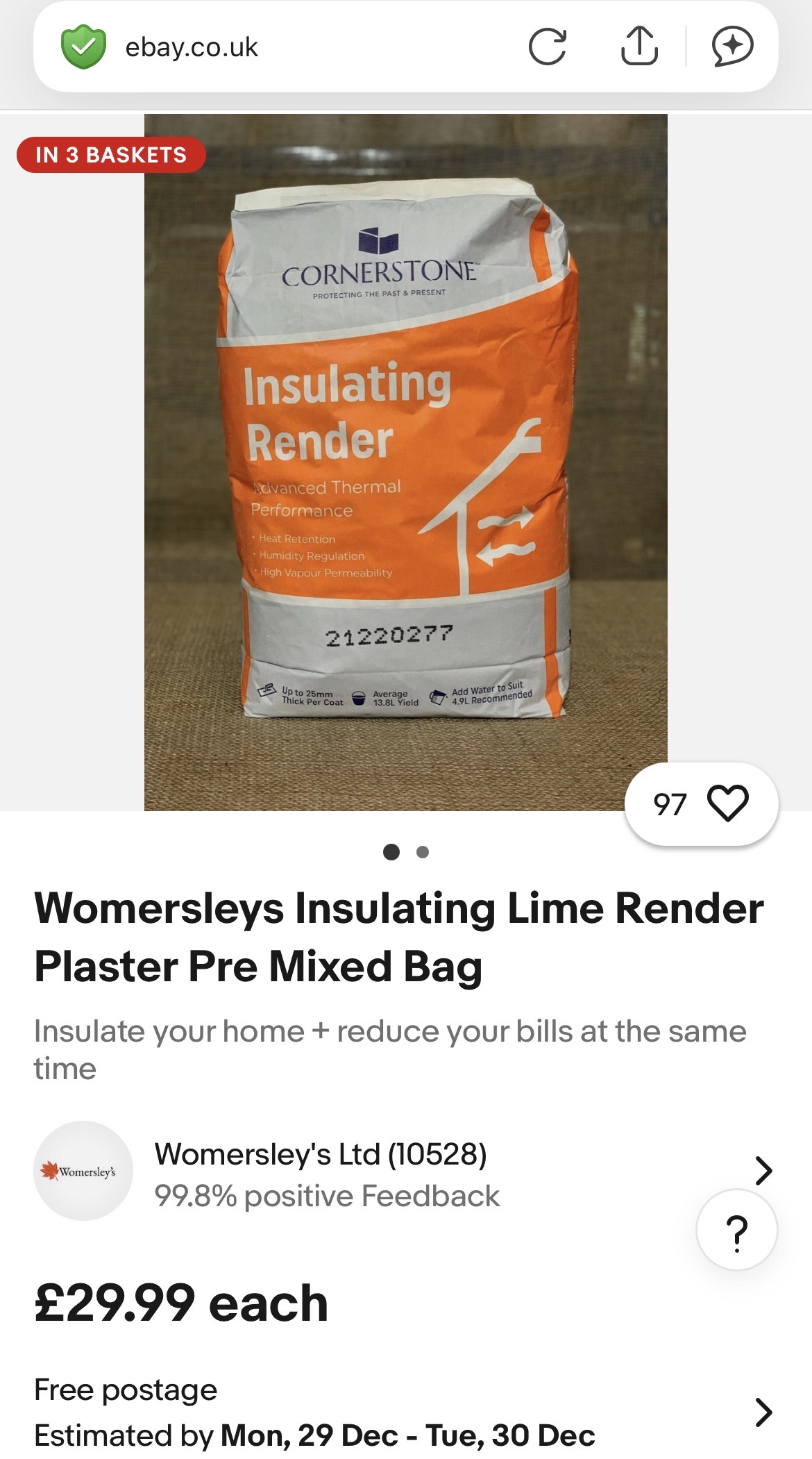
In particular I am thinking to repair my internal walls with a relatively thin layer of lime plaster before adding plasterboard to get a smooth surface. It should help with moisture management and provide airtightness (rather than trying to tape plasterboard to get the airtightness layer). It just seems wrong to only put plasterboard directly onto the wall, which is what plasterers/builders would seemingly do.
Do you have some thoughts on this?
I haven’t found much guidance or standards on this I can use to perhaps do it myself, so I am just learning about different lime types and I was astonished to learn that lime plastering is actually a common way to plaster in Germany. So I will have a look for some guidance from there.
Anyway, if you have any good references or guidance on a good way to use lime plaster for airtightness in a retrofit, I would appreciate it you could share or pinpoint where to look.
P.S.: I have been looking to find something from the AECB on this, but can’t seem to find any guidance from them on retrofit on their website. I thought they would have a handbook for builders for example. Any pointers? Thanks.
Yes, parging is a recommended airtightening method and also seals brick and block work ready for plastering. This can be required where different bricks, blocks and mortar have different absorbencies, which can cause cracks as the plaster dries. In the underfloor or other deliberate voids the parging may be adequate on its own.
Parging is applying a very thin layer of plaster and rubbing it into any surface pores and irregularities to fill minor voids.
Is there any guidance on this so I can perhaps do it myself?
I have just done a plastering course… although after doing some additional research over the last week I am thinking it would be much better to use lime plaster rather than Gypsum. Maybe some NHL 2 type mix, but lime is a bit of difficult method to get a clear handle on.
I have just lime plastered my window reveals and for such a small area it was ok. I wouldn’t dare to do a whole wall.
For a couple of years I had access to the AECB CarbonLite Retrofit course material, while taking the course and a year after, but I don’t know what was specially available and what was generally online. I do find the AECB material difficult to search at times.
I am not a plasterer and don’t have the skill to smooth a whole wall, whereas with the window reveal a had a straight edge as my guide and a width no greater than my trowel’s length.