Interesting reference documents

Has anyone found a good guide to implementing airtight layers? Maybe some real life case studies, rather than diagrams…

First challenge is a lime plaster/woodfibre board/plaster wall insulation scenario - wall is back to brick, but junctions with insulated floor, timber ceiling joists, pvc window, plasterboarded wall, wet plastered wall etc. Using combination of tapes, membranes and lime plaster, but there will be other buildups to follow.

I understand the theory, but finding it challenging putting it into practice/being able to explain to a contractor/check that it’s been done correctly.

Thanks for any links.

1 Like

My guess is that @pottyone72 could help.

Having a combination of measures is what makes it difficult to explain. Could you somewhat reduce the number of types used?

1 Like

Good question indeed!

I am looking at my windows and doors, my wall junctions and joists and so forth and there is so much to think about. I mean architects draw a nice airtightness line in drawings, but give no real detail how to actually achieve these. :slight_smile: I mean it would be good to find an all in one guide, rather than having to dig through the guidance of individual products like tapes and smart membranes.

In my case I have just removed the chimney breast and exposed a lot of old brick work underneath that has holes and loose lime plaster joints everywhere. So I am learning some lime pointing at the moment to plug the holes.

However, for airtightness they suggest a parging the wall and then maybe lime plaster or wood fibre/ normal plasterboard on top.

Hence I am now looking for a guide about parging with a plaster for airtightness… any ideas?

It is a bit difficult to find any details. Parging is only really mentioned in the passivhaus guidance and I can’t really find something on parging for airtightness on Youtube. The Passivhaus guidance ‘suggests’ to apply a 2 coat (5mm) plaster layer for example on internal masonry, but I am really struggling to find some guidance for beginners.

Long story short, I am happy to work together finding/sharing some guidance.

I have just emailed Coaction to ask whether any of their Passivhaus tradesman courses cover parging. They won’t see the email until tomorrow (I presume).

1 Like

Thanks for suggestion re @pottyone72
I find it difficult just focussing on one junction at a time so breaking it down into individual bits has to be the way to go. For me it might be something to do with going from 2D to 3D :upside_down_face:

Surely you retrofit in 4D. I do, with too much of the forth dimension passing during the work on the other dimensions.

For those of you looking for professional help this search page could be useful.

It is concerning that there are so few Certified Passivhaus tradespeople.

4th dimension much in evidence here too!

I read this on LinkdIn today and thought of your enquiry. I don’t know whether you have a presence there that I could forward to so copy below:

By Peter Anderson, Renfrewshire Council and Glasgow school of Building

As a Clerk of Works working on retrofit projects in the UK, I need to say something clearly.

We do not have an EnerPHit problem.
We have an airtightness delivery problem.

The physics works. The standard works. What repeatedly fails is how we execute it on site.

I have witnessed first-hand how difficult it is to make older masonry buildings airtight using conventional membrane-and-tape strategies. Tenements, solid stone walls, irregular substrates, timber joists, roof truss junctions, service penetrations they create complex leakage paths that look neat on drawings but are extremely difficult to seal properly in reality.

Time and again I have seen loft membranes forced around truss and joist junctions, tapes trying to negotiate impossible geometry, parge coats assumed to be airtight without verification, and final blower door tests exposing the gap between design intent and site reality. Then the outcome is labelled a “pilot” or written off as “too difficult”.

It is not too difficult. We are making it unnecessarily complicated to build.

If we are serious about consistently achieving 1.0 ACH, we must design for buildability as well as compliance. Airtightness has to be practical for the contractor carrying out the work.

From what I am seeing on site, liquid airtight membranes like Passive Purple fundamentally change that conversation. When properly specified and applied on the warm side or to a properly prepared external substrate a liquid system creates a visible, continuous airtight layer. It reduces reliance on fragile junction taping, simplifies complex timber and masonry interfaces, allows better inspection and quality control, and significantly reduces hidden leakage risk in older buildings.

Older buildings across the UK present many challenges when trying to create a reliable airtight envelope. A well-designed liquid membrane approach can alleviate most of them while still allowing vapour diffusion where required and maintaining moisture safety when correctly detailed.

There is a shift coming in UK retrofit. Liquid airtight membranes, used intelligently on interior and exterior surfaces, will lead the way. It is time to make airtightness easier for contractors to achieve, not harder.

This is not about lowering standards. It is about making high standards deliverable in the real world.

If I am wrong about liquid membranes, prove me wrong. Because from what I am witnessing on site, this change is coming whether we are ready or not. We should be prepared for it.

If we genuinely want to see more projects in the UK reaching certification rather than falling short, we need open, honest discussion between designers, contractors and site teams about what actually works in practice.

1 Like

Thanks Tim, that’s very interesting but sadly not surprising.

I have seen both Passive Purple and Aeroseal being used to good effect (Aeroseal featured on House Planning Help not so long ago HPH394: Could you automate air sealing on a house build?  – with Hugh Franklin - House Planning Help )

I have used liquid membranes, but just for the floor wall junctions. I used Soudal Soudatight LQ, which is vapour and air tight and really seems great.

However, as it is not vapour permeable so I wouldn’t use it on large areas except if the walls are dry anyway and you got an MVHR.

So I am coming back to a good parging layer using lime plaster.

Although now I have done my first pointing yesterday using an NHL3.5 mortar and … I am in pain (my muscles) from first preparing the joints painstakingly, mixing the mortar and then trying to fill the gaps one by one. I probably did about 1sqm over the whole day, first peeping and then jointing.

However, worth noting that my joints are everywhere in terms of size (from 5mm to 30mm) and a lot of the brick is brittle and broken up. The worst seems to be loose bricks where somebody used actual cement mortar. They bricks held with cement mortar (which was under a thick layer of wet plaster) all seem to have lost their bonds, while the bricks surrounded by lime mortar are mostly still ok even though the lime is crumbling. Perhaps not surprising after 80 years.

Interesting.

I don’t remember the names “Aeroseal” or “AeroBarrier“ but I do remember reading about a similar sounding product in testing a few years ago. Unfortunately the transcript doesn’t mention vapour permeability.

I think the way Aeroseal works is that its sucked into cracks and small holes rather than being sprayed everywhere, so the overall amount used is quite small - bigger holes have a halo round the edge of the hole so you need to deal with those manually (when you might also want to consider vapour permeability).

That is correct. I contacted them to find out whether the product and method are compatible with an occupied property (as in the occupants are out but the furniture and fittings are in place). All soft furnishings need removal and horizontal surfaces need covering. It’s a bit of a faff. More the kind of thing you might arrange for the day you take possession of a “new” property before moving in.

Oh, and they didn’t understand what “vapour open” means but I got the impression that it isn’t.

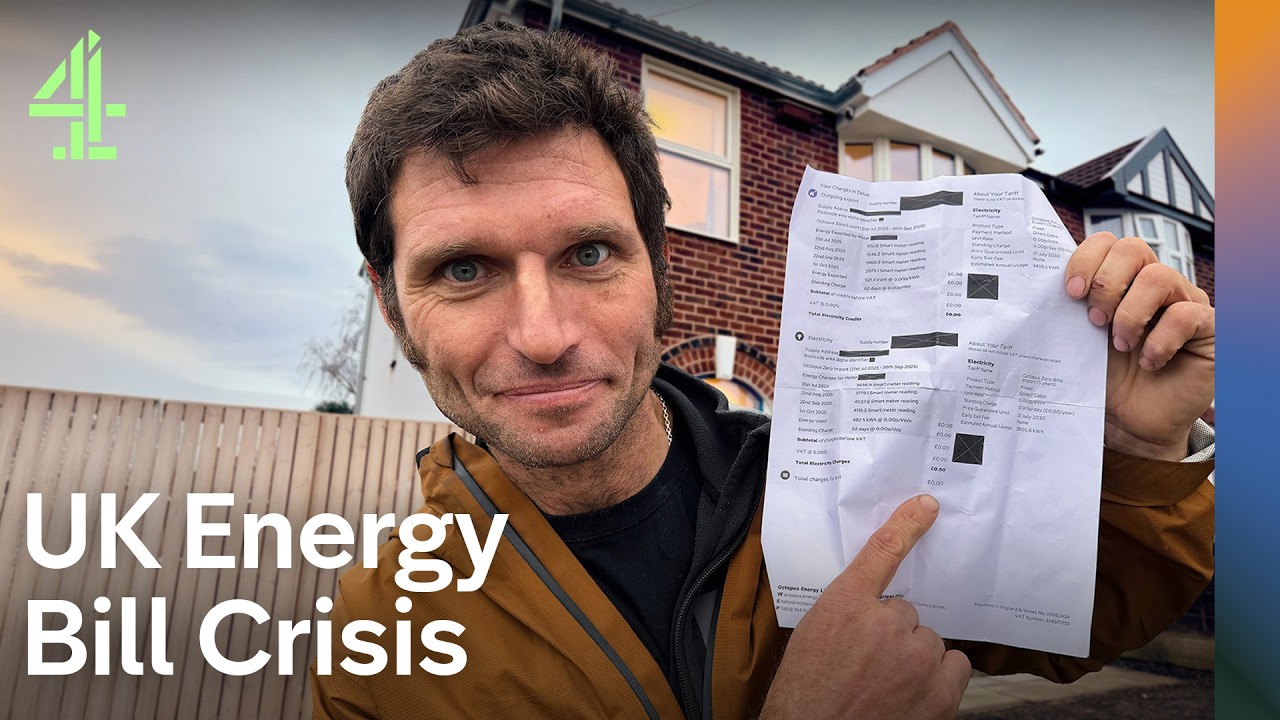
Not really a simple reference document, but a Channel 4 documentary with Guy Martin about a Passivhaus retrofit of a 1930s semi detached house in Manchester.

‘Guy Martin’s House without bills’ …

now available on Youtube, which I think is easier to access than playing on the Channel 4 app:

I like it and it does mention for example about parging with lime, although it doesn’t go much into details. More motivational for people who are new to this.

Here are a few more details about the architect etc: https://www.ribaj.com/buildings/practice-in-progress-house-without-bills-passivhaus-retrofit-manchester/

Found a good little thread on parging for airtightness basically suggesting to use an NHL3.5 and a plastering sand to get a thin layer on.

That seems to work ok, depending on the stone underneath (with Aircrete a bit problematic as it sucks out too much water).

It seems important to use a fine sand to ensure all holes are filling in well and also to keep the layer thin itself (if the wall is level anyway). I was going to use Lime Green Duro, but not sure what size sand they have in it as it it is not specified in the TDS.

I guess NHL3.5 should be fine, although some people seem to say this is too hard, but I generally think it seems to be the way to go for parging. It certainly takes away the worry of it not setting in any reasonable time (like with lime putty) and from my own experience with the NHL3.5 mortar it really takes away any moisture.

So my understanding as of parging for air tightness might be lying in the right NHL3.5/sand mix and specifically the grain size and perhaps any additives so it easily goes into any cracks. I have found some references that state an 8mm parge coat will provide good airtightness for EnerPHit or Passivhaus projects.

Perhaps lime putty could be added as it does have a very creamy constituency if the sand is a bit coarser.

As a final point, it seems to be important to protect any metal straps or fixings from lime plaster and Woodfibre insulation, because they can easily rust if it is not stainless steel.

Extreme weather planning.

This document can be used as an addition to retrofit planning to improve the climate adaptation of your home.

Newly published Passivhaus awards for retrofitting windows.