
Hi all,
I thought I’d update this thread with that we actually did, for any future DIYers struggling with the same problem. It was a pain to do and I wasn’t happy with the sustainability of the products, but it has achieved the desired effect in challenging circumstances.
Background - we had a solid floor slab, with no insulation and no functioning DPM, the party wall is built directly on the slab so removal was not an option and we only had 20-30mm beneath the external doors. Original make up was 110mm of concrete with 15mm layer on top which included bitumen in the mix but was in a very poor state.
-
Removed the damaged top layer
-
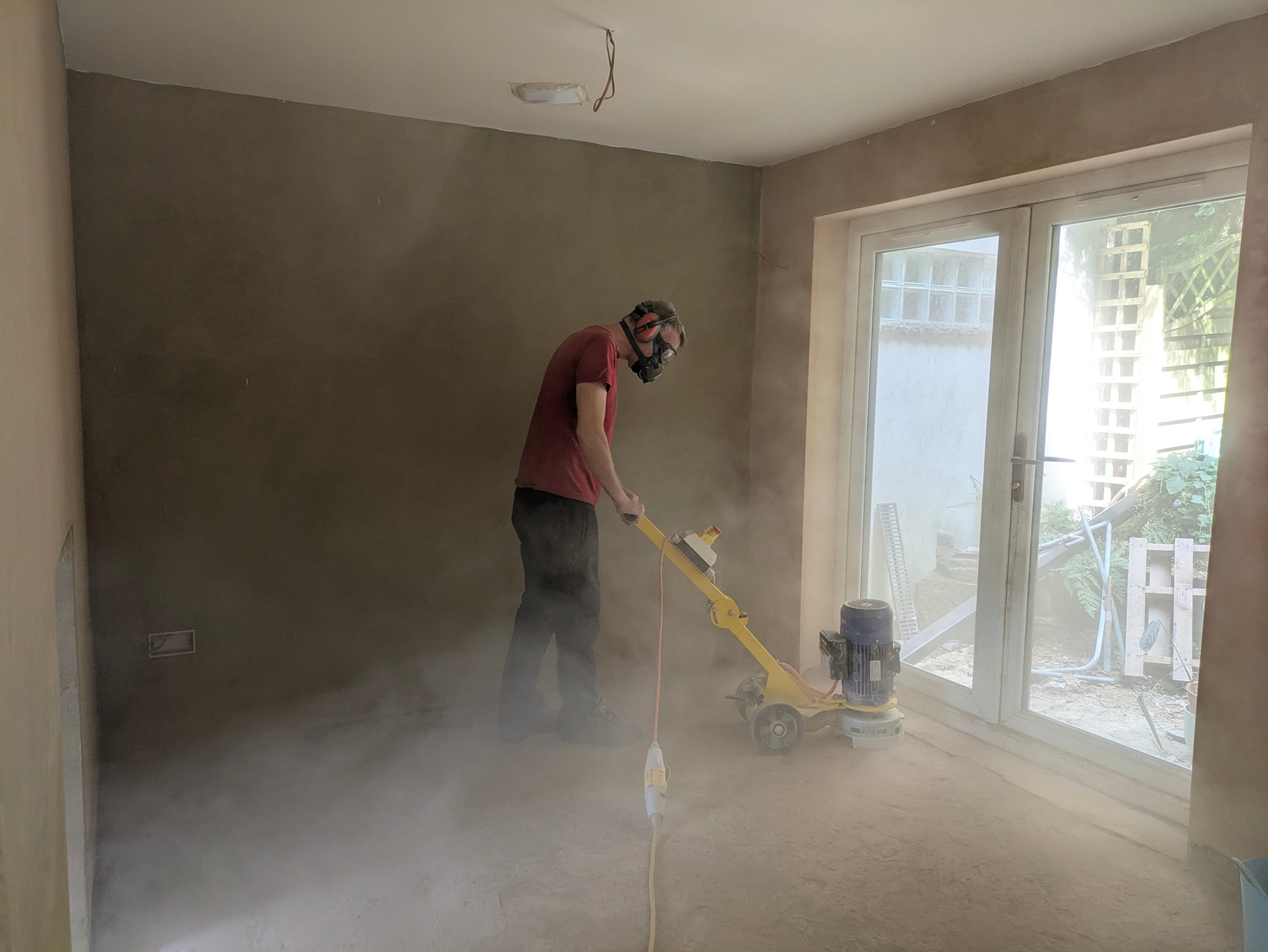
Ground the base concrete down about 10-15mm for initial levelling and to provide slightly greater insulation depth.
-
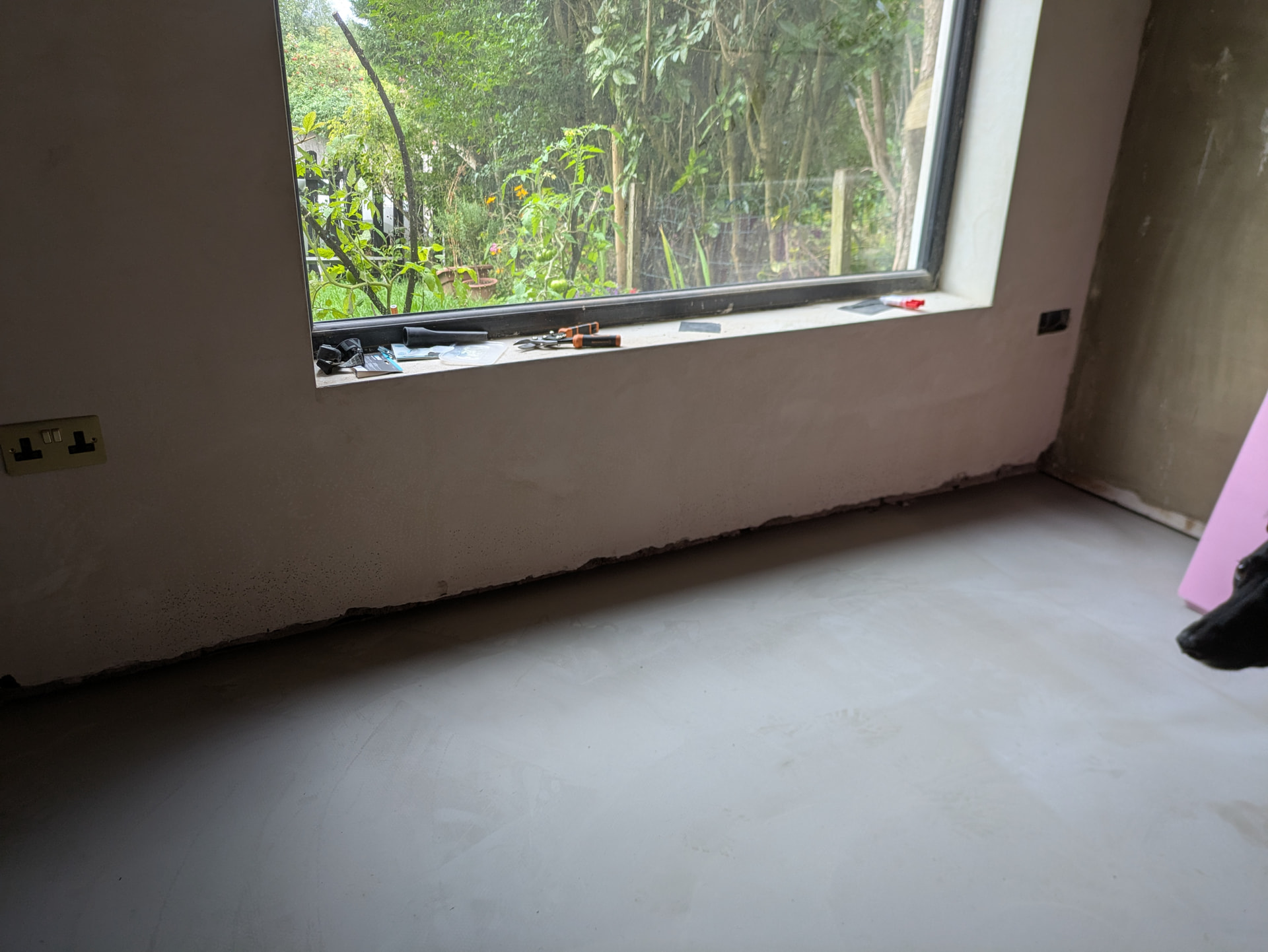
Next step was Ardex NA levelling compound ~2-3mm, followed by Ardex DPC 1C (the only liquid DPM I could find suitable when a structural DPM is not present. Then another layer of Ardex NA for protection.
-
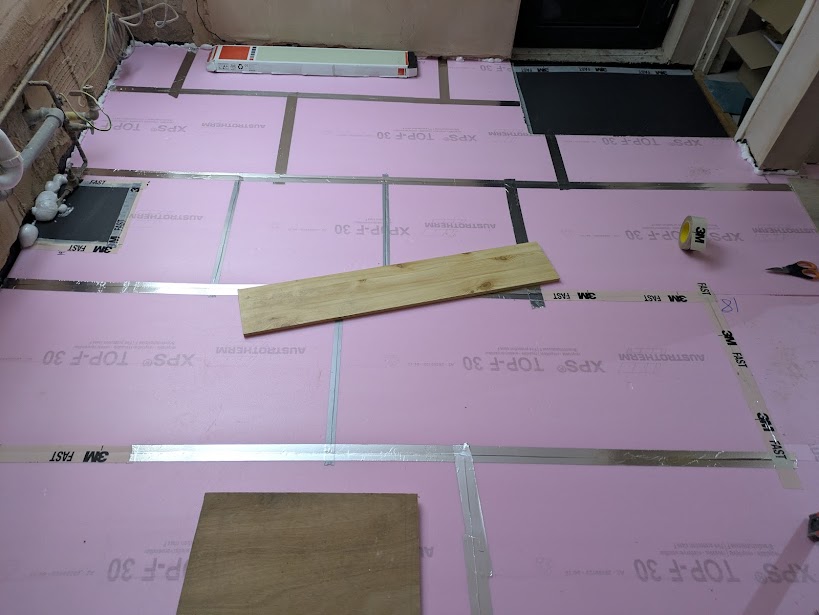
Added 30mm (sadly all we had room for) of XPS300 interlocking insulation boards with 10mm expansion gap at each wall.
-
We taped the seams, the supplier assured us this wasn’t necessary with interlocking boards but we were cautious about moisture.
-
Applied a base-layer of 5.5mm SP101 flooring plywood with 10-15mm expansion gap at each wall.
-
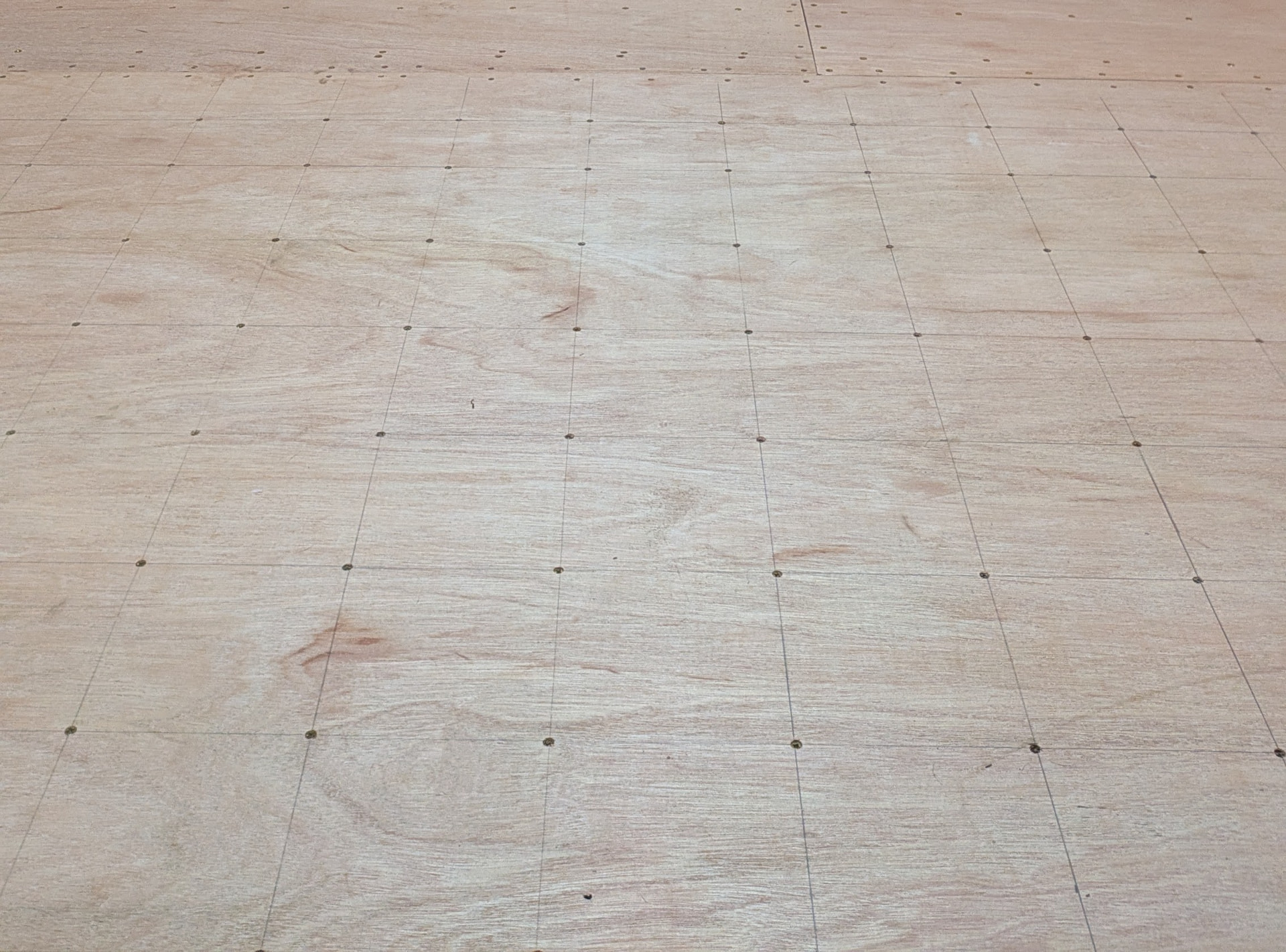
Cross laid a second layer of 9mm SP101 screwed into first at 100mm spacing around the perimeter of each sheet and 150mm spacing internally (almost 1000 18mm wood screws!).
-
Feather-edged the board joins and the screw holes
-
Lightly sanded whole floor
-
Filled the gap at the perimeter with flexible foam (Ilbruck FM330)
-
We were left with almost no space for final floor finish, so went with some 2mm glue-down LVT, which was affordable and is highly water and pet resistant.
End result?
Overall we’re very happy with it. It feels a lot more solid than I was expecting and the downstairs now easily gets up to temperature at a very low heat pump flow temperature - where previously we had to run the pump harder and turn down the radiators upstairs. It certainly wouldn’t even meet modern u-value regulations but it’s made a huge difference to our comfort levels and the house never drops below 19C now.
Do add any areas where you think it might have been done better or where performance might be improved below, so anyone that stumbles upon this thread doesn’t make the same mistakes.
Your floor retrofit demonstrates the law of diminishing returns as it applies to insulation. Anything (provided it is continuous/contiguous) is better than nothing but excessive thickness achieves little over recommended thickness.
Well done, I am sure it also sound’s different. Having discontinuous layers probably platy a larger measurable role than indicated by calculation.