Unfortunately I don’t know where a table of approved heat pumps is (maybe the BRE website somewhere?). I did this over a phone conversation with my EPC assessor and he was checking a list within his EPC writing software (not sure which one). Sorry not to be more helpful!
Any EPC certification needs to meet BRE requirements, so as you say, BRE is probably the place to look. The table, if any, is, in effect, a scale of recommendations, so it ought to be public but the BRE might have other ideas.
Edit: I have had a look on the BRE website and assume that what we are after is under “Domestic Annual Heat Pump System Efficiency (DAHPSE)” but I haven’t found it yet.
When I couldn’t find the heat pump table we are looking for I asked BRE and this is what they sent:
https://www.ncm-pcdb.org.uk/sap/pcdbsearch.jsp?type=362&pid=31
It isn’t what we wanted but could be useful non the less.
As a follow up I checked the BRE database again today. They do not have the current model for my heat pump but the previous one is there. One hopes that there has been an improvement since then.
https://www.ncm-pcdb.org.uk/sap/pcdbdetails.jsp?pid=31&id=106479&type=362&mid=020045
Apparently to get the points out of this you need the assessment software. The points are not published separately.
As a matter of interest I also found my MVHR.
https://www.ncm-pcdb.org.uk/sap/pcdbdetails.jsp?pid=34&id=500480&type=323&mid=020004
PS. As a further follow up I have been in touch with my EPC assessor and unfortunately:
- After 3 months a full resurvey is required.
- He claims the current version of the software cannot access the BRE database. This contradicts what @Ben_Woodhams’ assessor said a year ago.
I know that the software for new and existing properties differs, as more should be known about the ones currently being built. That may be the source of the difference.
Hi Ben,
your post is a bit older now and I am not sure how you have fared since then. Tim kindly linked your thread to me recently as I am just going through the EPC ratings while I am doing a partial retrofit.
Here is the thread and my latest post about the EPC ratings. As they have been just updating RdSAP to 10.2, ASHP may be better served. Retrofit project planning starting with underfloor insulation - #81 by Christian_Unger
However, there are may quirks and you likely need to be an EPC assessor for your own house to get the values entered correctly or you better prepare yourself and the evidence for the EPC assessor so this can be added correctly in the short time they have available.
I am planning to do another assessment when we are done with the current phase 1 retrofit, and I was hoping I could get to a B rating with all the money spent. However, I am not sure if it can be done.
Let us know if you have dared to do another EPC or are still with your older C rating. Thanks.
Isn’t running cost part of the evidence for EPC rating?
Yes, that is correct.
However the costs per unit price for different fuels are very out of date, as are the relative efficiencies.
I believe those issues are at least partly addressed in the latest modification.
If anyone wants to have a closer look on the RdSAP 10 details and how the assessor enters things, please check out the specifications and conventions. That is basically what they work of.
RdSAP 10 Specification 10-06-2025.pdf (2.0 MB)
RdSAP Conventions v12.1.pdf (1.1 MB)
My apologies for not being clear- The annual bill summary tells you cost and amount of energy used. The cost will fluctuate but the amount of energy used is most important if comparing pre & post retrofit to verify the effectiveness of the measures installed.
2 Likes
For illustrative purposes I checked my records and it shows that air tightness 19.5 ACH and EPC Feb 2016 energy demand 271 kWh/m2/year to 24kWh/m2 2018-2019 post retrofit
Very impressive. Over 90% reduction in energy requirement.
I could only dream of such an improvement. Mrs G has effectively vetoed any non essential changes until the children leave home, unless there is an urgent maintenance requirement at the same time. She both hates mess and is concerned that children will spoil any lovely new finishes we end up with.
I’m pondering what sabotage I can safely do to our home to induce retrofits of various components. Starting with the kitchen floor.
1 Like
We started with a low base. I have no intention of getting a new EPC rating but given the experiences documented, I haven’t a clue what our home would be rated at.
Agreed. An EPC is a need only document. When I needed one I went to the trouble of trying to get a quality survey.
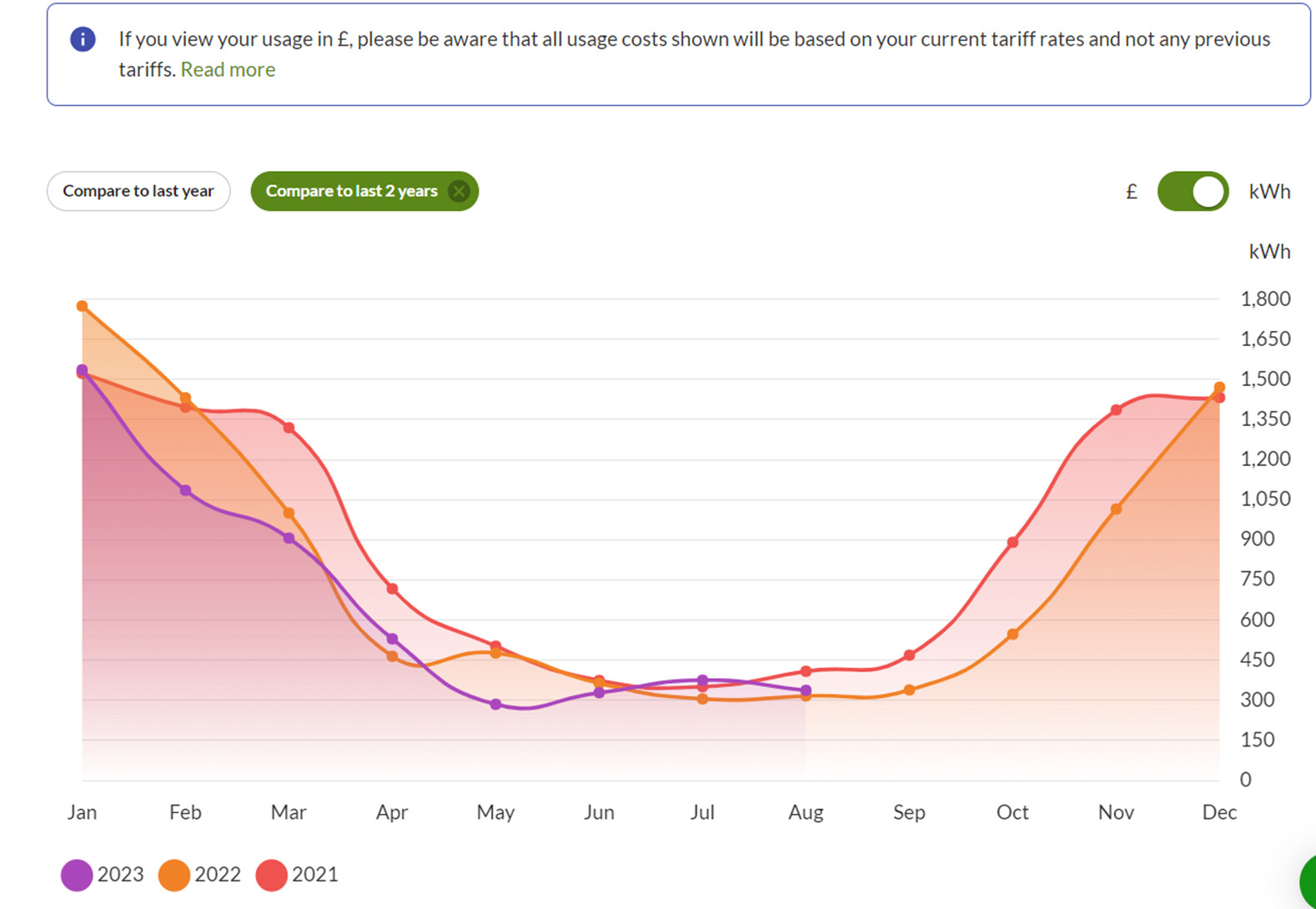
After the main retrofit I have continued to do mini projects to make marginal gains and these are less disruptive and typically involve draught reduction but are still measurable.
1 Like
Hi Lloyd, have you had a look at the new Home Energy Model (HEM) yet? It seems like it will be a real upgrade to RdSAP. I hope it will actually reflect our efforts much better in the future.
Someone may want to be point hunting as per the old system but unless you need an EPC urgently it may be best to reorientate according to the new HEM system. That should favour energy efficiency technology such a MVHR and heat pumps. However, for the time being at least, there are no modelled solutions or components to work with.
I get the feeling that it will be so different that this thread will need archiving and a new HEM one will need to replace it.
1 Like
Yes Tim I think a HEM/EPC thread will likely be good in the near future.
We should definitely include the EcoHome Lab thread with that webinar recording about HEM made by @mattfranklin:
I had listened into it, but need to watch it with the slides. It was a good start to get people a introduction.
1 Like
Hi, I did have a look at HEM but will wait to see how things shape up post implementation.
My current thoughts are beginning to explore heat pumps which would have a large impact on HEM?.
The new HEM based EPC has three tables with independent scores,
fabric,
heating (and ventilation?) system(s),
readiness for smart home control.
Ideally all three should be good.
EDIT: I am now aware that ventilation comes under fabric, not heating.
1 Like